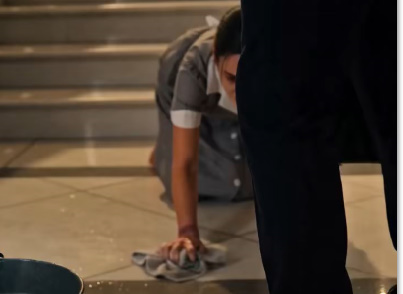
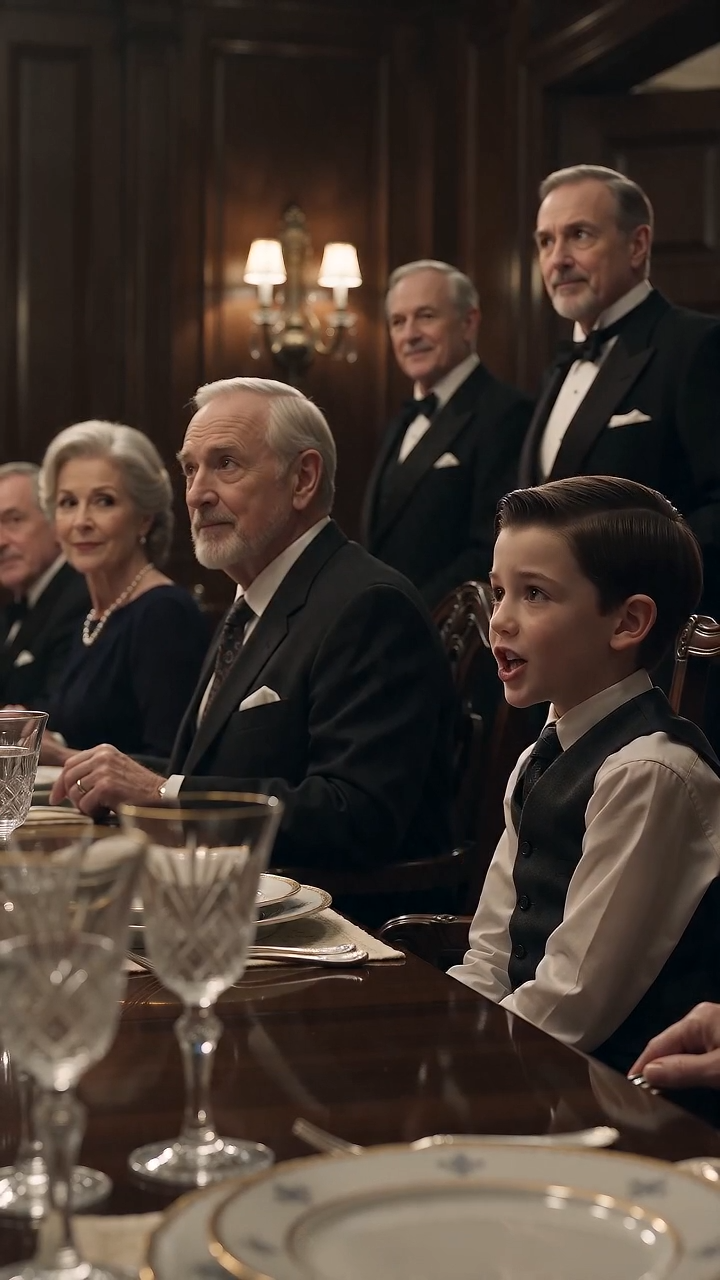
At Sunday dinner, my sister’s kid kicked my chair and announced, “Servants don’t sit with us.” The entire table erupted in laughter.
Chapter 2
By 7:15 a.m., my phone was exploding.
Vanessa had already called me fourteen times. My mother had sent seven voice messages, each one more hysterical than the last. Even my cousin Thomas had texted:
“What the hell, Margot? You can’t just evict your own family.”
I made coffee and sat at my kitchen table, watching the messages come in without replying.
At 7:42 a.m., Vanessa finally sent something coherent:
“Margot, this is insane. You can’t do this. We have nowhere to go. Carter has school here. This house has been in the family for forty years.”
I typed back one sentence.
“Grandpa left it to the trust. And I’m the trustee. You’ve been living there rent-free for nine years while treating me like staff. That ends today.”
She didn’t reply for twenty minutes.
When she finally did, her tone had changed.
“You’re doing this because of one stupid joke at dinner? Grow up.”
I stared at the message for a long time.
Then I blocked her number.
Chapter 3
Grandpa had always been the only one in the family who saw me clearly.
While everyone else treated me like the reliable, quiet daughter who would handle things, Grandpa used to say, “Margot’s the only one with a spine and a brain. The rest of them just know how to spend money.”
When he got sick, he called me into his study one afternoon.
“I’m leaving the house to the trust,” he said. “Not to your mother. Not to Vanessa. To the trust. And I’m making you the trustee.”
I had been shocked. “Why me?”
He looked at me over his glasses. “Because you’re the only one who’s never asked me for anything. And the only one I trust not to sell it the second I’m in the ground.”
He died six months later.
For nine years, I had quietly managed the trust. I let Vanessa and her family live in the house because I thought family should help family.
I paid for repairs. I handled the taxes. I never asked for rent.
In return, they treated me like I was lucky to be allowed at the table.
Carter kicking my chair was just the final straw.
Chapter 4
Vanessa hired a lawyer within forty-eight hours.
Her attorney sent a long, aggressive letter claiming that I was abusing my power as trustee and that the eviction was “retaliatory and malicious.”
My lawyer, Bellamy & Cross, replied with three pages of documentation showing that Vanessa had never paid a single dollar in rent or maintenance in nine years, while the trust had spent over $180,000 keeping the house in good condition.
They also included screenshots of family group chats where Vanessa had referred to me as “the help” multiple times over the years.
The letter ended with a simple statement:
“Ms. Margot Hale is exercising her fiduciary duty. The eviction will proceed as scheduled.”
Vanessa’s lawyer stopped responding after that.
Chapter 5
Two weeks later, I drove past the old house.
Vanessa’s family was outside loading boxes into a moving truck. Carter stood on the lawn looking confused. My mother was sitting in a folding chair, crying dramatically while my aunt patted her back.
Vanessa saw me drive by.
For a second, our eyes met.
She didn’t look angry anymore.
She looked scared.
I kept driving.
Chapter 6
That night, my mother showed up at my apartment unannounced.
She stood in the hallway with red eyes and trembling hands.
“Margot, please,” she said. “Vanessa made a mistake. Carter’s just a child. You can’t throw them out on the street.”
I looked at her for a long moment.
“Mom,” I said quietly, “when Carter kicked my chair and called me a servant, you laughed. When I left, you didn’t call me once to check if I was okay. The only reason you’re here now is because the money and the house are gone.”
She opened her mouth, then closed it.
I stepped back and closed the door gently.
Chapter 7
The eviction was finalized by the end of the month.
Vanessa and her family moved into a small rental across town. My mother moved in with my aunt. The big house sat empty for three weeks before the trust put it up for rent.
I received the first month’s rent check two days later.
It felt strange — receiving money from the house I had been maintaining for free for nearly a decade.
For the first time, I didn’t feel guilty about it.
Chapter 8
Three months later, Vanessa sent me a long email.
She apologized for Carter’s behavior. She said she had been under a lot of stress. She asked if we could “move past this” and if I would consider letting them move back into the house at a reduced rent.
I forwarded the email to my lawyer without replying.
Bellamy & Cross sent back a polite but firm response stating that all future communication should go through legal channels.
I never heard from Vanessa again after that.
Chapter 9
Six months after the eviction, I sold my small apartment and moved into a modest townhouse closer to the city.
For the first time in my life, I wasn’t rushing to family dinners or fixing other people’s problems.
I started painting again — something I hadn’t done since college. I joined a book club. I even went on a few dates.
My life felt smaller.
But it also felt like mine.
Chapter 10
One year later, I received a message from my cousin Thomas.
He told me that Vanessa and her family were struggling financially. Carter had been acting out at his new school. My mother had developed high blood pressure.
Thomas asked if I would consider helping them “just a little.”
I thought about it for three days.
Then I wrote back:
“I spent nine years helping them while they treated me like I was less than them. I’m done. If they want help, they can earn it the same way everyone else does.”
I didn’t feel cruel when I sent it.
I felt free.
Chapter 11
Two years after that Sunday dinner, I was sitting on my back porch with a glass of wine when my phone rang.
It was an unknown number.
I almost didn’t answer.
When I did, a small voice said, “Aunt Margot?”
It was Carter.
He sounded older. Quieter.
“I just wanted to say I’m sorry,” he said. “For what I said that day. Mom told me to say it, but… I still shouldn’t have.”
I closed my eyes.
“Thank you for saying that, Carter.”
There was a long pause.
“Are you ever going to talk to Mom again?” he asked.
I thought about it honestly.
“Maybe someday,” I said. “But not right now. And not because anyone tells me I should.”
He was quiet for a moment.
“Okay,” he said. “I get it.”
After we hung up, I sat on the porch for a long time, watching the sky turn dark.
For years, I had bent over backward trying to earn a place at that family table.
Now I had my own table.
And for the first time in my life, I didn’t need anyone’s permission to sit at it.