Chapter 3

I stared at the text for a full 10 seconds.
Langford Group.
The $20 billion conglomerate I’d spent the last 10 years quietly positioning to take over.
The overseas contract I’d just finished?
It hadn’t been random.
It had been the final piece of the puzzle.
I’d spent eight months locking down supply chains, securing regulatory approvals, buying up small blocks of shares from retired board members through a dozen shell companies.
I was 48 hours away from filing a formal tender offer.
48 hours from owning the largest industrial firm in the country.
And Helen had just walked straight into the middle of it.
I called Elias immediately.
“Track every person who leaves that boardroom,” I said, my voice tight. “Get me names, phone numbers, every connection they have to Helen or her late husband. Now.”
“Already on it,” he said. “One more thing. Mark just met with his lawyer. They filed for emergency temporary custody of Lila 20 minutes ago. Hearing is day after tomorrow.”
I hung up.
Walked to the bedroom door.
Peeked in.
Lila was asleep, curled into a tight ball, her favorite stuffed rabbit tucked under her chin.
Even in her sleep, her brow was furrowed.
Like she was waiting for the next bad thing to happen.
I closed the door softly.
Sat on the couch in the dark.
I’d spent my whole adult life building walls.
Hiding who I really was.
Hiding how much I had.
I’d married Mark because he was safe.
Boring.
Predictable.
I’d thought a quiet, unassuming husband would keep the wolves away from me and my daughter.
I’d been wrong.
The wolf had been living in my house the whole time.
The next morning, I took Lila to a new pediatric dentist for a checkup—Helen had refused to take her for six months, saying “kids’ teeth fall out anyway”—then to a private indoor playground I’d rented out just for her.
She laughed for the first time in 24 hours, chasing a ball through a plastic tunnel, her pigtails flying.
I watched her from a bench, my laptop open, going through the files Elias had sent overnight.
Helen’s late husband, Arthur, had been a mid-level executive at Langford 30 years ago.
He’d left the company under a cloud of suspicion—embezzlement rumors, never proven.
But he’d kept in touch with three of the old board members.
Men who owed him favors.
Men who now sat in that boardroom, listening to Helen lie about me.
Elias’s report said she was telling them I was a con artist.
That I’d stolen my Veridian shares from a dead business partner.
That I was an unfit mother, a criminal, that letting me take over Langford would ruin the company’s reputation forever.
She was trying to convince them to sell their shares to a corporate raider named Roland Voss instead.
A man famous for buying companies, stripping them for parts, and throwing thousands of people out of work.
I closed my laptop.
Rubbed my temples.
Helen didn’t care about Langford.
She didn’t care about the 12,000 people who worked there.
She only cared about hurting me.
About taking the one thing I’d worked harder for than anything else in the world.
The custody hearing came too fast.
I walked into the family courtroom that morning, Lila holding my hand, her thumb in her mouth.
My lawyer, Mara—one of the sharpest family law attorneys in the state, on my payroll for five years just in case—walked beside me.
On the other side of the room, Helen sat next to Mark.
She was wearing a soft gray sweater, a string of fake pearls, her hair pulled back in a tight bun.
She looked like every grandmother in every TV commercial ever made.
When she saw me, she gave me a small, cold smile.
The judge walked in five minutes later.
I froze.
Judge Eleanor Whitmore.
I’d seen her name on the docket the night before, but I’d told myself it was a coincidence.
It wasn’t.
She was Helen’s first cousin.
Mara leaned over to me, her voice so quiet only I could hear.
“I filed a motion to recuse first thing this morning,” she said. “It was denied. She’s hearing the case.”
My stomach dropped.
Helen’s smile got wider.
The hearing started.
Mark’s lawyer stood first.
He painted a picture so far from the truth it might have been a different family entirely.
He said I was a cold, absent mother.
That I’d abandoned Lila for eight months to chase a career.
That I’d come home, thrown an innocent elderly woman out of her own home over a trivial misunderstanding, and was now trying to cut a loving father out of his daughter’s life.
“Your Honor,” he said, turning to the judge. “This little girl needs stability. She needs her grandmother. She needs her father. Not a mother who sees her as an afterthought.”
Helen stood next.
She cried.
Real, fat tears rolling down her cheeks.
She talked about how much she loved Lila.
How she’d only ever wanted the best for her.
How I’d always been jealous of her bond with her granddaughter.
How the “rice incident” was a lie I’d made up to ruin her.
“Your Honor,” she sobbed, dabbing her eyes with a tissue. “That child is my whole world. I would never hurt a hair on her head. Her mother is unstable. She’s been acting erratic for years. I’m terrified for what Lila’s life will be if she’s left alone with her.”
Judge Whitmore nodded, her face soft with sympathy.
I looked over at Lila.
She was staring at Helen, her eyes huge, her body pressed tight against my side.
Mara stood.
She was calm.
Methodical.
She entered the pediatrician’s report into evidence.
The photos of Lila’s knees.
The timeline of missed doctor’s appointments while I was gone.
Then she called Mrs. Lopez to the stand.
The housekeeper was nervous, but her voice was steady.
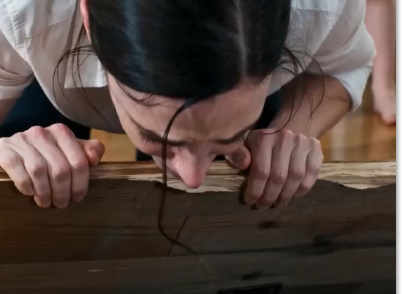
She testified that she’d seen Helen make Lila kneel on rice at least a dozen times.
That she’d heard Lila crying through the kitchen door, too scared to call for help.
That Mark had been home for most of it, and had never once stopped his mother.
Judge Whitmore’s face tightened.
But she still didn’t rule in our favor.
“Given the conflicting testimony,” she said, looking down at her notes. “I am inclined to grant joint temporary custody, with the child spending four nights a week with her father and grandmother—”
Mara cut her off.
“Your Honor,” she said, holding up one last sealed envelope. “We have one more piece of evidence. We only received it last night. It changes everything.”
She walked it up to the bench.
Judge Whitmore opened it.
Her face went pale.
Inside was a police report from 20 years ago.
Filed by a 16-year-old girl named Claire Langford.
Mark’s little sister.
Helen’s daughter.
The report said Claire had run away from home after years of physical abuse at Helen’s hands.
Kneeling on rice.
Beatings with wooden rulers.
Being locked in a closet for days at a time.
Claire had never been found.
Everyone in the family had said she was a troubled kid, a runaway who’d wanted freedom.
The truth was in black and white.
Helen had been abusing children for decades.
The courtroom went dead silent.
Judge Whitmore looked up at Helen.
Her face was hard now.
No more sympathy.
“Temporary sole custody is granted to the mother,” she said, her voice sharp. “Father gets supervised visitation only, pending a full investigation. The restraining order against Helen Langford remains in full effect. This court is adjourned.”
We won.
I picked Lila up, kissing her forehead, as Helen screamed at the judge, her perfect grandmother mask finally cracking.
We walked out of the courtroom into the bright hallway.
I was halfway to the elevator when a man stepped in front of me.
He was in his 60s, expensive suit, silver hair.
I recognized him immediately.
Harold Gray.
Chairman of the board of Langford Group.
May you like



He held out his hand.
“I need to talk to you,” he said, his voice low. “Immediately. Helen just leaked a story to every major news outlet in the country. It goes live in an hour. It says you’re a fraud. That you stole every dollar you have. And it’s going to ruin you before you ever get close to my company.”