Chapter 7
The trial started on a cold, gray Tuesday in January.
The courtroom was packed. Reporters. Family members. Curious onlookers.
Lila was brought in in handcuffs. She was wearing an orange jumpsuit, her hair pulled back in a tight bun. She looked pale. Thin.
But when she saw me, she smiled. That same cold smile.
I didn’t flinch.
I sat next to my parents. Held my mom’s hand. Took a deep breath.
The prosecution went first.
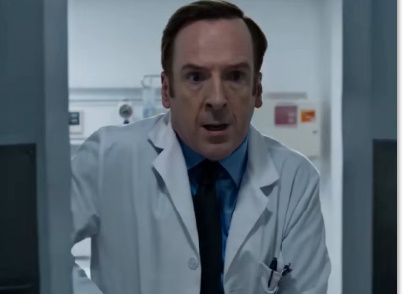
They called Dr. Miller to the stand.
He testified about my injuries. About the 17 fractures. About how none of them matched a fall down a short flight of stairs. About how they were consistent with being thrown, with being hit.
He held up my scans for the jury to see.
“These injuries are life-altering,” he said. “No one would intentionally inflict this kind of damage on themselves. It’s medically impossible.”
Next, they called Det. Carter.
He testified about the investigation. About the journal. About the burner phone. About the fake email account. About Lila showing up at the hospital, threatening me.
He held up the journal. Read the entries aloud.
July 4: It worked. She fell. Heard her bones crack. It was beautiful.
The jury gasped.
Lila’s face turned red. She whispered something to her lawyer. Her lawyer shook his head.
Then the defense went.
Lila’s lawyer was a slick man in a $5,000 suit. He spent three days trying to tear the evidence apart.
Said the journal was a forgery. Said I’d written it myself, copied Lila’s handwriting over months. Said the burner phone wasn’t Lila’s. Said someone had planted it in her closet. Said the fake emails had been sent from my laptop, not Lila’s.
He called Karen to the stand.
Karen cried. Sobbed. Told the jury Lila was a perfect child. A straight-A student. A volunteer at the local animal shelter. Said I’d always been jealous of her. Said I’d spent my whole life trying to outshine her.
“Mia has always been competitive,” she said, dabbing her eyes with a tissue. “When Lila got into her first choice college, Mia couldn’t stand it. She made up this whole story to ruin her.”
The prosecution objected. Said there was no evidence Lila had gotten into any college.
The judge sustained.
Karen was escorted off the stand.
Then Lila’s lawyer called me.
I walked to the stand. Swore to tell the truth. Sat down.
He smiled at me. Cold. Calculating.
“Mia,” he said. “You’re a very smart girl. Straight A’s. Full scholarship to Northwestern. Pre-med. You could do anything you set your mind to, couldn’t you?”
I didn’t answer.
“Couldn’t you?” he repeated.
“Yes,” I said.
“So you could, for example, copy someone’s handwriting over the course of a few months, couldn’t you? You’re smart enough. Dedicated enough.”
“Objection,” the prosecution said. “Speculation.”
“Sustained.”
The lawyer moved on.
“On the day of the cookout,” he said. “You were alone on the porch. No one saw you fall. Is that correct?”
“Yes,” I said.
“So there are no witnesses. No one can say for sure if Lila pushed you, or if you tripped, or if you threw yourself down those stairs. Is that right?”
My heart hammered.
“No,” I said. “Because the doctor said—”
“Just answer the question,” he snapped. “Is there any eyewitness to the fall?”
I hesitated.
“No,” I said.
“Exactly,” he said. He turned to the jury. “No witnesses. Just the word of a girl who was so desperate to be the best, she was willing to break 17 of her own bones to win.”
He turned back to me.
“Mia,” he said. “Isn’t it true that you’ve been diagnosed with depression? That you’ve had suicidal thoughts in the past?”
My blood ran cold.
That was true. I’d struggled with depression when I was 16. After my grandma died. I’d seen a therapist for six months.
But that had nothing to do with this.
“Objection!” the prosecution yelled. “Irrelevant!”
The judge leaned forward.
“Counsel,” he said. “Where is this going?”
“Your Honor,” Lila’s lawyer said. “The defense intends to prove that Mia has a history of self-harm. That she threw herself down those stairs in a suicide attempt, then blamed Lila to cover it up.”
The courtroom erupted.
Reporters scribbled furiously. The jury murmured.
I looked at my parents. My mom was crying. My dad was white with rage.
I looked at Lila.
She was smiling.
The judge banged his gavel.
“Order!” he yelled. “Order in the court!”
He looked at Lila’s lawyer.
“Counsel,” he said. “Do you have any evidence of this? Any medical records? Any witnesses?”
The lawyer hesitated.
“Not… yet, Your Honor,” he said.
“Then you will not bring it up again,” the judge said. “Is that clear?”
“Yes, Your Honor,” the lawyer said.
He turned back to me. His face was tight.
“No further questions,” he said.
I walked off the stand. My legs were shaking.
My mom hugged me.
“You did great, baby,” she whispered.
But I wasn’t so sure.
The lawyer had planted a seed in the jury’s mind.
What if I had done it to myself?
What if I was crazy?
The trial continued for another week.
The prosecution called Mia to the stand. She testified about finding the journal. About Lila’s threats over the years.
They called the tech expert who’d analyzed Lila’s laptop. Proved the fake emails had been sent from her IP address. Proved the burner phone had been bought with her credit card.
They called my therapist. Testified that I had no history of self-harm. That my depression had been mild, situational, fully resolved years before.
Slowly, the seed the lawyer had planted started to die.
On the last day of the trial, Lila took the stand.
She cried. Sobbed. Told the jury she was innocent. Said I’d framed her. Said she’d never hurt anyone in her life.
But then the prosecution cross-examined her.
Asked her about the journal. About the burner phone. About the fake emails.
She stumbled. Contradicted herself. Got angry.
At one point, she snapped.
“That scholarship was mine!” she yelled. “She stole it from me! She deserved what she got!”
The courtroom went silent.
Lila clapped her hand over her mouth. Her eyes went wide.
She’d just admitted it.
The prosecution smiled.
“No further questions,” he said.
The judge adjourned the court. The jury retired to deliberate.
I walked out of the courtroom with my parents. My hands were shaking.
Lila had admitted it.
She’d said I deserved what I got.
Surely the jury would convict her.
Surely.
But as I waited for the verdict, I couldn’t help but think of Lila’s lawyer. Of the seed he’d planted.
May you like
What if they believed her?
What if she walked free?