Chapter 10
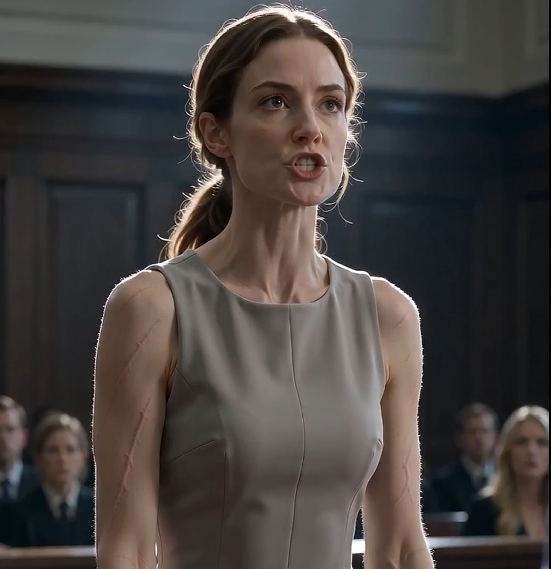
I wiped the flour off my hands again, leaning on the counter, curious, but wary.
I’d had enough propositions to last a lifetime.
Enough “once in a lifetime opportunities.”
Enough lies.
Enough drama.
I just wanted to bake my bread, go home to my daughter, be left alone.
“What kind of proposition?” I said, keeping my voice neutral.
She opened the leather folder, sliding a stack of papers across the counter to me.
“After the government seized Langford and sold off all the assets,” she said, “the employees were left with nothing. No jobs. No pensions. No severance. Nothing. Two thousand people, many of whom had worked there for thirty, forty years, their whole lives. They lost everything. Just like you did. But they never blamed you. They knew you had no idea what your father was doing. They knew you’d tried to do good. To build hospitals. To give raises. To reopen the factories. They remembered. And they want to try again. To build a new company. A new Langford. One that does only good. No secrets. No lies. No dirty money. Just the way you promised. And they want you to run it. As CEO. Again.”
I stared at her, shocked.
“Run it?” I said. “But there’s no money. No factories. No offices. Nothing. How—”
“We raised the money,” she said, smiling. “Two thousand employees. Every one of them put in what they could. Some put in five dollars. Some put in their life savings. We got donations from all over the country. From the girls your father’s ring hurt, who heard what you tried to do. From customers. From strangers. From Marcus Cole, who donated every penny he had left after he got out of prison. Total? One hundred and twenty million dollars. Enough to buy back the main factory. The downtown office building. Enough to hire everyone back. Enough to start over. Clean. Honest. Ours.”
I flipped through the papers.
The list of donors.
Thousands of names.
Small amounts.
Five dollars.
Ten dollars.
Fifty dollars.
All adding up.
All for us.
For a new Langford.
A better one.
“The only condition?” she said. “It has to be employee-owned. Every single person who works there gets a share. No more rich CEOs making a hundred times what the workers make. No more board members getting rich while everyone else struggles. We all own it. We all profit. We all decide. Together. And you get one share, same as everyone else. Same salary as the newest employee on the line. We know you don’t care about the money. We know you just want to do good. That’s why we want you. Will you do it, Iris? Will you help us build something good? Something real? Something we can all be proud of?”
I thought about it.
For a long time.
I thought about my father.
About the evil he’d done.
About the legacy of pain he’d left behind.
I thought about Lily.
About the kind of world I wanted her to grow up in.
A world where good people worked together.
Where everyone got a fair shot.
Where you didn’t have to lie or cheat or hurt people to succeed.
Where the mistakes of the past could be fixed.
Where something good could grow out of something terrible.
I thought about the two thousand employees who’d lost everything.
Who’d trusted me.
Who still trusted me.
I looked up at Sarah.
And I smiled.
“Yes,” I said. “I’ll do it. But on one condition.”
“Anything,” she said.
“The first thing we build,” I said. “The first dollar of profit we make. It goes to the victims. All of them. Every last person my father hurt. Every girl. Every family. We set up a fund. We take care of them. For the rest of their lives. No exceptions. We don’t make a real profit for ourselves until every single one of them is taken care of. Clear?”
Sarah smiled, holding out her hand.
“Clear,” she said. “That’s exactly why we want you.”
I shook her hand.
It was done.
The next year was the hardest, most exhausting, most wonderful year of my life.
We bought back the old main factory.
The downtown office building.
Hired back every single employee who wanted to come back.
We started slow.
Making textiles.
Clothing for kids.
All ethically sourced.
All made by workers who were paid a living wage, who had good benefits, who owned a piece of the company.
Every decision was made together.
Every profit shared.
No secrets.
No lies.
Just hard work.
And good people.
Working together.
The first dollar of profit went to the victim fund.
The second.
The third.
Every dollar for the first six months.
We paid for medical care.
For therapy.
For college.
For houses.
For anything they needed.
Every last one of them.
And slowly, very slowly, we started to heal.
All of us.
The employees.
The victims.
Me.
Lily came to the factory every day after school.
Sat in my office, doing her homework, drawing pictures, running around the factory floor, talking to the workers, learning how the clothes were made, how the business worked, how everyone worked together, how everyone was equal.
She was eight years old now.
Confident.
Smart.
Kind.
Brave.
She’d stand on the factory floor and give speeches to the workers, telling them they were the best team in the whole world, that we were gonna change the world together, and everyone would cheer, and lift her up on their shoulders, and she’d laugh that big, bright laugh of hers.
She was my legacy.
Not the company.
Not the money.
Not the name.
Her.
And the good we were doing together.
A year to the day after we’d started the new Langford, we had a big party at the factory.
All the employees.
All the victims who wanted to come.
All the kids from the neighborhood.
Food.
Music.
Games.
Lily was running around with her friends, face painted like a butterfly, laughing, chasing Rosa, who was trying to get her to eat a hot dog.
I stood on the small stage, watching them, happy, content, at peace for the first time in my life.
Sarah came up beside me, holding two glasses of lemonade.
“Look at this,” she said, smiling out at the crowd. “Two thousand people. All working together. All making a good living. All helping each other. All because of you.”
I shook my head.
“Not because of me,” I said. “Because of all of us. I just said yes. You all did the hard work.”
She laughed, clinking her glass against mine.
“Still,” she said. “You’re the reason it all came together. You should be proud.”
I looked out at the crowd.
At Arthur Hale, sitting at a table with his daughter Victoria, both of them working for us now, Arthur running the foundation, Victoria running the new children’s clothing line, both of them happy, both of them proud to be part of something good.
At Elias, who’d left his big corporate law firm to work for us for a dollar a year, saying it was the best work he’d ever done, chasing his two little kids around the picnic tables.
At Marcus, out on parole, working in the shipping department, keeping his head down, working hard, making amends, coaching the kids’ soccer team on weekends, finally becoming the good man he’d always wanted to be.
At Rosa, finally catching Lily, tickling her, both of them laughing so hard they could barely breathe.
And at Lily.
My daughter.
My whole world.
The reason I’d fought.
The reason I’d kept going.
Through every scar.
Every lie.
Every betrayal.
Every loss.
She was happy.
She was safe.
She was loved.
More than anything in the world.
That was the victory.
That was the happy ending.
Not the company.
Not the money.
Not the revenge.
Just her.
Happy.
Healthy.
Loved.
Lily saw me watching her, broke free from Rosa, and ran to the stage, climbing up the steps, throwing her arms around my legs.
“Mommy!” she said, grinning up at me, her butterfly paint smudged. “Can I say something? To everyone? Please?”
I smiled, lifting her up, setting her on the edge of the stage so everyone could see her.
“Sure, baby,” I said. “Whatever you want.”
She turned to the crowd, putting her little hands around her mouth like a megaphone.
“HEY EVERYONE!” she yelled.
The crowd went quiet, smiling, watching her.
“I just wanted to say,” she said, her voice loud, clear, proud. “That my mommy is the best mommy in the whole world. And that we used to be sad. And bad people hurt us. But now we’re happy! And we have all of you! And we’re all family now! Right? And we’re gonna help everyone! Forever and ever! Thank you for being our family!”
The crowd erupted.
Cheering.
Clapping.
Crying.
Whistling.
Lily beamed, bowing like she’d just given the greatest speech in history, then turned to me, throwing her arms around my neck, squeezing tight.
“Did I do good, Mommy?” she whispered in my ear.
I held her tight, crying happy tears, kissing the top of her head, looking out at all the people we loved, all the people who loved us, all the people who’d become our family, not by blood, but by choice, by hard work, by choosing to be good, to be kind, to help each other, no matter what.
“You did perfect, baby,” I said. “Absolutely perfect.”
The sun was setting, painting the sky pink and orange, the music starting up again, everyone dancing, laughing, celebrating, the old factory full of light and life and love, nothing like the dark, evil place it had once been.
It was true what they say.
Happiness isn’t about money.
Or power.
Or legacy.
Or getting revenge on the people who hurt you.
It’s about the people you love.
The people who love you back.
The good you do in the world.
The second chances you give.
And the second chances you take.
I held Lily tighter, swaying to the music with her in my arms, knowing that whatever came next, whatever life threw at us, we’d face it together.
Stronger.
Braver.
Better.
Together.
Forever and ever.
Just like she’d said.
May you like
The end.
```