PART 2: Discover the rest of the story in the comments section.
The kitchen remained silent. No one moved. No one spoke. Alejandro stood over the table, slowly turning page after page. With every document he read, the color drained further from his face. I had seen my husband angry before. I'd seen him frustrated. Exhausted. Heartbroken. But I had never seen this expression. It was the look of a soldier uncovering an enemy.
Methodical. Focused. Dangerously calm. "What is it?" I asked quietly. For several seconds, he didn't answer. Then he held up a document. "Did you ever meet with Dr. Peterson?" I frowned. "No." He looked at another paper. "Did you ever report suicidal thoughts?" My heart stopped. "What?" "Did you?" "Of course not!" Alejandro's jaw tightened. The document in his hand was.
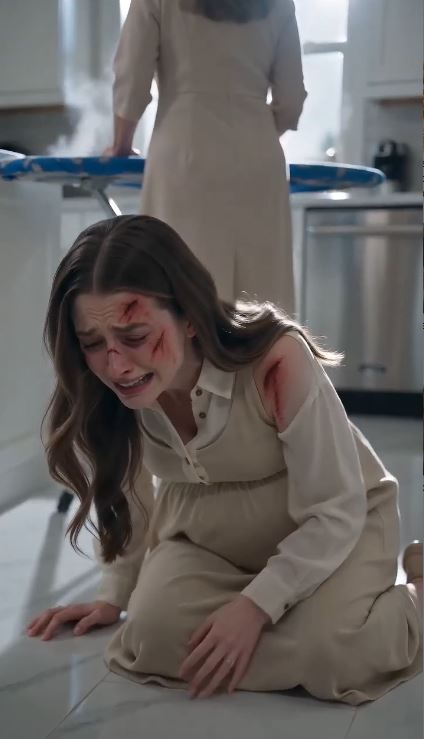
The document in his hand was a psychiatric evaluation. According to the report, I suffered from severe depression. Paranoia. Emotional instability. Potential risk to a child. Every word was a lie. A complete fabrication. Yet the paperwork looked official. Signed. Stamped. Filed. My stomach turned. "Who wrote that?" Alejandro slowly placed the document on the table. "No licensed psychiatrist." I stared.
"What do you mean?" He pointed toward the signature. "The license number is fake." Across the room, Margaret's breathing became noticeably heavier. The police dispatcher was still connected through Alejandro's phone. Everything was being recorded. Every word. Every reaction. Every lie. Alejandro picked up another folder. Inside were photographs. Dozens of them. I felt sick immediately. They were pictures of me.
Leaving grocery stores. Walking into medical offices. Sitting alone on park benches. Some had obviously been taken from far away. Without my knowledge. Without my consent. My hands started shaking. "Oh my God." Alejandro's face hardened. "This has been going on for months." The realization hit me like a truck. Every strange feeling. Every moment I thought I was being watched.
Every unexplained encounter. I hadn't imagined any of it. Someone really had been following me. And judging by Margaret's silence... She knew exactly who. A knock interrupted the tension. Police officers entered through the front door. Two uniformed officers. Then a detective. The detective immediately noticed the hot iron. The forged military notice. The stack of suspicious documents. And Margaret standing.
And Margaret standing alone near the kitchen counter. "This is quite a scene," he said quietly. Alejandro handed him the fake casualty notice. The detective read it. His expression changed instantly. "Where did this come from?" No one answered. The detective looked directly at Margaret. "Ma'am?" She swallowed. "I found it in the mail." The detective raised an eyebrow. "Interesting."
He flipped the document over. Then pointed at the military seal. "This seal hasn't been used in seven years." Silence. Absolute silence. The lie had collapsed immediately. The detective slowly nodded. "Let's try again." Margaret looked away. For the first time that night, she seemed genuinely nervous. The detective turned toward Alejandro. "Captain, we'll need statements from everyone." Alejandro nodded.
Then he handed over another document. And another. And another. The detective's expression grew darker with every page. Finally he stopped. "What exactly was she planning to do with these?" Nobody answered. But I suddenly knew. The answer had been sitting in front of me the entire time. The forged psychiatric evaluations. The canceled appointments. The photographs. The custody forms.
The fake military death notice. All connected. One horrifying plan. If Alejandro had truly died overseas... Margaret would have filed for emergency custody. She would have argued that I was mentally unstable. Unable to care for a newborn. Dangerous. Unfit. And because Alejandro would supposedly be dead... No one would be left to challenge her. The realization made me dizzy.
She wasn't trying to help. She was trying to take my baby. The detective seemed to reach the same conclusion. His eyes narrowed. "Ma'am, why were you attempting to obtain custody?" Margaret's mask finally cracked. Completely. Years of fake smiles. Fake concern. Fake kindness. Gone. She slammed both hands onto the counter. "Because she doesn't deserve that child!" The room froze.
Even the officers looked startled. Margaret pointed directly at me. "She trapped my son." My mouth fell open. "What?" "You heard me." Tears streamed down her face. Real tears this time. But they weren't tears of sadness. They were tears of obsession. Possession. Control. "You took him from me." The detective exchanged a glance with one of the officers. Alejandro simply stared.
As though he were looking at a stranger. Margaret continued. "He was supposed to stay with family." "Mom." "He was supposed to need me." "Mom." "But then you showed up." Her finger remained pointed at me. Accusing. Trembling. "You got pregnant." The room became painfully quiet. And then she said something that made everyone's blood run cold. "I was only trying."
"I was only trying to save my grandson." The detective frowned. "Save him from what?" Margaret laughed. A strange, broken laugh. Then she whispered: "From becoming hers." No one spoke. Because suddenly the situation felt much bigger than greed. Much bigger than custody. Much bigger than family conflict. This wasn't about legal documents anymore. This was obsession. And obsession was unpredictable. Dangerous.
The detective slowly stepped closer. "Mrs. Castillo, I need you to come with us." Margaret's eyes widened. Then something changed. A flash of panic. Real panic. For one brief second, she looked toward the hallway. Toward the staircase. Toward the second floor. Alejandro noticed it immediately. So did the detective. Everyone did. The glance lasted less than a second. But it was.
But it was enough. The detective followed her line of sight. "What’s upstairs?" Margaret's face went white. Nobody answered. The detective turned to one of his officers. "Check it out." The officer headed upstairs. The rest of us waited. Thirty seconds. One minute. Two minutes. Then we heard him shout. "Detective! You need to see this." The officer sounded shocked. Terrified.
The detective hurried upstairs. Alejandro followed. I remained frozen in the kitchen. My heart pounding. Wondering what could possibly be worse than everything we'd already discovered. Three minutes later, Alejandro returned. His face was pale. Completely pale. The detective came down behind him carrying a large plastic storage box. Inside were hundreds of photographs. Baby clothes. Medical records. Ultrasound copies.
A nursery plan. A birth certificate application. And one item that made my blood run cold. A framed photograph. Not of Margaret. Not of Alejandro. Of me. With my face scratched out. Repeatedly. Violently. Alejandro stared at the box. Then at his mother. And in a voice barely above a whisper, he asked: "How long have you been planning this?"
Margaret said nothing. But the answer was already sitting inside that box. For much longer than anyone had imagined. And the detective had just uncovered evidence that could turn this custody dispute into something far more serious.
PARYT 2 : The Truth Unveiled
Part 2: The Truth Unveiled
"Where did you get this?" he asked, his voice trembling as he gripped the photograph. The boy, Leo, stared into the eyes of the girl in the picture—the same girl, now weeping at his feet. The crowd on the stairs went deathly silent; the bully, Sarah, stood frozen, her malicious grin replaced by a mask of sheer terror. She knew, and he knew, that this secret would shatter the life they had constructed.
Leo helped her up, his touch gentle as he ignored the gasps echoing through the hallway. "I didn't steal it," she sobbed, clutching her prosthetic leg. "I found it in the archives. I knew... I knew about the accident. I knew I had to tell you." The air felt heavy, suffocating, as students huddled closer, hungry for the scandalous truth behind the girl who had always been the school's punching bag.

"You're lying!" Sarah shrieked, breaking the silence with a desperate, high-pitched scream. She lunged forward, trying to snatch the photo from Leo’s hand, but he pushed her back with a cold, piercing gaze. "You didn't just bully her, Sarah," he whispered, his voice dangerously low. "You knew all along that she was the one who pulled you from that burning wreckage six years ago."
The hallway seemed to tilt. Every student gasped, shock rippling through the crowd like electricity. The girl, Lily, wiped her tears, her eyes flashing with a sudden, painful strength. "I never told anyone," she said, her voice steadying. "I didn't want a reward. But you... you used my silence to make my life a living hell. You used the very person who saved your life as your outlet for hate."
Sarah backed away, stumbling, the arrogance draining from her face. She looked for support, but her former "friends" stepped back, their faces twisted in disgust. She was alone, caught in the snare of her own cruelty, while Lily—the girl with the prosthetic leg—suddenly looked like the strongest person in the room. Leo turned to Lily, taking her hand. "The truth is out, Lily. And it’s not ending here."
He turned back to the crowd, pulling out his phone. The screen flickered with a recorded video—the surveillance footage from moments ago, capturing Sarah’s malicious shove. "This isn't just about the past," Leo declared, his voice echoing off the concrete walls. "This is about the present. And justice is long overdue." The school bell rang, but no one moved. The story had changed forever, and Sarah’s nightmare was just beginning.
Full Story : A nightmare at the laundromat.
The gun touched Norah Hale’s forehead before she could stop shaking.
It was black, heavy, and cold enough to feel alive.
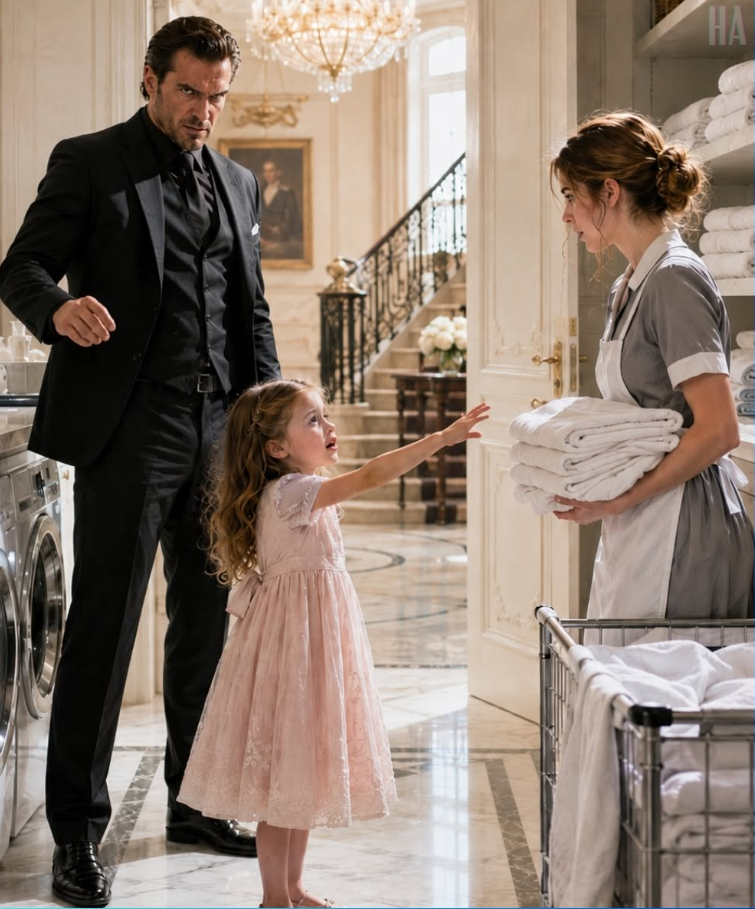
The man holding it stood in the doorway of the laundry room with rain dripping from his black suit and death sitting calmly in his pale gray eyes. Behind him, armed men filled the aisles between the humming washers, their weapons raised over rows of spinning glass doors.
Norah knelt on wet tile with a four-year-old girl locked against her chest.
The child had not made a sound through the crash, the gunfire, the running, or the blood splattered across the sleeve of her little white coat. She had only clutched Norah’s faded blue work apron with both tiny fists.
“Give me my daughter,” the man said.
His voice was soft.
That made it worse.
Norah tightened one arm around the child.
“She ran to me,” she whispered. “I saved her.”
The gun pressed harder.
Norah closed her eyes.
Then the child moved.
One small hand slipped from Norah’s apron and reached toward the barrel.
“Don’t,” the little girl whispered.
The entire laundry stopped breathing.
The man froze.
The girl turned her tear-streaked face up to him and spoke again, in the first real words anyone in his house had heard from her in a year.
“Don’t shoot Mama.”
The gun lowered one inch.
Then another.
And the most dangerous man in New York stared at Norah Hale as if she had just opened a grave he had spent a year trying to keep sealed.
Three minutes earlier, Norah had been counting quarters under the flickering sign of Bellamy Wash & Fold.
The sign outside buzzed in the rain, half the letters dead. Bellamy Wash stayed open twenty-four hours because people with clean lives never understood how often dirty ones needed washing at three in the morning.
Norah worked the night shift alone.
She liked it that way.
No customers asking why she looked tired. No manager reminding her to smile. No men staring too long while she folded other people’s sheets. Just washers, dryers, steam, detergent, and the steady rhythm of work.
She had been mending the torn cuff of a rich man’s black wool coat when thunder rolled over the block.
Her needle paused.
The coat was too fine for this neighborhood. Italian wool, hand-finished seams, a hidden label stitched inside the lining with initials instead of a name.
D.B.
People like that did not come to Bellamy.
Their drivers did.
Norah pushed the coat aside and counted the cash drawer again.
Eighty-three dollars.
Enough to keep the lights on at her rented room for one more week, if Mrs. Pike did not raise the rent again. Her mother would have told her to stop worrying. Her mother had said a lot of hopeful things before the hospital took her breath, then her apartment, then everything Norah had left except a sewing tin and a grief she could not outrun.
The bell over the front door gave one weak jingle.
Norah looked up.
No one entered.
Outside, headlights skidded across the rain-slick glass.
Then something hit the curb with a force that shook the dryers.
Norah dropped the quarters.
A black SUV spun into the street outside the laundry. Its side crumpled inward. A second vehicle slammed it again, pushing it toward the row of parking meters. Men in dark coats poured out through the rain.
Gunfire cracked.
Not movie gunfire.
Not distant.
Real gunfire, flat and ugly, breaking windows two doors down.
Norah threw herself behind the folding counter. A stack of clean towels spilled over her shoulder.
She should have stayed down.
She should have crawled to the back exit and run.
Then the rear door of the black SUV opened.
A little girl fell out onto the wet street.
She was tiny. Four, maybe five. Her white coat was soaked through. One patent leather shoe was missing. She held a cloth rabbit by one ear and stood in the rain without screaming while a man turned his weapon toward her.
Norah did not think.
Thinking was for people with time.
She grabbed the nearest rolling laundry cart, the big steel kind with canvas sides and a bent front wheel, and shoved it hard through the open doorway.
The cart hit the gunman at the knees.
His shot went wild, cracking the glass above Norah’s head.
Norah ran straight into the rain.
“Move!”
The child did not move.
Of course she didn’t.
She was frozen so completely that even fear had failed her.
Norah scooped her up with one arm. The girl weighed almost nothing, a bundle of wet wool and bones and terror. Norah shoved the cart between them and the gunman, then kicked the front wheel sideways. The cart tipped canvas-first, spilling white towels across the sidewalk like a sudden wall.
Another shot tore through the laundry sign.
Norah ran.
The girl clung to her apron.
Not her neck.
Not her shirt.
The apron.
Norah burst back into Bellamy Wash and slammed the glass door. The lock was a flimsy thing meant to keep out drunk college kids, not armed men. She dragged a steel garment rack across the entrance and hooked its wheel under the door handle.
The child still had not cried.
“Hey,” Norah whispered, breathing hard. “Look at me.”
Huge brown eyes lifted to hers.
“I’m Norah. We’re going to hide.”
No answer.
“That’s fine. You don’t have to talk.”
A body struck the door from outside.
The rack buckled.
Norah grabbed the child and ran past the washers, past the dryers, past the sign that said Employees Only.
In the back room, industrial steam rose from the pressing station. Blue plastic laundry bags hung from hooks. A row of drying racks formed a narrow maze around the old service corridor.
Norah shoved the child behind a stack of folded hotel sheets.
“Stay under this.”
The girl caught her apron again.
Norah swallowed.
“I know. I know, sweetheart. But if they see both of us standing, we both lose. Hold your rabbit. Hold your breath if you can.”
The girl stared.
Norah pulled off her own cardigan, wrapped it around the child, then tipped a basket of towels over the hiding place. From the outside, it looked like another messy pile in a failing laundry.
The front door gave way.
Boots moved through the shop.
Norah reached for the nearest thing her hand knew.
A steam iron.
It was old, heavy, and hot enough to take wrinkles out of hotel linen in one pass.
The first gunman came through the plastic curtain.
Norah swung the iron with both hands.
It hit his wrist with a dull crack. His weapon clattered under the folding table. He cursed and grabbed for her.
Norah yanked the steam lever and drove a white blast into his face.
He screamed.
She kicked his knee.
He went down into a bin of damp uniforms.
The second man reached the doorway before she could run.
Then the entire front of the shop erupted with a different kind of violence.
Short commands.
Controlled shots.
Glass breaking.
Men falling.
Norah backed toward the towel pile, holding the iron like a weapon, and hating that her hands knew how to shake only after the danger had already arrived.
The plastic curtain moved.
A man stepped through.
Not the shooter.
Worse.
He wore a black suit cut perfectly for his body and ruined by rain. He was tall, broad-shouldered, and beautiful in the way storms were beautiful from a locked room. His black hair was wet, his jaw shadowed with stubble, his eyes pale enough to look almost silver beneath the fluorescent lights.
Norah did not know his name yet.
She knew power when it entered a room.
His gaze moved once.
The burned man on the floor.
The missing gun.
The tipped towel pile.
Norah with the iron.
His weapon rose.
“Where is she?”
CHAPTER 2 — The Whisper That Changed Everything
CHAPTER 2 — The Whisper That Changed Everything
"Don't touch that inhaler!"
Paramedic Davis's voice cracked through the room like thunder.
Luke froze.
For just a fraction of a second.
Then his hand continued moving.
"I was only trying to help," he said, forcing a laugh.
But Davis was already there.
In three long strides, he placed himself between Luke and the kitchen counter, one hand stopping Luke's wrist before he could reach the inhaler.
"No."
The word wasn't loud.
It didn't need to be.
The female paramedic never looked up from Addie.
"Oxygen saturation seventy-nine," she called. "We're moving. Now."
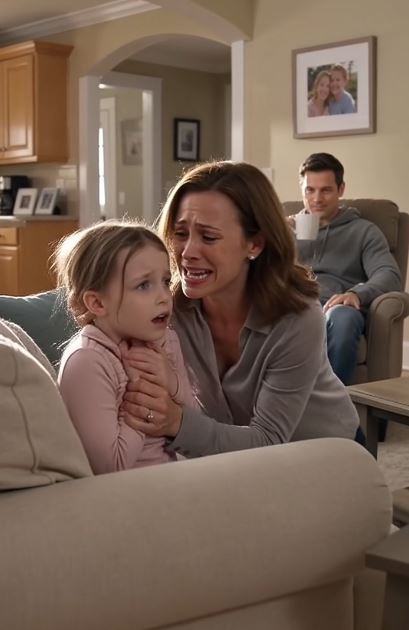
She lifted Addie gently while securing the oxygen mask.
My daughter looked so impossibly small.
"M-Mommy..."
"I'm here."
I kissed her forehead.
"I'm not leaving you."
As they hurried toward the front door, Davis stayed behind just long enough to look directly at Luke.
The two men stared at each other.
Neither blinked.
Then Davis spoke.
"You haven't changed."
Luke's face lost every trace of color.
"You've got the wrong person."
"I don't think I do."
My heartbeat pounded so loudly I barely heard the ambulance doors slam outside.
"What are you talking about?" I asked.
Davis didn't answer immediately.
Instead, he watched Luke with the kind of caution people reserve for loaded weapons.
Then he turned back to me.
"I know your husband."
Luke interrupted instantly.
"No, you don't."
"I absolutely do."
Silence.
It stretched until even the refrigerator seemed to stop humming.
Davis lowered his voice.
"My name is Mark Davis."
He swallowed once.
"Eight years ago I worked as an EMT in Colorado."
My stomach tightened.
"I responded to a call involving him."
Luke barked a laugh.
"This is ridiculous."
"It wasn't ridiculous for the four-year-old little boy who almost died."
Everything inside me stopped.
"What?"
Luke's eyes flashed toward me.
"He's lying."
But Davis kept speaking.
"There was a child."
"A little boy."
"He'd suffered a severe allergic reaction."
"He wasn't given his EpiPen."
The room suddenly felt too small.
Too hot.
Too impossible.
Davis continued carefully.
"The boy survived."
"But investigators believed someone intentionally delayed treatment."
My mouth went dry.
"What happened?"
"The evidence wasn't enough for criminal charges."
He looked directly at Luke.
"But child protective services removed the boy from the home."
Luke exploded.
"That's enough!"
His coffee mug hit the floor.
Ceramic shattered across the hardwood.
"You don't know anything!"
"I know exactly what I saw."
Davis never raised his voice.
"I also remember what you told the responding officers."
Luke's breathing grew heavier.
"What... did he say?" I whispered.
Davis hesitated.
Then answered.
"He said the child needed consequences."
The exact same words.
The room spun around me.
She needed to be taught a lesson.
Consequences.
Lessons.
The phrases fit together like pieces of a nightmare I had never known existed.
I slowly turned toward Luke.
"You told me your first marriage ended because your ex-wife cheated."
"It did."
"You told me you never had children."
"I don't."
Davis interrupted quietly.
"That's not true."
Luke pointed toward the front door.
"Get out of my house."
"This isn't your priority anymore," Davis replied.
"The little girl is."
Outside, another siren echoed through the neighborhood.
Not another ambulance.
A police cruiser.
I frowned.
"I didn't call the police."
Davis shook his head.
"I did."
Luke's head snapped toward him.
"You had no right."
"When I see a child whose life may have been deliberately endangered, I have every right."
The front door opened.
Two uniformed officers stepped inside.
One of them walked directly toward Davis.
"You the reporting medic?"
"Yes."
"What have we got?"
Davis spoke calmly.
"Five-year-old female."
"Respiratory distress."
"Possible intentional withholding of prescribed medication."
"And..."
He glanced once more at Luke.
"...possible connection to a prior child endangerment investigation in Colorado."
The officers exchanged quick looks.
Luke laughed again.
Too loudly.
Too fast.
"This is insane."
"My wife knows me."
Every eye turned toward me.
I realized I couldn't remember the last genuine smile I'd seen from him.
Only smirks.
Corrections.
Criticism.
Control disguised as patience.
Little things.
Telling Addie she cried too much.
Making her sit alone after tiny mistakes.
Insisting she was "too attached" to me.
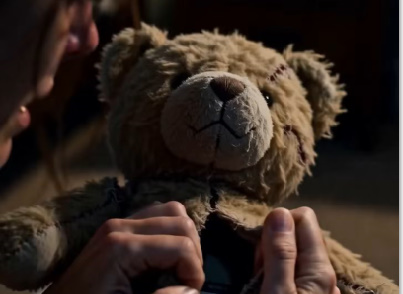
Hiding her favorite stuffed rabbit because "she needed to grow up."
At the time, each incident had seemed small enough to explain away.
Together...
They formed something monstrous.
One officer spoke gently.
"Ma'am, we'd like to ask you a few questions."
"I need to go with my daughter."
"You absolutely should."
"We'll follow up at the hospital."
Luke took a step toward me.
"Hannah."
His voice softened instantly.
The same gentle tone he'd used when neighbors were watching.
"Don't let strangers poison your mind."
I stared at him.
For the first time in three years...
I noticed there wasn't a single tear in his eyes.
Not one question about whether Addie would survive.
Not one request to ride in the ambulance.
Only concern about what I might believe.
The officer quietly shifted between us.
"I think it's best if you give your wife some space."
Luke clenched his jaw.
"You can't keep me from my family."
"No."
The officer answered evenly.
"But for tonight, we're asking you to remain here while we gather information."
For one terrifying second, I thought Luke might run.
Or fight.
Instead...
He smiled again.
Slowly.
Coldly.
"Fine."
"I've done nothing wrong."
I turned and ran out the door toward the waiting ambulance.
Inside, Addie lay surrounded by machines that beeped with frightening urgency.
The female paramedic adjusted the oxygen flow while a pediatric nurse started an IV.
My little girl reached weakly toward me.
I grabbed her tiny hand.
"I'm here, sweetheart."
She squeezed my finger with almost no strength.
Then, through the oxygen mask, she whispered six words that shattered whatever remained of my old life.
"He said..."
She struggled for breath.
"...not to tell you why."
The ambulance doors slammed shut.
And as we pulled away from the curb, I looked through the rear window.
Luke stood alone in the driveway.
Watching us leave.
May you like
Still smiling.