Chapter 6
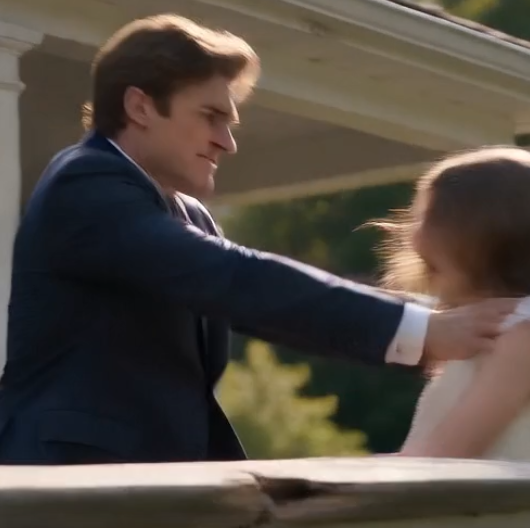
I got out of the hospital a week after the preliminary hearing.
Rita said I was making amazing progress—I could feel my legs all the way down to my ankles now, and I could wiggle my toes on command.
I still couldn’t walk, not yet, but I was getting there.
Lauren, Mason, and I moved up to the lake house the day I was discharged.
It was even more beautiful than I remembered.
A big white house with a wraparound porch, sitting right on the edge of a crystal clear lake, surrounded by pine trees.
The air smelled like pine and water and summer.
Mason ran out of the car as soon as we pulled up, yelling and chasing a butterfly across the big green lawn.
“Look, Mommy!” he yelled. “It’s so big! Can we go swimming? Can we get the dog now?”
Lauren laughed, grabbing his suitcase from the trunk.
“Slow down, bug,” she said. “We gotta get unpacked first. Then we can go swimming. And we’ll go to the animal shelter this weekend, I promise.”
Sarah and Rita helped me get inside, carrying me up the front steps and setting me in a big soft armchair by the window overlooking the lake.
Eli had already had the house cleaned and stocked with food, and he’d hired a part-time nurse to help me with my exercises during the day while Lauren got settled.
“This place is amazing,” Sarah said, walking out onto the porch and looking out at the lake. “You could stay here forever and never leave.”
“I just might,” I said, smiling.
That weekend, we kept our promise to Mason.
We drove to the local animal shelter, looking for the biggest, fluffiest dog we could find.
We found him in the last cage at the end of the hall.
A huge golden retriever, at least a hundred pounds, with soft fluffy fur and the saddest brown eyes I’d ever seen.
His name was Max.
He’d been surrendered by his previous owner when they moved and couldn’t take him with them.
When Mason walked up to the cage, Max sat up, his tail thumping so hard against the concrete floor the whole cage rattled.
Mason reached his little hand through the bars, and Max licked it gently, his big eyes closing in happiness.
“This one,” Mason said, turning to me and Lauren, his face determined. “This is our dog. I know it. He’s gonna protect us. Look how big he is!”
Lauren looked at me, raising an eyebrow.
“He is pretty big,” she said. “You sure we can handle a hundred-pound dog?”
I looked at Max, who was now lying down, pressing his big head against the bars so Mason could scratch his ears.
“Absolutely,” I said. “He’s perfect.”
We adopted Max that day.
He rode home in the back of the SUV with Mason, his head out the window, his tongue flapping in the wind, looking like the happiest dog in the whole world.
Life at the lake house settled into a rhythm.
Every morning, Rita came over, and I did my physical therapy for four hours straight.
I learned to stand up, holding onto parallel bars, my legs shaking like jelly.
I learned to take one step. Then two. Then ten.
It was slow, painful work.
Some days I fell, and I’d lie on the floor crying, convinced I’d never get it right.
But Max was always there, lying down beside me, his big head on my lap, licking the tears off my face until I laughed.
Mason was always there too, cheering me on, holding my hand while I practiced, telling me I was the bravest person he knew.
Lauren got a job at a local graphic design firm, working part-time so she could be home with Mason in the afternoons.
She was happier than I’d ever seen her—no more flinching at loud noises, no more hiding her bruises under long sleeves, no more looking over her shoulder waiting for Tyler to jump out and hurt her.
She started painting again, something she’d given up years before when Tyler told her it was a waste of time.
She hung her paintings all over the house—bright, colorful pictures of the lake, of Max running through the grass, of Mason laughing.
Sarah drove up every weekend, bringing pizza and bad movies, staying up late with us talking and laughing.
She and Lauren became fast friends, bonding over their shared hatred of Tyler and their love of terrible 90s rom-coms.
Eli came up once a month, bringing updates on the company and the upcoming trial.
The company was doing better than ever, he said.
The employees had all rallied around me, thrilled that Tyler was gone.
They’d spent years dealing with his rages, his thefts, his constant interference.
Now that I was in charge, they were free to do their best work.
Sales were up 30% in just three months.
We were launching a new line of jewelry, designed by the head designer, a woman named Maria who’d worked for Grandma for 20 years.
It was called the Rose Collection, in Grandma’s honor.
Every piece had a tiny hidden rose on the back, just like Grandma used to put on all her favorite designs.
I went down to the company headquarters once a week, in my wheelchair at first, then on crutches, then with just a cane.
The employees cheered when I walked in the door the first time without my wheelchair.
Maria hugged me, crying, telling me Grandma would be so proud.
For the first time in my life, I felt like I belonged somewhere.
Like I was good at something.
Like I was enough, just as I was.
Tyler’s trial was set for six months after the preliminary hearing.
Eli said it would be an easy win.
The evidence was too strong.
Tyler’s lawyer had already approached him twice, offering plea deals—five years, then seven, if I’d just agree to drop the most serious charges.
I said no both times.
Tyler had tried to kill me.
He’d abused his wife for years.
He’d terrorized his own son.
May you like

He didn’t get a deal.
He deserved to pay for every single thing he’d done.