Chapter 2
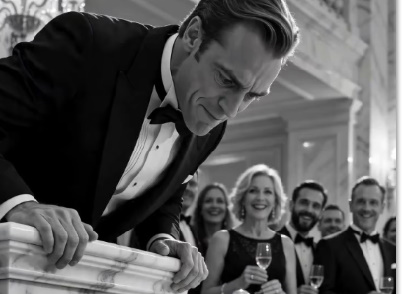
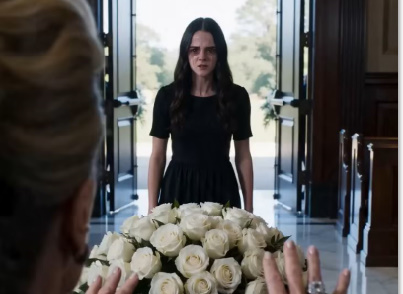
The lobby erupted.
Whispers exploded like firecrackers, bouncing off the marble walls.
“Clara? He had a daughter?”
“Did she say her mom was dead?”
“Is that girl his granddaughter?”
I didn’t look at any of them.
I kept my eyes locked on Arthur.
His face was a mask of shock, his mouth slightly open, like he couldn’t breathe.
He took one step toward me, then stopped, like he was scared to get too close.
“Clara,” he repeated.
His voice was cracked, broken, nothing like the arrogant boom he’d used five minutes before.
“Clara is…?”
“Dead,” I said.
I stood up from the piano bench, my legs shaking a little.
I swung my backpack off my shoulder and unzipped the front pocket.
I pulled out the tattered sheet music, its edges frayed, its pages covered in Mom’s scribbled notes.
I held it up.
The cover had Arthur’s name scrawled in messy, young handwriting, dated thirty years ago.
“She kept this,” I said.
“Every single day.
She waited for you.
Every birthday, every Christmas.
She played your song until her fingers ached.”
Arthur stared at the sheet music like it was a ghost.
He reached out a shaking hand, then pulled it back, like he didn’t deserve to touch it.
“That’s impossible,” he whispered.
“Clara’s mother… she wrote me.
She said Clara didn’t want anything to do with me.
She said I should stay away.”
I laughed.
It was a sharp, bitter sound.
“Mom never wrote you anything.
She wrote you hundreds of letters.
She sent them to this hotel, every year.
They all came back unopened.”
I stepped toward him, the sheet music still held tight.
“You left her.
You never came back.
And when she got sick, when we lost the apartment, when we had nothing?
You were here, drinking champagne, making bets with homeless girls.”
Two security guards pushed through the crowd, their faces hard.
“Mr. Hale,” one said.
“Should we remove her?”
Arthur didn’t look at them.
He didn’t blink.
He just kept staring at me, at the sheet music, at the scar on my left wrist I’d gotten when we’d been evicted and I’d fallen through a broken window.
“No,” he said.
His voice was louder now, firm.
“Leave us.
Everyone.
Clear the lobby.”
The guests hesitated, then started moving, their whispers still loud.
The security guards nodded and herded them toward the ballroom, the doors clicking shut behind them.
The lobby was quiet again, just the two of us, the piano still humming faintly with the last note.
Arthur walked slowly toward me.
He stopped a foot away, close enough that I could smell his expensive cologne, see the lines around his eyes that hadn’t been there ten minutes before.
“Clara died of what?” he asked.
His voice was so quiet I almost didn’t hear it.
“Lung cancer,” I said.
“Three months ago.
We couldn’t afford the treatment.
We lost the apartment two months before that.
I’ve been on the streets since.”
I stuffed the sheet music back into my backpack.
“Your hundred dollars won’t fix that.
Your warm bed won’t bring her back.
I just wanted you to know.
I wanted you to hear the song.
I wanted you to feel what she felt, every single day you were gone.”
I turned to leave.
My hand was on the lobby door, the cold metal seeping through my glove, when he spoke again.
“Wait.”
I didn’t turn.
“Please.”
That one word was so raw, so full of pain, I stopped.
I looked over my shoulder.
He was standing by the piano, his shoulders hunched, like all the arrogance had been drained out of him.
“Stay,” he said.
“Not for the bet.
Not out of pity.
I have a thousand questions.
You have every right to hate me.
But please.
Stay the night.
We can talk.
I want… I need to know everything about her.”
I stared at him for a long time.
The wind howled outside, rattling the glass doors.
My feet were frozen.
My stomach was empty.
I thought of Mom’s voice, soft in my ear, telling me to always give people a second chance if they were brave enough to ask.
“One night,” I said.
I turned back to face him.
“No money.
No fancy gifts.
Just the truth.
If you lie to me even once, I’m gone.
And you’ll never see me again.”
He nodded so fast his hair fell over his forehead.
“Deal,” he said.
“Follow me.
I’ll have someone bring up food.
And blankets.
Whatever you need.”
He started toward the elevator.
May you like
I followed, my boots still leaving faint prints on the marble.
I didn’t know it then, but that walk to the elevator was the first step of the rest of my life.