Chapter 1
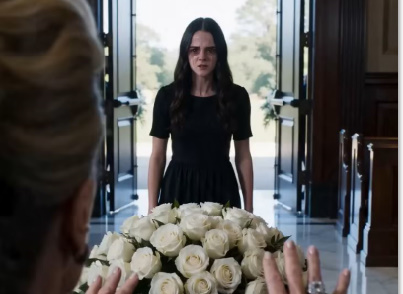
The scent of white roses hit me the second we stepped through the wedding venue doors.
String music curled through the air, soft and warm.
Champagne towers glinted under crystal chandeliers, and every surface looked like it had been polished until it hurt.
My eight-year-old son Ethan bounced on his heels beside me.
He’d ironed his tiny white dress shirt himself that morning, singeing a tiny hole at the cuff that he’d tried to hide with a sticker of a dinosaur.
He’d practiced his toast for his Aunt Melissa a hundred and twelve times—he’d counted—scrawling the words on a napkin until the ink ran.
In his other hand, he clutched a crumpled crayon drawing: Melissa in a puffy white dress, a crown on her head, a rainbow arching over her.
My ten-year-old daughter Sophie reached over and smoothed his collar for the tenth time that hour.
She wore the pale blue hair clip her father had given her the day he left, the one she only put on for days she thought mattered.
“Don’t spill anything,” she whispered to him. “Grandma Helen’s already watching us like we’re here to steal the silver.”
I glanced across the room.
My mother Helen stood by the head table, laughing too loud, her diamond earrings catching the light.
She hadn’t spoken to me in six months, not since I’d refused to let her take the kids for a month so she could “teach them some class.”
She’d only invited us to the wedding to make her family look complete for the photographer.
I knew it.
She knew it.
We’d just never said it out loud.
Our table was near the back, by the kitchen doors.
I pulled out Ethan’s chair first.
That’s when I saw it.
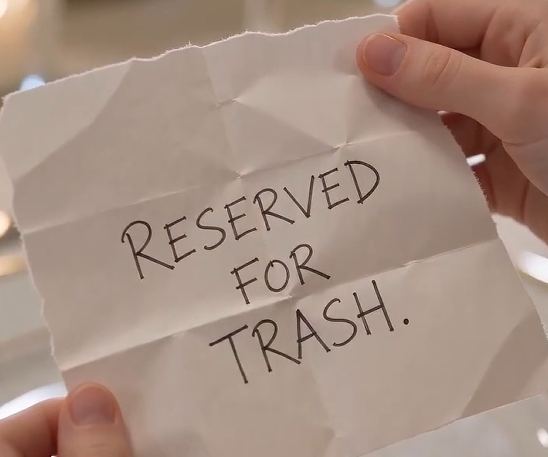
A folded white card, propped against his water glass.
I thought it was a name tag.
I flipped it open.
My blood turned to ice in my veins.
Printed in neat, black block letters: RESERVED FOR TRASH.
I stared at the words.
I waited for them to blur, to change, to make some kind of cruel sense.
They didn’t.
I waved over a waiter in a black vest, my hand so tight around the card my knuckles burned.
“What is this?” I asked, my voice so quiet only he could hear.
His face went bright red, all the way to the tips of his ears.
“Special request from the bride, ma’am,” he mumbled, and scurried away before I could ask anything else.
From across the room, Helen laughed.
It was that sharp, fake laugh she used when she wanted everyone to look at her.
“Oh, for heaven’s sake, Clara,” she called, loud enough for the three tables around us to turn. “Stop making a mountain out of a molehill. It’s just a joke.”
Melissa glided over in her wedding dress, the train sweeping behind her like a cloud.
She smiled that perfect, practiced smile she’d used since we were kids, the one that never reached her eyes.
“You didn’t actually take that seriously, did you?” she said, tilting her head. “Relax. It’s funny. You always did have a terrible sense of humor.”
Sophie’s fingers clamped around Ethan’s free hand so hard her nails dug into his skin.
I felt her whole body start to shake, small, sharp tremors that ran all the way up her arm.
“Mom,” she whispered, her voice cracking so bad I almost didn’t hear her. “Why would they write that about Ethan?”
Ethan said nothing.
He just stared at the card in my hand, his crayon drawing crumpling tighter and tighter in his fist.
He didn’t cry.
He just looked like he was trying to decode a language no one had ever bothered to teach him.
I looked straight at Melissa.
“Replace it,” I said.
No yelling.
No shaking.
Just three words, flat and final.
Melissa rolled her eyes so hard I thought they’d stick.
“Don’t be so sensitive,” she said. “It’s a wedding. People laugh. You’re just mad no one’s ever thought you were funny enough to tease.”
Helen nodded, still smiling, her eyes cold as glass.
“Honestly,” she said. “You’re embarrassing yourself. And my grandchildren. Do you want them to grow up as rude as you are?”
The room swirled around us—glasses clinking, someone giving a speech, applause that sounded like it was coming from a mile away.
But at our table, everything went dead still.
I reached down and took both of my children’s hands.
I gave them a small, steady nod, the same one I gave them when they had to get a shot, when the thunder was too loud, when their father didn’t call on their birthdays.
“Let’s go,” I said.
No yelling.
No scene.
Just us, turning our backs and walking out.
Behind us, I heard someone snort a laugh.
I heard Helen say, “She’ll be back in five minutes, groveling. She always does.”
We didn’t turn around.
We walked past the roses, past the chandeliers, past the photographer who called after us to wait for the family portrait.
We didn’t stop until we were buckled in the car, the doors locked, the venue shrinking in the rearview mirror.
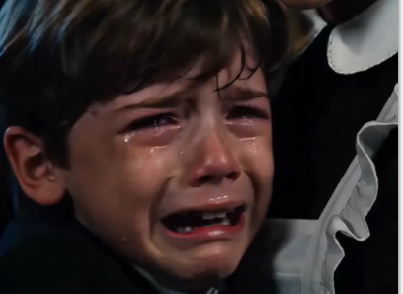
Ethan cried then, quiet, hiccuping sobs that shook his whole small body.
He held out his crumpled drawing, the princess’s crown smudged with tears.
“I worked so hard on it,” he said.
Sophie pulled him into her arms and didn’t say a word.
She just stared out the window, her jaw set, the blue hair clip slipping sideways in her hair.
I drove us home, my hands steady on the wheel, my mind already turning over plans I’d buried deep three years before.
Plans I’d promised myself I’d never use.
Plans that would burn every bridge Helen had ever built.
Three days later, my doorbell rang.
I wiped my hands on my jeans and walked to the door.
I opened it.
Marcus, my right-hand man at Voss Capital, stood on the step, a leather briefcase in his hand, his face grave.
“Ms. Voss,” he said, quiet enough that the neighbors couldn’t hear. “The final Langford Group acquisition files are ready. We move on your signal.”
I looked past him, at the quiet street, at the kids’ bikes lying on the lawn.
I thought of the card.
Of Ethan’s crumpled drawing.
Of Sophie’s shaking hand.
May you like
“Come in,” I said.
And I knew, in that single second, nothing would ever be the same for any of them again.