Chapter 4
I drove to the school so fast I ran two red lights, my hands shaking on the wheel, a thousand terrible scenarios running through my head.
Had Helen taken them?
Had she hurt them?
I skidded into the parking lot and ran inside, my heels clicking so loud the secretary looked up, alarmed.
“Where are they?” I gasped.
“Principal’s office,” she said, pointing down the hall.
I ran.
I burst through the office door.
Sophie was sitting on a chair, her face streaked with tears, her blue hair clip lying broken on the floor beside her.
Ethan was sitting next to her, his arm wrapped around her shoulders, his own eyes red.
The principal stood behind her desk, her face grave.
“What happened?” I said, dropping to my knees in front of Sophie, checking her for cuts, for bruises, for anything.
“Some boys in her class,” the principal said, her voice soft. “They were talking about an article that came out this morning. On the front page of the city paper.”
She handed me a newspaper.
I looked at the headline.
My blood turned to fire.
GOLD-DIGGING DAUGHTER TRIES TO STEAL BILLION-DOLLAR COMPANY FROM SICK, ELDERLY MOTHER.
Beneath it, a photo of me, taken outside the Langford building that morning, my face hard, my suit sharp.
The article was full of lies.
It said I’d abandoned Helen when she’d had cancer three years before (a lie—she’d refused to let me visit).
It said I’d been embezzling money from her for years (a lie).
It said I was an unfit mother, that I spent my nights partying instead of taking care of my kids (a lie).
And at the end, a quote from Helen, her voice full of fake tears: I love my daughter. I just wish she loved me more than she loves my money.
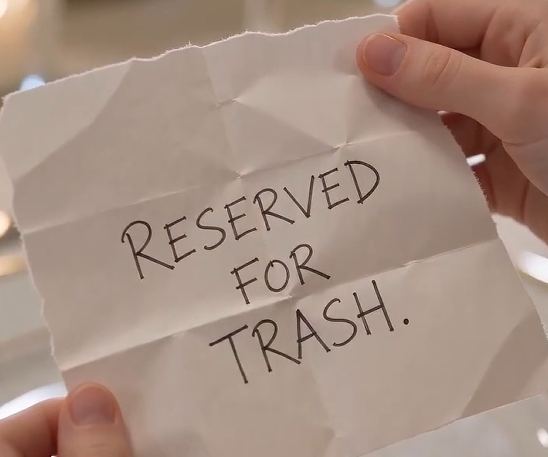
“The boys were calling Sophie names,” the principal said. “They were calling her… trash baby. Saying her mom was a thief. She got into a fight with one of them. She pushed him. He fell and scraped his knee.”
I looked at Sophie.
Her lip was swollen.
There was a scratch down her left cheek.
“I didn’t mean to push him,” she whispered, her voice breaking. “I just… he said Ethan was trash too. I couldn’t let him say that.”
I pulled her into my arms, holding her so tight I was afraid I’d hurt her.
Ethan crawled into my lap, wrapping his arms around both of us.
“It’s okay, Mom,” he said, his voice small. “We know it’s not true. Grandma Helen just made it up, right?”
“Right,” I said, my voice thick. “She made it all up.”
I thanked the principal, promised to talk to the kids about fighting, and led them out to the car.
On the drive home, Sophie was quiet, staring out the window, her broken hair clip clutched in her hand.
Ethan fell asleep in the back, his head lolled against the seat.
When we got home, I tucked Ethan into bed, then sat on the couch next to Sophie.
“Can you fix it?” she asked, holding out the hair clip, the two pieces of blue plastic separated.
I took it from her.
“I can try,” I said.
“I don’t care about the clip,” she said, her voice wobbly. “I care that everyone believes her. That everyone thinks you’re a bad person. That everyone thinks we’re trash.”
I pulled her close again.
“Listen to me,” I said, tilting her chin up so she was looking me in the eye. “What other people think doesn’t matter. What matters is what we know. We know I love you more than anything in the world. We know we work hard, and we’re kind, and we take care of each other. That’s not trash. That’s family. And no one, not Grandma Helen, not the boys at school, not the stupid newspaper, can ever take that away from us.”
She nodded, but I saw the doubt in her eyes.
The same doubt I’d carried for nineteen years, the quiet voice that whispered you’re not good enough, you’re trash, just like she said.
That night, after Sophie was asleep, I called Marcus.
“The article was Helen,” I said, no preamble. “She paid the editor. I want proof. And I want every single lie she told in that article torn apart, publicly, by tomorrow morning.”
“Already on it,” Marcus said. “I have the bank records from when you were sick—proof Helen refused to help you. I have the emails between her and the editor, negotiating the price of the article. I have the school records from when Sophie was little, proof you never missed a parent-teacher conference, never missed a doctor’s appointment. We’ll run it all on the front page of the business journal tomorrow. And we’ll leak the audio of Helen threatening to take the kids from you to every news station in the state.”
“Good,” I said. “And Marcus? I want the tender offer for Langford on every shareholder’s desk by the end of the week. Twenty percent above market value. I want this company. And I want Helen out.”
“Done,” he said.
The next morning, the business journal hit newsstands.
The headline was bigger than the city paper’s had been.
HELEN LANGFORD LIED: EVIDENCE SHOWS BILLIONAIRE ABANDONED PREGNANT TEEN DAUGHTER, LET HER STARVE WHILE SHE BUILT HER EMPIRE.
The article had everything.
The bank records.
The emails.
The audio of Helen screaming that she’d take my kids.
The photos of the tiny apartment I’d lived in when Sophie was a baby, the medical bills I’d paid off a dollar at a time.
Public opinion flipped overnight.
People were calling for Helen’s resignation.
Protesters gathered outside the Langford building, holding signs that said TRASH IS AS TRASH DOES and LEAVE CLARA’S KIDS ALONE.
Family members started calling me.
Uncle Ray, Helen’s younger brother, who’d always been the only one kind to me, called to say he was on my side, that he’d been trying to tell Helen for years she was too cruel.
Cousin Lila, Melissa’s best friend, called to say Helen was a monster, that she’d always known it.
Even some of the board members called, saying they were ready to vote Helen out as CEO.
Helen didn’t back down.
She called a press conference that afternoon, standing on the steps of the Langford building, her face streaked with fake tears, a team of lawyers beside her.
“Clara is not my daughter,” she said, her voice shaking for the cameras. “She is a stranger. A con artist. She stole my company using illegal means. I am filing a lawsuit today, to have her shares invalidated, to have her removed from the board, and to take custody of her two innocent children, to save them from the woman who is using them as pawns in her sick game of revenge.”
My phone rang ten minutes later.
It was the family court.
A judge had signed an emergency order.
Helen had filed for temporary custody of Sophie and Ethan.
And the judge assigned to the case?
Judge Margaret Carter.
May you like



Helen’s college roommate.
Her best friend for forty years.