Chapter 7

It was a Saturday in March. The regional spelling bee.
Lily had decided to compete, just like she’d said. She’d practiced every night for three months, James quizzing her, Clara making silly sentences to help her remember the hard words. She was nervous, but excited. Her smile was back, bright and wide.
We were all in the front row of the school auditorium—me, James, Mia, Clara, even Dr. Rao, who’d come to cheer her on. Lily waved at us when she walked on stage, her little hand shaking a little.
She made it to the final round. It was her against a 10-year-old boy from a school across town. The boy got his word wrong. It was Lily’s turn.
The announcer said the word. “Perseverance.”
Lily took a deep breath. She spelled it slow, steady, every letter perfect.
The crowd cheered. The announcer held up the trophy. Lily was the regional champion.
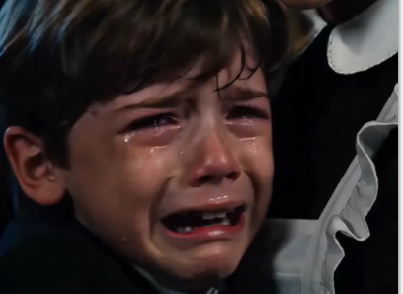
She ran off the stage, straight into our arms, laughing and crying at the same time. We were all crying, even James, who never cried. Clara held up a big sign that said “THAT’S OUR LILY!” so loud people turned to stare.
We were so happy, so caught up in the moment, that we didn’t see her at first.
She was standing by the exit, at the back of the auditorium. Margaret.
She was wearing a hoodie, her hair pulled down over her face, but I’d know her anywhere. She was staring at Lily, her face twisted with hate.
Mia saw her first. She grabbed Lily, pulling her behind her, her body tense.
“Dad,” she said, her voice sharp. “Look.”
James turned. His face went from joy to rage in half a second. He stepped in front of the girls, blocking them from view.
“Call the police,” he said to me, quiet. “Now.”
I pulled out my phone. But before I could dial, Margaret started walking toward us, fast.
People moved out of her way. They could see the anger rolling off her, the crazy in her eyes.
“You think you can get rid of me that easy?” she yelled, pointing at Lily. “You think a piece of paper from a judge stops me? That’s my granddaughter. She’s mine. You can’t keep her from me—”
Two police officers, who’d been stationed at the event for security, ran over. They grabbed her arms, holding her back. She fought, kicking, screaming, spitting, trying to get to Lily.
Lily was crying, hiding her face in my chest. Mia was holding her, shaking.
“You’re under arrest for violation of a protective order and stalking,” one of the officers said, reading her her rights. They cuffed her and led her out. She was still screaming, her voice echoing off the auditorium walls, until the doors slammed shut behind her.
The rest of the day was a blur. We gave statements to the police. We talked to the district attorney, who said this was the last straw. They were going to press felony charges. This time, Margaret wasn’t getting off with a warning.
We took Lily home. She was quiet, the whole drive. She held her new trophy tight, like it was a lifeline.
That night, she climbed into bed with us again.
“Is she going to come back?” she whispered.
I held her tight. James stroked her hair.
“No, baby,” he said. “She’s never going to hurt you again. I promise.”
The district attorney’s office moved fast. They charged Margaret with two felonies: aggravated stalking and violation of a protective order. Because she’d targeted a child, because she’d violated a court order in a public place, because of the long pattern of harassment, they were asking for prison time.
The trial was three months later. We didn’t have to testify this time. The security footage from the auditorium, the police reports, the judge’s restraining order, all of it was enough.
Margaret pleaded not guilty. She tried to say she’d had a mental break, that she didn’t know what she was doing. Her lawyer brought in a psychiatrist who said she had narcissistic personality disorder, that she wasn’t responsible for her actions.
But the jury didn’t buy it.
They found her guilty on both counts.
The judge sentenced her to 18 months in state prison, followed by five years of probation. As a condition of her probation, she had to complete a year of intensive mental health treatment. And the permanent restraining order was extended to 10 years. If she ever violated it again, she’d go back to prison for 10 years, no exceptions.
As the officers led her out of the courtroom, Margaret looked at James. For a second, the hate was gone. She just looked tired, old, broken.
“I’m sorry,” she said, quiet. So quiet only he could hear.
May you like


James didn’t answer. He just held my hand, held the girls close, and watched her go.
It wasn’t forgiveness. Not even close. But it was closure.