Chapter 6
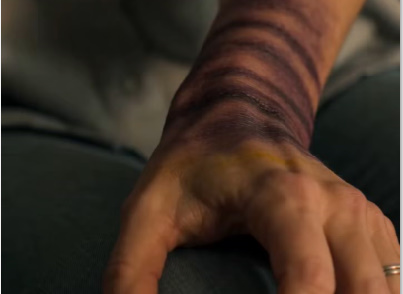
The permanent restraining order was a line in the sand.
But healing wasn’t a line.
It was a messy, slow, painful road.
One I had to walk one step at a time.
My lawyer filed for divorce the next day.
Served him the papers at work, in front of all his colleagues, just like she’d promised.
I wish I could have seen his face.
But I was too busy starting to put myself back together.
Dad insisted I go to therapy.
“Just try it,” he said. “For me. You’ve been carrying all this alone for so long. Let someone help you carry it.”
I found a therapist, Dr. Hale, a woman around my age with a soft voice and a couch that felt like a hug.
The first session, I sat there for 45 minutes and didn’t say a word.
Just cried.
She didn’t push.
Just handed me tissues, and said, “Whenever you’re ready. I’m here.”
The second session, I talked.
And talked.
And talked.
About the first time he hit me.
About the lies I’d told.
About the shame, the fear, the way I’d thought I deserved it.
About how I’d stayed because I didn’t want to be a failure, didn’t want people to talk, didn’t want to admit I’d made the biggest mistake of my life.
“Why do you think you stayed?” she asked, one session, leaning forward, gentle.
I thought about it.
For a long time.
“Because I thought love was supposed to hurt,” I said, quiet. “I thought if it was easy, it wasn’t real. I thought if I just tried harder, loved him more, was better, he’d change. And I was so scared. Scared he’d find me if I left. Scared no one would believe me. Scared I’d be alone forever.”
Dr. Hale nodded.
“That’s very common,” she said. “Abusers don’t just hit you. They break your confidence. They make you believe you can’t survive without them. That no one else will ever want you. That you’re lucky to have them, even when they’re hurting you. But none of that is true. You survived three years with him. You can survive anything. And you are so, so worthy of being loved the right way. Without fear. Without pain. Without lies.”
I cried when she said that.
No one had ever said anything like that to me.
Not even myself.
I started going twice a week.
Slowly, things started to shift.
I stopped flinching every time someone raised their hand.
I stopped apologizing for everything, for taking up space, for existing.
I started to believe that maybe—just maybe—I deserved good things.
Dad started coming to therapy with me sometimes.
For family sessions.
He cried the first time, told Dr. Hale how guilty he felt, how he wished he’d seen the signs, how he’d failed me.
“You didn’t fail me,” I said, holding his hand. “You saved me. The second you saw those bruises, you saved me. That’s all that matters.”
Dr. Hale helped us talk about it.
Helped dad let go of the guilt.
Helped me let go of the shame.
We were both healing.
Together.
A month after the hearing, I got a job.
At a small independent bookstore downtown, run by a woman named Mara who was also a survivor.
She’d seen my resume, called me in for an interview, and halfway through I’d told her everything.
I’d thought she’d never hire me.
Instead, she’d reached across the table, squeezed my hand, and said, “You start Monday. $18 an hour. We close at 6, no overtime, no exceptions. You deserve to go home and rest.”
I loved that job.
Loved the smell of old books and coffee.
Loved helping people find the perfect story.
Loved Mara, who became like a big sister to me, who brought me lunch every day, who never let me work too hard.
For the first time in years, I looked forward to getting up in the morning.
I made friends.
With the barista next door, who gave me free lattes.
With the high school kids who came in after school to study.
With a group of survivors Mara introduced me to, women who’d been through what I’d been through, who understood, who didn’t judge.
We met once a week for coffee, talked, laughed, cried, held each other up.
I wasn’t alone anymore.
I had a whole village.
The only blip was three months after the permanent order.
I was walking to work when I saw him.
Standing across the street, staring at me.
My blood ran cold.
I froze.
For a second I was that scared girl again, hiding bruises, walking on eggshells.
Then I remembered.
The permanent order.
The police.
Dad.
Mara.
My friends.
Me.
I was strong now.
I wasn’t that girl anymore.
I pulled out my phone, called the police, and stared right back at him.
Didn’t look away.
Didn’t flinch.
He saw me talking on the phone, saw the cops turning the corner, and ran.
They caught him two blocks away.
He spent 30 days in jail for violating the order.
When he got out, he left the state.
I never saw him again.
That night, I went home to dad’s.
Made us both dinner.
We ate at the kitchen table, talking about my day, about the books I’d sold, about the future.
Halfway through, dad stopped, looked at me, and smiled.
“You look different,” he said.
“Different how?”
“Happy,” he said. “Light. Like a weight’s been lifted off your shoulders.”
I thought about it.
He was right.
The weight was gone.
The fear was gone.
I was happy.
May you like
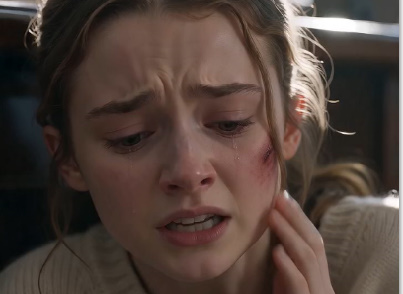
Truly, deeply happy.
And I knew, no matter what came next, I could handle it.