Chapter 7
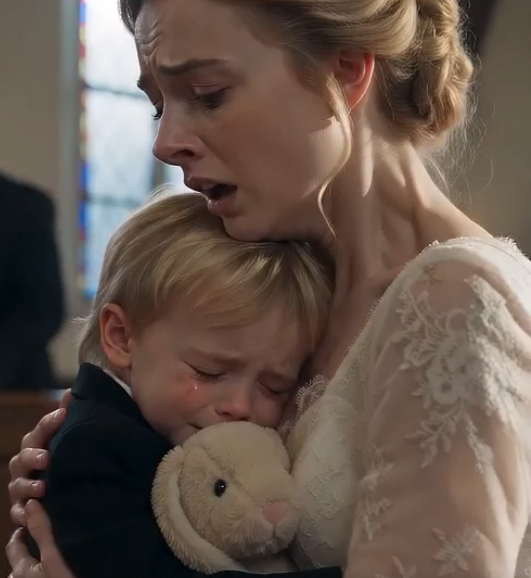
The church was full.
More full than I’d ever seen it. Word had spread about what had happened, about Jessica’s arrest, about Diane’s public apology. People from other churches had come, people from the community, even some reporters from the local paper—though the pastor had asked them to stay in the back and be respectful.
We walked in through the side entrance, so we wouldn’t have to walk through the crowd. Mrs. Henderson met us there, taking Noah to the nursery herself. She promised she’d stay with him the whole time, that she’d bring him out if we needed him, that nothing and no one would get near him.
“Thank you,” I said, hugging her tight.
“Go on,” she said, smiling. “It’s time.”
Ryan took my hand. His palm was a little sweaty, but his grip was firm.
“Ready?” he said.
I nodded.
We walked down the center aisle together.
The congregation went quiet as they saw us. Every eye turned to follow our progress. But this time, the stares weren’t cold or judgmental.
They were kind.
Supportive.
Respectful.
Several people smiled at us. A few nodded. Mrs. Lopez from the nursery blew me a quiet kiss.
We sat in the front row, on the left side—our usual spot. The spot where Jessica had stood on a chair and destroyed my life just seven days before.
The pastor walked up to the pulpit. He looked tired, but his voice was strong.
“Good morning, everyone,” he said. “Before we begin our service today, we have some important business to attend to. As most of you know, two weeks ago, a terrible thing happened in this house of God. A lie was told. A family was attacked. An innocent woman and her child were publicly shamed and condemned, by people who should have known better. By people who were trusted.”
He paused, looking out over the crowd.
“Today, we begin to make amends. Today, the truth is spoken out loud, where everyone can hear it. Today, we apologize. And today, we begin to heal—as individuals, as families, and as a church family.”
He looked toward the side door.
“Diane Hale. Please come forward.”
The room held its breath.
Diane walked in.
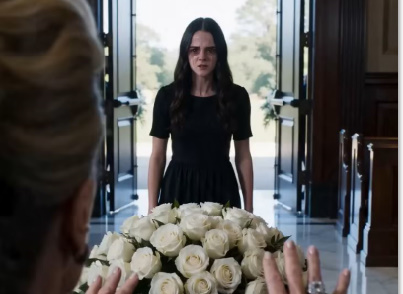
She looked smaller than I remembered. Her hair, usually perfectly coiffed, was pulled back in a severe bun. She wasn’t wearing any makeup. Her clothes were plain, dark, unassuming. She walked slowly to the front, her head bowed, and stood beside the pulpit. She didn’t look at me. She didn’t look at Ryan.
She stared at the floor.
The pastor handed her a piece of paper.
“Diane,” he said. “You have asked to read a statement, apologizing to Sarah and Noah Miller, and to this congregation, for your actions. The floor is yours.”
She took the paper with shaking hands.
For a long moment, she didn’t say anything. She just stood there, breathing hard, the paper trembling.
And then she began to read.
Her voice was small at first, barely audible. The pastor adjusted the microphone for her.
“I, Diane Marie Hale,” she read, “stand before you today ashamed, humbled, and truly sorry for the terrible things I have done. For months, I conspired with my daughter, Jessica, to destroy the reputation of my daughter-in-law, Sarah Miller. I knew Jessica was abusing Sarah’s son—my own grandson, Noah. And I helped her cover it up. I lied to my son. I lied to this church. I lied to the police. I stood by and let an innocent woman be accused of the very crimes my own daughter was committing.”
Her voice cracked.
“I did it because I was weak. Because I couldn’t face the truth that my daughter was capable of such evil. Because it was easier to blame Sarah, to tell myself she was a bad mother, than to admit I had failed as a parent. I manipulated my son, Ryan, turning him against the woman he loves, against the mother of his child. I used this church—this house of God—as a weapon. I used all of you. I asked you to judge Sarah, to condemn her, and you trusted me. And I betrayed that trust. For that, I am deeply, truly sorry.”
She looked up.
Her eyes found mine.
They were red and swollen, full of tears.
“Sarah,” she said, her voice breaking completely now. “I have no right to ask for your forgiveness. I don’t deserve it. I will spend the rest of my life trying to make amends for what I did to you and to Noah. You are a wonderful mother. You are a good woman. And I was too blind and too proud to see it. I am so, so sorry.”
She turned to Ryan.
“Baby,” she said, crying openly now. “I am so sorry I did this to you. To your family. I know I’ve lost you. I know I’ll probably never be in your life again, or in Noah’s. And that is my punishment. That is what I deserve. But please—know that I love you. I always have. Even when I was doing the most unforgivable things, I loved you. I was just too broken to show it the right way.”
She folded the paper.
“To this congregation,” she said, looking out over the silent room. “I am sorry I lied to you. I am sorry I used your faith and your trust to hurt innocent people. I accept full responsibility for my actions. I will accept whatever punishment the court sees fit to give me. And I will spend every day for the rest of my life praying for Sarah, for Ryan, and most of all, for Noah—praying that he heals, praying that he forgets, praying that he never has to feel the pain I helped cause him.”
She stopped.
The room was completely silent.
No one moved. No one spoke.
Diane stood there for another long moment, waiting. For what, I didn’t know. Condemnation? Forgiveness? A sign that it wasn’t too late?
I looked at Ryan.
His face was wet with tears. His jaw was tight, his hands clenched into fists at his sides. This was his mother. The woman who’d given birth to him, who’d raised him, who’d loved him in her own terrible, broken way. And she was apologizing. Publicly. Honestly.
I squeezed his hand.
Whatever he decided to do, I would support him.
He stood up.
The whole room watched him.
He walked slowly to the front of the church, to where his mother stood. She looked up at him, hope and fear warring in her eyes.
For a second, I thought he might hug her.
He didn’t.
But he didn’t condemn her either.
“Mom,” he said, his voice rough but steady. “I don’t know if I’ll ever be able to forgive you for what you did. You hurt the two people I love most in this world. You almost destroyed my family. That’s not something you just get over. That’s not something that just goes away.”
He paused, swallowing hard.
“But I do believe you’re sorry,” he said. “I do believe you mean what you said. And I don’t hate you. I could never hate you. You’re my mother. But things have to change. You can’t be in our lives. Not now. Maybe not ever. You have to get help, Mom. Real help. You have to fix what’s broken in you. And if you do that… if you truly change… then maybe, someday, a long time from now… we can talk. Maybe.”
Diane let out a sob.
She nodded, unable to speak.
Ryan turned and walked back to me, sitting down and taking my hand again.
The pastor stepped forward.
“Thank you, Diane,” he said gently. “You may go.”
Two police officers—there as observers, to make sure the restraining order wasn’t violated—escorted her out. She didn’t look back.
The pastor turned to the congregation.
“Now,” he said. “On behalf of the leadership of this church, and on behalf of every single one of us who failed Sarah and Noah that day… I would like to read our own apology.”
He read a beautiful, heartfelt statement, promising that the church would do better, that we would implement new policies to protect vulnerable children and their families, that we would never again let gossip and lies destroy an innocent family.
When he was done, he looked at me.
“Sarah,” he said. “Ryan. Is there anything either of you would like to say?”
I stood up.
The room went quiet again.
I looked out over all those faces—people who’d judged me, people who’d apologized, people who’d stood by me. I thought about Noah, safe in the nursery, laughing and playing. I thought about Ryan, beside me, holding my hand. I thought about Jessica in jail, where she belonged. I thought about Diane, broken and humbled, finally facing the truth.
I took a deep breath.
“I forgive you,” I said, my voice clear and strong, carrying all the way to the back of the room. “All of you. For judging me. For believing the lies. For doubting me. You were wrong. But you were human. And we all make mistakes. What matters is what we do after. And you all—you showed up. You apologized. You helped us. You loved us when we needed it most. That’s what family does. That’s what God calls us to do.”
I paused, looking at Ryan.
“And as for Diane and Jessica,” I said. “I forgive them too. Not because what they did was okay. It wasn’t. It was evil. It was unforgivable. But I forgive them because I don’t want to carry their hate in my heart anymore. I don’t want it to poison me. I want to be free. I want my family to be free. And the only way to do that is to let it go. To forgive. And to move forward.”
I sat down.
The room erupted in applause.
Not the loud, boisterous kind. The quiet, reverent kind. The kind that comes from deep emotion.
Ryan squeezed my hand so tight I thought my fingers might break.
“I love you,” he whispered. “So much.”
The rest of the service passed in a blur of hymns and prayers and kind words. When it was over, people lined up to hug us, to tell us how brave we were, to promise they’d always be there for us.
And then Mrs. Henderson brought Noah out.
He ran straight to us, holding up a picture he’d drawn in the nursery—a stick figure family, three people holding hands, with a big blue dinosaur beside them.
I picked him up and kissed him.
May you like
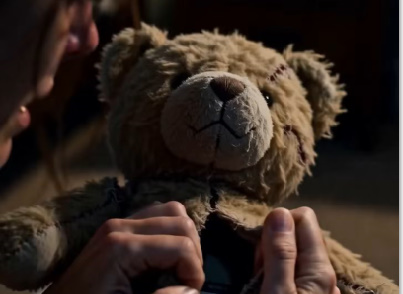

Ryan wrapped his arms around both of us.
And for the first time in my life, I felt completely, utterly, perfectly at peace.