Chapter 8
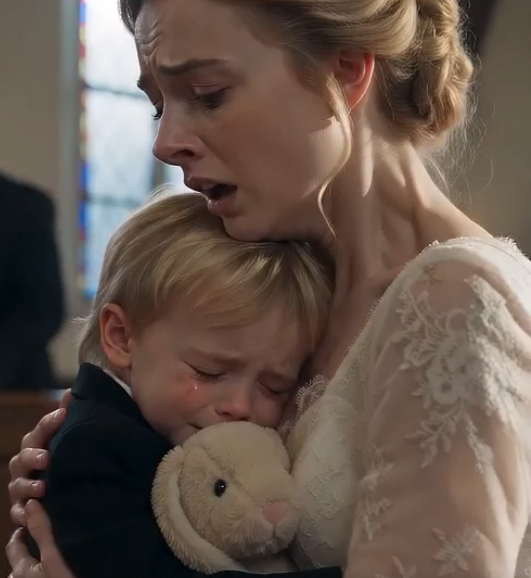
The next few months were the hardest, most wonderful months of our lives.
Hard, because healing isn’t linear. Some days were amazing—Noah would laugh and play and communicate with his new iPad like he’d been doing it his whole life, Ryan and I would talk and laugh and remember why we fell in love in the first place, and everything would feel perfect.
And some days were terrible.
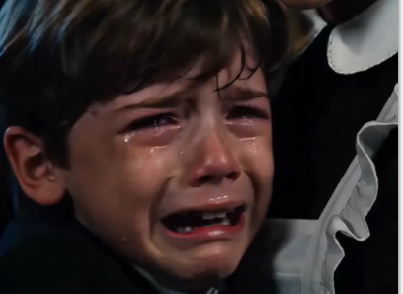
Noah would have a meltdown out of nowhere, triggered by a sound, or a touch, or a stranger who looked a little too much like Jessica, and we’d have to hold him and rock him and remind him he was safe, over and over again, until he believed it. Some nights I’d wake up screaming from my own nightmares, and Ryan would hold me while I cried, and I’d tell him I didn’t know if I could do this, and he’d tell me I was stronger than I thought.
Some days I’d look at Ryan and all I could see was his face in that church, saying he didn’t know what to believe, and I’d have to leave the room and breathe and remind myself that was the old Ryan, that the man standing in front of me now was different, that he’d fought for us, that he’d chosen us.
But we kept going.
We went to therapy every week—individual, couples, and family therapy with Noah. We talked about everything. The hard things. The ugly things. The things we’d never told anyone. We learned to communicate better, to fight fair, to ask for what we needed instead of letting resentment build.
Ryan kept every promise he made.
He went part-time at work, so he could be home more. He never missed a therapy appointment. He learned every single thing about Noah’s condition, his sensory triggers, his communication style. He became Noah’s biggest advocate—at school, at the doctor’s office, everywhere. He joined a support group for fathers of special needs kids, and he started speaking at local churches about what had happened to us, about the importance of believing mothers, about protecting vulnerable children.
He was becoming the man I’d married. The man I’d always known he could be.
Noah flourished.
His iPad changed his life. The first time he tapped the “scared” picture and then pointed to a stranger in the grocery store, I cried. He could tell us things now. He could tell us when he was hurt, when he was happy, when he wanted more chicken nuggets, when he wanted to go to the park. He was no longer trapped inside his own head, unable to make himself understood.
His nightmares became less frequent. The flinching stopped. He started sleeping through the night. He made friends at his special needs school—two little boys who also loved dinosaurs, and they’d sit together for hours, lining up their toys and roaring at each other.
The church became our safe place.
They implemented the new policies the pastor had promised—mandatory background checks for all volunteers, a security team at every service, a zero-tolerance policy for gossip and judgment. They started a support group for parents of special needs kids, which I now led. We met every Tuesday night, sharing stories, sharing resources, sharing hope.
Mrs. Henderson became like a second mother to me. She was there for everything—bad days, good days, sick days, holidays. She loved Noah like he was her own grandson. She never missed a single one of his school events.
Diane kept her word.
She pleaded guilty to all charges. She did her community service—working at a shelter for abused women and children, which her lawyer said had changed her completely. She wrote the check for Noah’s trust fund. She published the apology in the paper. She went to therapy, every single week, working through her own issues, her own toxic relationship with Jessica, her own inability to see the truth.
She never tried to contact us.
Not once.
But every month, like clockwork, a card arrived in the mail. No letter. No long message. Just a simple note:
“I’m still working on myself. I’m still sorry. I love you all. — Mom”
We never wrote back.
But we never threw the cards away either.
Jessica was in prison.
She’d pleaded guilty to all charges, just like she’d promised. Seven years, no parole. Ms. Carter told us she’d become a pariah in the prison—child abusers didn’t do well behind bars. She spent twenty-three hours a day in her cell, for her own protection. She’d tried to write to Ryan once, begging him to forgive her, telling him she’d been mentally ill, that Diane had made her do it.
Ryan had sent the letter back, unopened.
He was done.
Fall turned to winter, and winter turned to spring.
Noah turned eight years old. We threw him the biggest dinosaur-themed birthday party Nashville had ever seen. The whole church came. There was a bounce house shaped like a T-Rex, a dinosaur-shaped cake, a petting zoo with a baby alligator that Noah absolutely loved. He opened so many presents we had to borrow a truck to get them all home.
He sat in the middle of the living room floor, surrounded by wrapping paper and toys, tapping on his iPad over and over again.
Happy. Happy. Happy.
I looked at Ryan, standing by the window, watching him, a smile on his face. He’d put on a little weight, gotten his color back. The haunted look was gone from his eyes. He was happy too.
I walked over and stood beside him.
“Penny for your thoughts?” I said.
He put his arm around me, pulling me close.
“I was just thinking,” he said. “About how close we came to losing all this. How one lie, one choice, almost destroyed everything. And how lucky we are. How blessed.”
He looked down at me.
“I was thinking about how much I love you,” he said. “How I’d be lost without you. How you’re the best thing that ever happened to me. The best mother Noah could ever have. And I was thinking… I want to do it again.”
I raised an eyebrow. “Do what again?”
He got down on one knee.
My breath caught.
“Sarah Miller,” he said, pulling a small ring box out of his pocket. “I already asked you to marry me once. And you said yes. And then I failed you. Miserably. But you gave me a second chance. You gave us a second chance. And I want to spend the rest of my life proving to you, every single day, that it wasn’t a mistake. So I’m asking you again. Will you marry me? Again? New promises. New vows. A fresh start. Just us. Forever.”
He opened the box.
Inside was a simple, beautiful ring—nothing fancy, nothing expensive, but perfect. Engraved on the inside were three words:
Always. Together. Stronger.
Tears ran down my face.
Noah looked up from his toys, saw his daddy on his knee, and let out a happy shriek. He crawled over and climbed into Ryan’s lap, clapping his hands.
“Yes,” I said, laughing and crying at the same time. “Yes. A thousand times yes.”
Ryan slipped the ring on my finger and stood up, lifting me into his arms and spinning me around. Noah laughed, holding on tight.
When he put me down, he kissed me—long, slow, deep. The kind of kiss that says everything words can’t.
“I love you,” he said.
“I love you too,” I said.
May you like

Outside, the sun was setting, painting the sky in brilliant shades of pink and purple and gold. The birds were singing. The world was beautiful.
And for the first time in a very long time, I knew, without a shadow of a doubt, that everything was going to be okay.