Chapter 10
The next thirty days were the hardest of my life.
Helen’s lawyers argued that because I wasn’t Grandma’s biological daughter, the will was invalid. That Grandma had been “tricked” into leaving me everything, that she’d never have done it if she’d “remembered” I wasn’t her real child.
They dragged my birth records into court, made a mockery of Clara’s choice to give me up for adoption, called me a “fraud,” a “gold digger,” a “stranger who’d stolen a family’s fortune.”
The media went wild again.
Headlines blared:
ELEANOR LANGFORD: NOT A REAL LANGFORD.
ADOPTED HEIRESS FACES LOSING BILLIONS.
HELEN LANGFORD: THE ONLY TRUE HEIR.
But this time, I wasn’t alone.
Clara was there, every day, sitting beside me in court, holding my hand, testifying about the adoption, about how Grandma had known exactly what she was doing when she left me everything, about how she’d loved me more than anything in the world.
Mom and Dad were there too, testifying that they’d known about the adoption, that they’d always considered me their daughter, that Grandma had told them a hundred times I was her “real” heir, blood or no blood.
Mark was there, testifying about Helen’s cruelty, about how she’d known about the adoption for years, how she’d used it as a weapon against me our whole lives, how she didn’t care about the family name—she only cared about the money.
Arthur was there, testifying about Grandma’s wishes, about how she’d told him a hundred times that “blood doesn’t make family—love does,” that I was the only one she trusted to run the company.
Dozens of parents whose kids I’d helped were there, holding signs, cheering me on, telling anyone who’d listen that I was the only real Langford, the only one who’d ever lived up to Grandma’s legacy.
And Mia was there, every day, sitting in the back row with her nanny, coloring, waving at me when I looked over, blowing me kisses, reminding me exactly what I was fighting for.
The judge was cold, distant, clearly leaning toward Helen, his questions sharp, his rulings always in her favor.
By the end of the trial, things looked bad.
Really bad.
Elias pulled me aside after closing arguments, his face tight.
“I’m not gonna lie to you,” he said. “We’re probably gonna lose. The judge hates adoption cases. He’s old school. He thinks blood is everything. If he rules against us, we can appeal, but it’ll take years. And Helen will get control of the company in the meantime. She’ll liquidate everything. She’ll come after Mia. We need a miracle.”
I nodded, looking over at Mia, who was showing her latest drawing to Clara, both of them laughing.
I thought about Grandma’s letter.
Power isn’t about destroying the people who hurt you. It’s about building something better for the people you love.
I thought about the company.
About the employees.
About the kids.
About Mia.
I knew what I had to do.
The next morning, the judge called everyone into the courtroom to deliver his ruling.
The room was packed.
Reporters, cameras, family, friends, employees, parents.
Helen was there, brought in from jail in shackles, a smug smile on her face, already acting like she’d won.
The judge opened his folder, looking out over the room.
“After careful consideration of all the evidence,” he said, his voice slow, serious. “The court finds that the adoption of Eleanor Langford was legally valid at the time it was performed. However, the court also finds that there is sufficient evidence to question whether the late Clara Langford fully understood the terms of the adoption, and whether the late Margaret Langford exerted undue influence over her sister to obtain custody of the child. Therefore, the court rules that the will of Margaret Langford is hereby invalid. All assets, shares, and properties previously bequeathed to Eleanor Langford are hereby transferred to Helen Langford, as the sole biological heir of the Langford estate.”
The room erupted.
Reporters shouted.
My family gasped.
Helen laughed, a sharp, cruel sound, the bailiffs having to hold her back from running at me.
I stood up, calm, steady, holding up a hand to quiet the room.
“Your Honor,” I said, my voice loud, clear, carrying to every corner. “Before you finalize this ruling, I have one thing to submit into evidence. Something I should have submitted a long time ago.”
I signaled to Elias.
He walked to the front of the room, handing the judge a thick stack of papers.
“What is this?” the judge said, annoyed.
“It’s the amended articles of incorporation for Langford Group,” I said. “Filed by Grandma, three days before she signed her will. And a unanimous vote of the board of directors, taken yesterday.”
The judge flipped through the papers, his face slowly changing from annoyed to confused to shocked.
“What does this mean?” he said.
“It means,” I said, smiling. “That Grandma changed the company’s bylaws thirty years ago, when she adopted me. The bylaws state explicitly that ownership of the company is not determined by blood relation. It is determined by who Grandma chose as her heir. And she chose me. The board voted unanimously yesterday to uphold those bylaws. To uphold Grandma’s wishes. So even if you throw out the will? The company still belongs to me. Every single share. Every single asset. Every single hospital. All of it.”
The room went dead silent.
Helen’s smile dropped.
She stood up, screaming, pulling against the bailiffs.
“THAT’S ILLEGAL!” she screamed. “YOU CAN’T DO THAT! IT’S MINE! IT’S ALL MINE!”
The judge banged his gavel, his face red.
“Order!” he shouted. “Order in the court!”
He looked at the papers again, then at me, then at Helen.
“The bylaws are legally binding,” he said, his voice tight. “The board’s vote is unanimous. The court has no authority to override the internal rules of a private corporation. Therefore, the previous ruling regarding the company assets is vacated. The company remains the property of Eleanor Langford. The rest of the personal estate will be split according to intestacy laws. But the core of the Langford fortune? It stays with Ms. Langford.”
He banged his gavel one last time.
“Case dismissed.”
The room erupted again.
Cheering, clapping, crying, reporters shouting questions, cameras flashing.
Helen collapsed into her chair, sobbing, screaming, defeated, broken, finally beaten.
The bailiffs dragged her out, still screaming, never to be seen by any of us again.
I walked over to my family, Mia running to me, jumping into my arms, Clara, Mom, Dad, Mark, Elias, all crowding around me, hugging me, crying, laughing.
We did it.
We really did it.
The next year was the best of my life.
Langford Group grew bigger than ever.
We opened ten more children’s hospitals around the world.
We helped fifty thousand more kids.
We created twenty thousand new jobs.
We became the most admired company in the country.
Clara moved to the city, bought a house ten minutes from mine, became Mia’s official “fairy godmother,” spoiling her rotten, taking her to Paris every summer, teaching her to bake, to paint, to speak French.
Mom and Dad came to every soccer game, every school play, every birthday party, slowly earning back our trust, slowly becoming the grandparents Mia deserved, slowly becoming the parents I’d always wanted.
Mark worked his way up from the mailroom, to the warehouse, to the foundation, running the volunteer program, turning his life around, becoming someone I was proud to call family.
Elias became my best friend, my right hand, the godfather of all Mia’s future pets.
Dr. Caldwell became Mia’s favorite doctor, and my favorite person to argue with about hospital budgets, and eventually, much to Mia’s delight, my boyfriend.
And Mia?
Mia was seven years old now.
Her knee was fully healed.
No more brace.
No more pain.
She was the star of her soccer team, fast, tough, scoring more goals than anyone else on the field, kind to the other kids, helping the ones who fell down, just like I’d taught her.
She was happy.
Confident.
Loved.
Safe.
Exactly what I’d always wanted for her.
The final scene of our story played out on a sunny Saturday in June, the one year anniversary of the final court case.
We were at Mia’s soccer championship game.
The score was tied 1-1, ten seconds left on the clock.
Mia had the ball, dribbling fast down the field, past two defenders, past the goalie, her little legs pumping hard.
She kicked.
The ball flew into the back of the net.
The crowd screamed.
Her team swarmed her, lifting her up on their shoulders, cheering.
She looked over at us, grinning, covered in dirt, her hair a mess, holding up the number one sign with her fingers.
The final whistle blew.
They’d won.
She ran over to us, jumping into my arms, squeezing me tight, her uniform sweaty, her breath coming in gasps.
“I did it, Mommy!” she said. “I scored the winning goal! Did you see? Did you see?”
“I saw, baby,” I said, kissing her dirty cheek, crying happy tears. “I’m so proud of you. So, so proud.”
I looked around.
Clara was there, cheering, holding a giant sign that said THAT’S MY NIECE.
Mom and Dad were there, crying, holding balloons, yelling that she was the best player who ever lived.
Mark was there, holding a cooler of Gatorade, high-fiving all the kids.
Elias was there, filming the whole thing, yelling so loud his voice was hoarse.
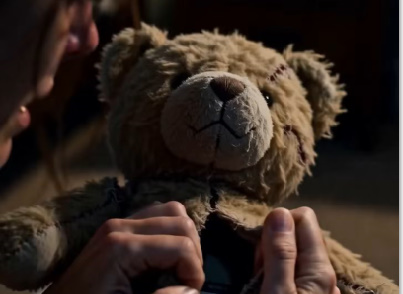
Dr. Caldwell was there, holding a giant teddy bear he’d bought her, grinning like an idiot.
All the people I loved.
All the people who’d fought for me.
All the people who’d become my family, blood or no blood.
Mia pulled back, looking at me, her big brown eyes serious.
“Mommy?” she said.
“Yeah, baby?” I said.
“Is the mean lady ever gonna come back?” she said.
I shook my head, tucking her hair behind her ear.
“Never,” I said. “She’s gone forever. You’re safe. We’re all safe. Nothing bad is ever gonna happen to you again. I promise.”
She smiled, the biggest, brightest smile in the whole world, and hugged me again.
“Good,” she said. “Because I love our family. It’s the best family ever.”
I held her tight, looking up at the sun, shining down on all of us, warm and bright, like Grandma was there, watching, smiling, proud.
She was right.
It was the best family ever.
Not because we were perfect.
Not because we were all related by blood.
But because we loved each other.
Because we’d fought for each other.
Because we’d chosen each other, over and over again, through every lie, every betrayal, every battle.
And that’s what family really is.
Not the name you’re given at birth.
Not the money you inherit.
Not the blood in your veins.
It’s the people who show up.
The people who stay.
The people who love you, no matter what.
And I had all of them.
Forever and ever.
May you like

Just like Mia had drawn in that picture, all those months ago.
The end.