Chapter 6
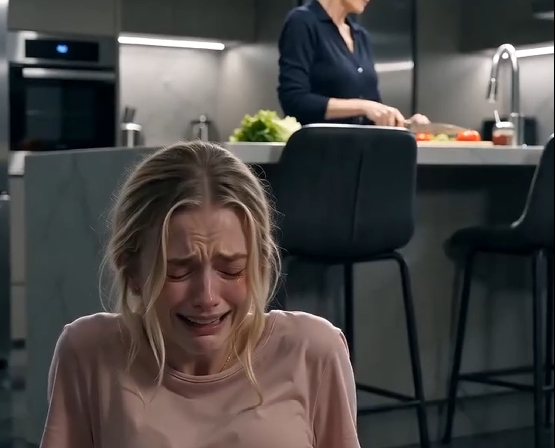
The old Salgado house was dark when we pulled up, only a single light burning in the upstairs window.
It looked smaller than I remembered.
Sadder.
The big front yard where Graciela used to host her fancy parties was overgrown with weeds. The fountain in the middle was dry, full of leaves and trash. The windows were covered with newspaper.
It looked like what it was.
A dead place.
Full of dead memories.
I told the security team to stay back, to wait in the trees, to move in only if they heard me scream or if something went wrong.
I didn’t want to spook Ernesto. If he really had something, I needed him to give it to me.
I walked up the front steps on my crutches, my leg aching from the three-month-old break that still hadn’t fully healed, and knocked on the big wooden door.
It creaked open before my knuckles even touched it.
Don Ernesto stood there.
He looked terrible.
Thinner. Older. His face was lined with grief and regret. He was drinking from a bottle of whiskey, his hand shaking.
“Come in,” he said, turning and walking back into the dark house without waiting for me.
I followed him, my crutches clicking on the old tile floor, every sense on high alert.
The house smelled like dust and whiskey and regret.
All the fancy furniture Graciela had loved so much was gone. Repossessed, probably, when Héctor had cut off her money.
Only the kitchen table remained. The same table where we’d eaten a hundred Sunday dinners. The same table where I’d stood and warned Ernesto about the salty soup. The same table beside which Graciela had grabbed the rolling pin.
Ernesto sat down at one end, pouring another glass of whiskey, and gestured for me to sit at the other.
On the table between us sat a thick manila envelope.
Sealed.
With the Salgado family wax stamp on the back.
“That’s it?” I asked, nodding at the envelope, not sitting down, keeping my crutches under my arms, ready to run if I had to. “That’s what you called me about?”
Ernesto nodded, taking a long drink.
“Everything,” he said, his voice rough. “Every deal Héctor ever made. Every bribe. Every fake document. Every recording of him and Graciela planning to steal your company. Proof he paid off the judge. Proof he blackmailed Robert. Proof of everything. Enough to put him and Graciela away for the rest of their natural lives. Enough to make sure you win on Monday. Enough to give you back everything they took.”
“Why?” I asked, staring at him. “Why are you doing this? You never cared about me before. You let her hurt me. You let her hurt Sofía. Why now?”
Ernesto looked up at me, and for the first time, I saw real tears in his eyes.
“Because I’m dying, Clara,” he said, quiet. “Cancer. The doctor gave me three months. Maybe less. I’ve spent my whole life being afraid of Graciela. Afraid of what she’d do if I crossed her. I let her run my life. I let her run my business. I let her hurt people. I let her hurt you. I stood there in that kitchen and I did nothing while she broke your leg. I stood there and I did nothing while she took your baby. I’m a coward. I’ve always been a coward. But I don’t want to die one. This is the only good thing I’ve ever done. The only thing that might make up for all the bad. Take it. Win. Destroy them. They deserve everything that’s coming to them.”
He pushed the envelope across the table toward me.
I stared at it.
It was everything I needed.
Everything I’d been fighting for, for three long months.
I reached out, my hand hovering over it.
And then I heard it.
The faint click of a gun being cocked.
From the shadows behind me.
“Very touching, Father,” a voice said. Cold. Familiar. “But you always were a sentimental old fool.”
Tomás stepped out of the darkness, a gun in his hand, pointing straight at my chest.
Behind him came Héctor, smiling that same cold, cruel smile his sister had, and behind Héctor, being half-carried by two guards, was Graciela herself, out on bail, her ankle monitor visible under her dress, her face twisted with hate.
“Did you really think we’d let my pathetic ex-husband hand you the keys to the kingdom, Clara?” Graciela said, walking slowly toward me, her voice like ice. “Did you really think we’d just let you win on Monday? Oh, no. We have much better plans for you.”
I looked at Ernesto. He was staring at Tomás, his face white with shock.
“You called them,” he whispered, disbelieving. “My own son. You called them.”
“Of course I did, Father,” Tomás said, the gun still pointed at me. “Graciela is my mother. Héctor is my uncle. Family is family. You were going to give everything to this… this stranger. This woman who destroyed our family. I couldn’t let that happen. Not when we’re so close to winning. Not when we finally have everything we’ve ever wanted right in our grasp.”
Graciela laughed, walking around the table, picking up the envelope, flipping through it, nodding like she was impressed.
“Really, Ernesto,” she said, shaking her head. “You kept all this? All these years? I should have known you’d betray me in the end. You always were too weak. But it doesn’t matter now. We have the envelope. We have Clara. And by morning, both of you will be dead. Another murder-suicide. So sad. The dying old man, wracked with guilt over his part in all these terrible crimes, kills his innocent daughter-in-law and then himself. The perfect ending. And with Ernesto dead, there’s no one to testify against us. No evidence. No witnesses. On Monday, the supreme court will have no choice but to rule in our favor. We win, Clara. Again. You lose. Again. And this time? You stay lost.”
She nodded at Tomás.
“Do it,” she said, cold. “Make it look real.”
Tomás raised the gun.
His hand was shaking.
He looked at me, and for one second, I saw a flicker of the man I’d married. The man who’d brought me flowers. The man who’d held Sofía when she was born. The man who’d once promised to love and protect me forever.
“Tomás,” I said, soft, calm, looking him right in the eyes. “Don’t do this. Think about Sofía. She’s your daughter. She loves you. She asks about you sometimes. She asks when her papa is coming home. Do you want her to grow up knowing her father murdered her mother? Do you want her to have to visit you in prison for the rest of your life? You still have a choice, Tomás. It’s not too late. Put the gun down. Help us. Testify against them. You can still have a relationship with your daughter. You can still be her father. But if you pull that trigger? You lose her forever. She’ll never forgive you. Never.”
Tomás hesitated.
The gun wavered.
Graciela saw it.
“Tomás!” she snapped. “What are you waiting for? Shoot her! Now!”
Tomás looked at his mother. Then at Héctor. Then back at me.
And then he slowly lowered the gun.
“No,” he said, his voice shaking but sure. “No. I’m not going to do it. I’ve done enough. I’ve let you hurt enough people. I’m not going to let you turn me into a murderer too. Not when I still have a chance to be a father to my daughter.”
Graciela’s face twisted with rage.
“You ungrateful little—”
She lunged at Tomás, trying to grab the gun.
They struggled.
The gun went off.
BANG.
The bullet hit the chandelier above us, glass raining down all over the kitchen.
Héctor pulled his own gun, pointing it first at Tomás, then at me.
“Enough!” he screamed. “I’ll kill all of you if I have to! This ends now!”
And that was when the security team and the police burst through the doors and windows, dozens of them, their guns raised, shouting orders.
Héctor tried to run.
He didn’t make it three steps before three officers tackled him to the floor, the gun flying out of his hand.
Graciela tried to follow, but her ankle monitor wouldn’t let her run fast enough. Two officers grabbed her, slamming her against the wall, reading her her rights for what felt like the hundredth time.
Tomás dropped his gun, putting his hands in the air, letting the officers cuff him without a fight. He looked at me as they led him out.
“Tell Sofía I’m sorry,” he said, quiet, so only I could hear. “Tell her I love her. And tell her I’ll do whatever it takes to make this right. Whatever she needs.”
I nodded.
I didn’t know if I’d ever let him see her again.
But I’d tell her.
Ernesto was still sitting at the table, staring at the spot where the envelope had been, his face blank.
I walked over to where Graciela had dropped it when the police burst in, picked it up off the floor, and brushed the glass off it.
It was intact.
All of it.
Everything we needed.
I walked out of the Salgado house for the last time, the envelope under my arm, the police cars lights flashing red and blue all around me, and didn’t look back.
We won the supreme court case three days later.
Unanimous.
Nine to zero.
The judges didn’t just rule in my favor. They tore Héctor and Graciela and the corrupt lower court judge apart in their written decision, calling the fraud “the most blatant and offensive abuse of the judicial system” any of them had ever seen.
I got Langford back.
All of it.
Héctor was arrested that afternoon, charged with fraud, conspiracy, bribery, and attempted murder. He was held without bail.
The corrupt judge was disbarred and arrested too.
Robert was found hiding in a hotel room in another state, arrested and charged as a co-conspirator.
Graciela’s bail was revoked. She was sent straight to maximum security to await trial on all the charges—assault, attempted murder, kidnapping, extortion, fraud, conspiracy, the list went on and on.
Tomás took a plea deal. He testified against everyone. He told the truth about everything Graciela and Héctor had ever done. In exchange, he got five years in a minimum security prison, with the possibility of parole in two, and supervised, therapeutic visitation with Sofía, if and when she was ready to see him.
It was over.
All of it.
I was sitting in my office on the fortieth floor of the Langford building, the same office Robert had once occupied, looking out over the city, the envelope Ernesto had given me in my desk drawer, when Carlos knocked on the door.
He was smiling.
“Clara,” he said, walking in, holding a thick stack of papers. “The acquisition of Salgado Construction just closed. All the paperwork is signed. It’s official. We own it. And… there’s something else. Someone is here to see you. Says it’s urgent. Says he’s family.”
I frowned.
My family was all accounted for.
“Send him in,” I said.
The door opened.
It was Ernesto.
He looked even worse than he had three days before. Pale. Thin. Barely able to stand.
He walked slowly into my office, holding a small, wrapped box in his shaking hands.
“I don’t have much time,” he said, sitting down across from me without being invited. “The doctors say it could be any day now. I came to give you this. It’s for Sofía. From me. Before I go.”
He pushed the box across the desk toward me.
I didn’t open it.
“Why?” I asked again. “Why now? After everything?”
Ernesto looked at me, his eyes full of tears.
“Because you won,” he said, simple. “You won when no one thought you could. You took everything they tried to steal from you and you turned it into something good. You’re a better person than I ever was. A better parent. A better leader. I just… I wanted to do one last thing. For Sofía. For the granddaughter I never got to know. The one I was too much of a coward to protect when it mattered. Tell her… tell her her abuelo was sorry. Tell her he loved her, even if he was too stupid and scared to show it. That’s all. I’ll go now.”
He stood up to leave.
“Ernesto,” I said, before he could reach the door.
He stopped.
“Thank you,” I said, quiet. “For the envelope. For helping us win. It meant something. And… I’ll tell her. About you. About how you tried to make it right at the end. She deserves to know the whole story. The good and the bad.”
Ernesto nodded, a single tear rolling down his cheek.
“Thank you, Clara,” he said. “That’s more than I deserve.”
He walked out.
I opened the box he’d left.
Inside was the Salgado family locket. The one Graciela had always worn, the one that had been passed down through the family for generations. The one I’d always admired as a little girl, the one Graciela had always said I’d never be “good enough” to wear.
And tucked inside, a photo of Sofía, taken when she was a baby, and a handwritten note.
To my granddaughter.
May you always be braver than I was.
May you always have the courage to stand up for what’s right.
May you never let anyone make you feel small.
I love you.
Abuelo Ernesto.
I closed the box, my throat tight.
I’d won.
Everything.
But as I looked out the window at the city below, I knew the hardest part was still ahead.
Building something good out of all the destruction.
Healing.
Forgiving.
And making sure no one ever had to go through what I’d gone through, ever again.
May you like
I picked up the phone to call my team, ready to start the next chapter, when my assistant knocked on the door, her face white.
“Ms. Mendoza,” she said, breathless. “You need to turn on the news. Right now. It’s Graciela. She escaped from prison.”