Chapter 9
I stared at the phone, speechless.
My grandmother.
Alive.
In Switzerland.
Waiting for me.
Everyone had said she’d died when my father was a boy. A car crash. So tragic. So sad.
But she’d been alive the whole time.
Watching.
Waiting.
“Why?” I whispered, my voice cracking. “Why didn’t you come find me sooner? Why didn’t you help me?”
She sighed, a long, sad sound.
“Because Graciela would have killed me if I’d shown my face, mija,” she said, quiet. “She killed my son, you know. Your father. Everyone said it was a heart attack. But I know better. I know what she put in his tea every morning. I know the signs. I couldn’t prove it. She was too careful. Too clever. And if she’d known I was alive? She’d have killed me too. And then she’d have come for you. I stayed away to protect you. To build my own resources. My own power. To wait until the time was right to help you take her down. And you did it, mija. All on your own. You were braver than I ever was. Stronger. I’m so proud of you I could burst.”
I cried then.
For the father I’d lost too young.
For the grandmother I’d never known.
For all the years we’d missed.
“When can I see you?” I asked, wiping my eyes.
“Whenever you want,” she said, warm. “I’m here. At the house. With your parents. With Sofía. She’s already sitting on my lap, telling me all about her rainbow pictures. She says I’m her new favorite abuela. I’m inclined to agree. Come see us, Clara. As soon as you can. We have so much to talk about. So much lost time to make up for. And… I have something for you. Something your father left for me to give you, when the time was right. Something that will change everything. Again.”
I hung up the phone, my heart full for the first time in years.
I left for Switzerland the next day, Carlos staying behind to run Langford, to finalize the foundation, to make sure everything was taken care of while I was gone.
The flight was long, but I didn’t sleep.
I was too excited. Too nervous. Too ready to finally meet the woman who was my last real link to the father I’d lost.
The car pulled up to the house three hours after we landed.
It was huge. Beautiful. An old stone chalet high in the Alps, surrounded by snow-capped mountains, green meadows full of wildflowers, a crystal clear lake at the bottom of the hill.
The front door opened before the car even stopped.
My grandmother stood there.
Small. Elegant. Silver hair in a neat bun. Wearing a simple blue dress. Her eyes were exactly like mine.
She walked down the steps, pulling me into a hug the second I got out of the car, holding me so tight I could barely breathe, crying into my hair.
“Mija,” she said, over and over. “My beautiful, brave mija. I’m so sorry. I’m so sorry I wasn’t there for you. I’m here now. I’ll never leave you again. Never.”
I cried with her, holding her just as tight, all the little girl I’d ever been finally getting the grandmother I’d always dreamed of.
We spent the next two weeks together.
She told me everything.
About my father. What he was like as a little boy. How proud he’d been when I was born. How he’d cried the day he had to disown me to keep Graciela from hurting me worse. How he’d planned to tell me everything, to bring me back into the family, just before he died.
About Graciela. How she’d weaseled her way into our family. How she’d slowly poisoned my father against everyone who loved him. How she’d stolen from him. Lied to him. Manipulated him. And finally, killed him.
About the years she’d spent hiding, building her own company, her own fortune, her own network of people loyal only to her, all waiting for the day Graciela was gone so she could come home.
And she told me about the thing my father had left.
The big surprise.
“Your father knew Graciela would try to steal Langford,” she said, handing me a thick, leather-bound book from the safe in her study. “He knew she’d try to turn the board against you. Knew she’d find loopholes. Knew she’d use the courts against you. So he made a backup plan. A second company. A separate trust. Completely independent of Langford. Worth twice as much as Langford is today. All of it yours. To do with whatever you want. He built it for you, mija. For the day you’d need it. For the day you’d have to fight Graciela and win. And now that you’ve won? It’s all yours. To build. To give away. To make the world a better place. Whatever you decide.”
I opened the book.
Page after page of assets. Stocks. Real estate. Companies. Patents. Investments. All over the world.
It was true.
Twice the size of Langford.
All mine.
I closed the book, overwhelmed.
“What do I do with all this?” I whispered, looking at her.
She smiled, putting her hand over mine.
“Whatever you want, mija. But I think you already know. You’ve already started the foundation. You’re already helping women and children. You’re already changing the world. This just gives you the power to change it more. Faster. Bigger. Better. No one can ever take anything from you again. Not with this. Not with me beside you. Not with all the people who love you.”
She was right.
I did know.
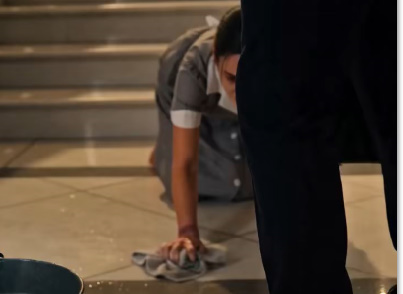
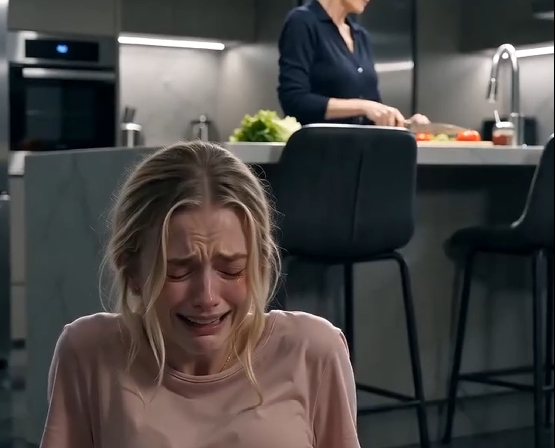
I’d spend the rest of my life making sure no one ever had to feel as small, as scared, as alone as I’d felt in that kitchen, on that tile, in the dark.
We went back to Guadalajara a month later.
My grandmother came with us. She moved into the big house down the street from me, the one Eleanor had lived in before she’d passed, and she became the matriarch of our growing family.
She and Sofía were inseparable.
She taught her to cook. To speak French. To ride a horse. To be brave. To be kind. To never, ever let anyone make her feel like she wasn’t enough.
The Mendoza Foundation grew faster than any of us had imagined.
Within a year, we’d helped over ten thousand women and children escape abusive situations. We’d built twenty new safe houses across the country. We’d paid for hundreds of women to go to college, to start their own businesses, to build new lives for themselves and their kids.
We changed laws.
We put more abusers in prison.
We gave women a voice.
A choice.
A way out.
Langford Group thrived too.
We became the most respected company in the country. Known for our ethics. Our fairness. Our commitment to the communities we built in. We paid our workers more than any other construction company. We gave them better benefits. Better homes. Better lives for their kids.
Sofía started first grade.
She was the happiest, most confident little girl I’d ever known. She was at the top of her class. She had dozens of friends. She volunteered at the foundation with me every Saturday, helping pack bags of food and clothes for the kids who came to our safe houses. She told everyone she was going to be “a superhero for mommies and babies” when she grew up.
Tomás got paroled after two years, just like his plea deal had promised. He got a job working in one of our Langford construction yards, working hard, keeping his head down, trying to make amends. He saw Sofía once a month, supervised, at the foundation office. It was awkward at first. Hard. But slowly, very slowly, they built a fragile, careful relationship. He never pushed for more. He never asked for forgiveness. He just showed up. Every time. And slowly, Sofía started calling him “Papa” again. It wasn’t perfect. It would never be the family I’d once dreamed of. But it was enough. For now.
Don Ernesto died six months after we got back from Switzerland. He was at peace, the doctors said. He’d gotten to see Sofía one last time, to give her the locket, to tell her he loved her. He left everything he had left to the foundation. It wasn’t much. But it was everything he had. And it meant something.
Héctor and Robert and the rest of them were all in prison, serving long sentences, with no chance of parole. They’d never hurt anyone again.
And Graciela?
She was in maximum security, solitary confinement, twenty-three hours a day. No visitors. No phone calls. No letters. No way to contact the outside world. She’d appealed her sentence a dozen times. Lost every single one. She’d die in that cell. Alone. Forgotten. Exactly what she deserved.
Everything was perfect.
Or almost everything.
I was sitting in my office one afternoon, going over the foundation’s annual report, when Carlos knocked on the door, a strange smile on his face.
“Clara,” he said, walking in, holding a small, velvet box. “There’s someone here to see you. Someone who’s been waiting a very long time to ask you something.”
I frowned, confused.
“Who?”
The door opened again.
And in walked Mateo.
The head of my security team.
The man who’d been with me through everything. The factory. The safe house. Graciela’s final attack. Switzerland. All of it.
The man I’d slowly, quietly, fallen in love with over the last two years.
The man who’d never pushed. Never rushed. Never asked for anything more than to be there for me and Sofía.
He walked over to my desk, his face nervous, his hands shaking a little, and knelt down in front of me.
“Clara,” he said, his voice soft but sure. “I’ve loved you since the day I first saw you, sitting in that hospital bed, broken and bleeding but already planning how you were going to win. I’ve loved you through every fight. Every loss. Every victory. I love your strength. Your kindness. The way you love your daughter. The way you love the world, even after everything it’s done to you. I don’t have a lot to offer. Just me. My promise to protect you and Sofía for the rest of my life. To love you both. To be the kind of man you deserve. The kind of father Sofía deserves. Will you marry me?”
He opened the velvet box.
Inside was a simple, beautiful ring. A sapphire surrounded by small diamonds. Exactly the kind of ring I’d always wanted.
I cried.
And then I laughed.
And then I said yes.
Over and over again.
He put the ring on my finger, stood up, and kissed me, right there in the middle of my office, Carlos cheering in the background.
We were married six months later, in the big garden behind our house, surrounded by all the people we loved.
My grandmother gave me away.
Sofía was the flower girl, wearing a white dress just like mine, throwing rose petals everywhere, grinning from ear to ear.
Tomás came, and he shook Mateo’s hand, and told him if he ever hurt me or Sofía, he’d have to answer to him. It was awkward. But it was kind. And it meant something.
All the women and kids from the foundation came. All the Langford employees. All our friends. All our family.
It was the happiest day of my life.
But as I danced with Mateo, holding him close, looking out at all the people laughing and eating and celebrating, I saw something out of the corner of my eye.
A woman.
Standing by the gate at the edge of the garden.
Wearing an orange prison jumpsuit.
Her hair short and gray.
Graciela.
She smiled at me. Cold. Cruel.
And then she was gone.
I froze.
Mateo felt me tense.
“What’s wrong?” he asked, concerned.
I looked again.
There was no one there.
Just the gate. Just the trees. Just the dark.
“Nothing,” I said, smiling, shaking my head, holding him tighter. “Nothing at all. I’m just happy. So, so happy.”
But deep down, I knew.
Graciela was gone.
Dead to the world.
Locked away forever.
But her shadow would always be there.
A reminder.
Of how far I’d come.
Of how much I’d lost.
Of how much I’d fought to get here.
And I knew, as long as I lived, I’d never stop fighting.
For Sofía.
For Mateo.
For my family.
For every woman and child who’d ever felt alone.
For the little girl I’d once been, crawling through the mud, wondering if she’d ever be safe.
May you like
I’d fight.
Forever.