Chapter 3
The safe house was small and plain, but it felt like a fortress.
There were locks on every door, security cameras in the hallways, and a social worker on site twenty-four hours a day.
Nobody could get to us here.
The first two days, Mia barely spoke.
She clung to me like a shadow, following me from room to room, even to the bathroom. If I was out of her sight for even ten seconds, she’d start to panic.
She wouldn’t play with the other kids at the safe house. She wouldn’t touch the toys they had in the common room.
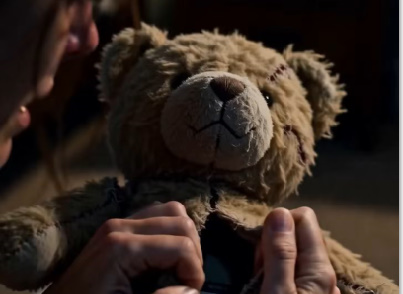
The only thing she wanted was the sparkly unicorn I’d brought home from the airport.
She slept with it tucked under her arm, its horn pressed to her cheek.
On the third day, my phone rang.
It was Mark.
I stared at the screen for a long time, my thumb hovering over the answer button.
I shouldn’t have answered.
The caseworkers had told me not to. They’d said all communication should go through our lawyers now.
But I did anyway.
“Sarah,” he said, his voice raw and broken. “Thank God. I’ve been calling every shelter, every hospital in the city. Where are you? Let me see her. Please. I just need to know she’s okay.”
I closed my eyes.
“Is she okay?” I asked, my voice cold. “You tell me, Mark. You were there. You saw the bruise on her wrist. You heard what she said. And you still took your mother’s side.”
“I know,” he said, and he sounded like he was crying. “I know, Sarah. I’m an idiot. I’m the worst father in the world. But when I saw those hospital photos… when the police showed them to me… I wanted to die. I had no idea she was doing those things. I swear to God, I had no idea.”
I wanted to believe him.
God, how I wanted to believe him.
But I thought of all the times I’d come to him worried. All the times I’d pointed out a bruise or a strange behavior.
And every single time, he’d shut me down.
“Your mother told you Mia burned herself on a curling iron,” I said. “Did you even ask to see the curling iron? Did you check if it was hot? Or did you just believe her because it was easier than facing the truth?”
He was quiet for a long time.
“I believed her,” he whispered finally. “She’s my mom, Sarah. She raised me. She never hurt me. I couldn’t imagine her hurting anyone else. I was stupid. I was willfully blind. But I’m not anymore. I went to the police station yesterday. I told them everything I know. Everything she ever said about Mia being ‘too spoiled,’ about needing ‘firm discipline.’ I told them about the curling iron lie. I’m testifying against her, Sarah. Whatever you need. Whatever Mia needs. I’ll do it.”
I didn’t say anything.
“Please,” he begged. “Just let me see her. Five minutes. That’s all I’m asking. I need to tell her I’m sorry. I need to tell her I’m gonna make this right.”
I looked over at Mia.
She was sitting on the floor, coloring quietly, her unicorn propped up beside her. For the first time all day, she looked peaceful.
I couldn’t do it.
I couldn’t bring him into this safe space we’d just started to build.
“Not yet,” I said.
“Sarah—”
“Not yet, Mark,” I repeated, firmer this time. “Mia is just starting to feel safe. I’m not gonna bring the man who stood there and did nothing while his mother threatened her into this house. Not until I’m sure you’re actually on our side. Words aren’t enough. You want to prove you’re sorry? Do it in court. Do it by making sure your mother never sees the outside of a prison cell for as long as she lives.”
I hung up.
I turned my phone off.
And I didn’t cry.
Not this time.
That afternoon, Lena came by with a thick manila folder.
She sat down across from me at the kitchen table while Mia napped.
“I got Diane’s criminal history back,” she said, pushing the folder toward me. “You should see this.”
I opened it.
And my blood ran cold.
Diane had been investigated for child abuse before.
Thirty years ago, when Mark was a baby.
A neighbor had called CPS after hearing screaming through the walls. The caseworker who’d responded had noted suspicious bruises on Mark’s arms and legs.
But the case had been closed.
Diane had talked her way out of it, just like she’d talked her way out of everything else. She’d been a young widow, raising a son alone. Everyone had felt sorry for her.
Nobody had looked closer.
There was more.
Mark’s father hadn’t died in a car accident like Diane had always claimed.
He’d left.
He’d filed for divorce when Mark was two, citing “emotional instability and a pattern of violent behavior” in the court documents. He’d tried to get full custody.
But Diane had fought him.
She’d painted herself as the grieving, devoted widow, the victim of a deadbeat husband who’d abandoned his family.
The judge had believed her.
Mark’s father had been allowed supervised visits once a month.
And then, when Mark was five, he’d stopped coming entirely.
Diane had told Mark his father was dead.
She’d lied to him his entire life.
I stared at the documents, my hands shaking.
All of it made sense now.
Diane wasn’t just a strict grandmother who’d gone too far.
She was a lifelong abuser.
A master manipulator.
And she’d been practicing for decades.
Mark had grown up in this. He’d been raised by a woman who could lie so convincingly she could fool judges, doctors, social workers.
Is it any wonder he’d believed her over me?
Is it any wonder he’d been blind?
I closed the folder.
I looked at the photo paperclipped to the front—Diane’s mugshot from thirty years ago, young and pretty, with the same cold, dead eyes she’d had in my kitchen.
I’d thought this was just about protecting Mia.
But it was bigger than that.
It was about breaking a cycle that had started long before my daughter was born.
May you like

And I was going to break it.
No matter what it took.