Chapter 1
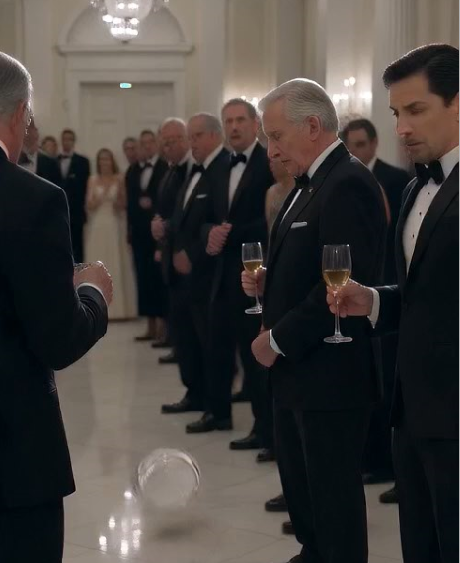
I watched the most powerful woman in Dallas drag my 8-year-old daughter away—and no one dared lift a finger.
The Ashbourne Museum gala was supposed to be a boring night of small talk and champagne. I’d only brought Sophie because her babysitter had woken up with a fever that morning, canceling last minute.
At eight, she was the kind of kid who apologized when someone stepped on her foot. She’d spent an hour before we left picking wild clover and daisies from our yard, tucking them into the neckline of her pale blue hand-me-down dress until it looked like a walking garden.
I turned my back for thirty seconds. Just thirty, to hug an old coworker I hadn’t seen in five years.
When I looked up, Victoria Langford had one jeweled hand clamped so tight around Sophie’s upper arm I could see her nails digging into the fabric.
Victoria was the Langford heiress. The kind of woman who could get a mayor fired with a text, who’d had three restaurants closed because she didn’t like the way a waiter looked at her. Her family’s name was carved into half the buildings in North Texas.
She leaned down until her red lipstick was inches from Sophie’s trembling mouth. Her perfume was thick enough to taste—roses and money and cruelty.
“Children like you don’t belong in rooms full of people who matter,” she whispered.
Her smile was so cold I saw a nearby waiter’s hand shake, sloshing champagne over the edge of a flute.
“You’re nothing but a penniless little stray who wandered in off the street.”
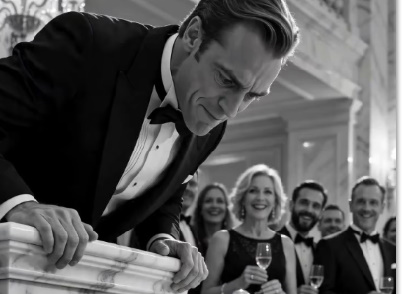
Around us, senators lowered their gazes to their shoes. Tech billionaires sipped their drinks and stared at the marble floors like they held the secrets of the universe. Every powerful family in the room stood perfectly still.
No one challenged a Langford.
Victoria tightened her grip until Sophie’s knuckles bleached white, and started yanking her toward the service exit. Sophie’s wildflowers fell from her dress, one by one, crushed under the heels of passing guests.
My throat closed up. I tried to run, but a wall of tuxedos and ballgowns blocked my path—people moving slow, pretending not to see, too scared to get out of my way fast enough.
For one endless second, I was too far. Too slow. Too ordinary to them. Just a single mom in a thrifted silk dress, no last name worth fearing.
Then Sophie screamed.
“Mommy!”
The orchestra cut off mid-waltz. A tray of caviar blinis crashed to the floor. Every head in the atrium snapped toward us.
I didn’t scream back. I didn’t shove or yell or make a scene.
I just started walking.
One slow, steady step at a time. My hands were loose at my sides, my face blank—the way I look when I’m about to burn a company to the ground and no one sees it coming.
Guests parted around me like water. They didn’t move because they knew who I was. Most of them had no idea. They moved because of the look on my face—the kind that promises consequences no trust fund can buy, no lawyer can fix.
Victoria dropped Sophie’s arm like it was on fire, smoothing her silk gown like she’d just brushed a crumb off her shoulder.
“Control your brat,” she said, loud enough for the first three rows to hear. “She’s embarrassed every decent person in this room.”
I knelt, tucking Sophie behind me so my body blocked her from view. I wiped the tears off her cheeks with my thumb, my touch gentle as I breathed in the smell of her shampoo—strawberry, the cheap kind she loves.
Then I stood. And I looked Victoria Langford dead in the eye.
“You’re right,” I said. My voice was so calm I saw her flinch. “Someone is about to be embarrassed.”
Victoria laughed—a sharp, barking sound that echoed off the glass ceiling. She thought I was a joke. A nobody. A regular mom with a cheap dress and no connections, who’d gotten lucky with a ticket to the gala.
She had no idea I’d bought the Ashbourne Museum three years prior, after her family’s mismanagement had nearly bankrupted it and sold half the art collection to pay their gambling debts.
She had no idea my holding company owned 47% of Langford Industries’ voting stock. Enough to dismantle her family’s 120-year legacy before the sun came up.
I pulled out my phone, pressed the first contact, and put it on speaker.
“Remove Ms. Langford from my property,” I said.
The head of security—who’d stood frozen three feet away while Victoria dragged my child—stepped forward immediately, his face pale.
Victoria’s laugh died in her throat.
I wasn’t done.
“And call an emergency board meeting for Langford Industries. Tonight. In one hour.”
Her face drained of all color, her mouth opening and closing like a fish pulled out of the lake. The crowd murmured, a low roar of confusion and fear.
I squeezed Sophie’s small hand in mine, lacing our fingers together, and spoke the line that turned the entire room to stone.
“By sunrise, the Langford name won’t mean anything in this state anymore.”
For the first time in her spoiled, protected life, Victoria Langford looked scared.
But the secret I whispered in her ear ten seconds later was so much worse. I told her I knew about the Westside housing collapse. The three dead bodies her family had buried under bribes and fake inspection reports. The little boy, seven years old, who’d died in the rubble because they’d cut corners on concrete to buy her a second private jet.
May you like

The rest of the night was a blur of flashing lights and shouted questions. But as I carried Sophie out of the museum, her face tucked into my neck, I knew one thing for sure.
The Langfords had picked the wrong mom to mess with.