Chapter 7
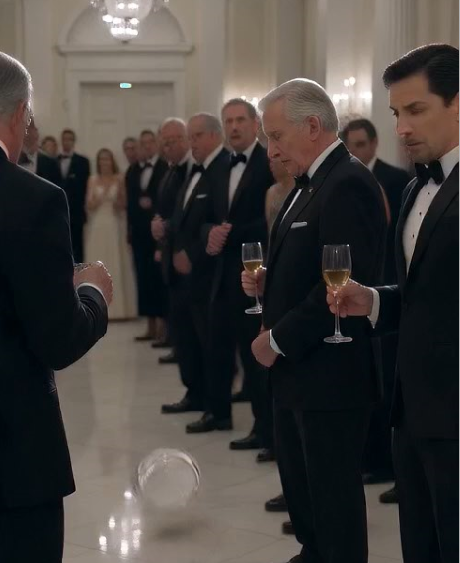
The jury deliberated for three days.
Three of the longest days of my life. I spent them at home with Sophie, trying to act normal, trying not to check my phone every two seconds for a call from my lawyer.
We planted more wildflowers. We baked a three-layer cake that collapsed in the middle. We watched every Disney movie ever made, back to back.
On the third night, my phone rang.
“Verdict’s in,” my lawyer said. “They want everyone in court in an hour.”
I called Lila to come stay with Sophie, kissed her goodbye, and drove to the courthouse. The hallway was packed again, reporters yelling questions, cameras flashing. I didn’t hear any of it. My heart was pounding so hard I could hear it in my ears.
The jury filed in. None of them would look at Roland or Victoria.
I held my breath.
The foreman stood up, holding a piece of paper in his shaking hand.
“On the count of manslaughter in the first degree, against Roland Langford… we find the defendant guilty.”
A cheer went up from the gallery. The judge banged his gavel.
“On the count of fraud, against Roland Langford… guilty.”
“On the count of bribery, against Roland Langford… guilty.”
One by one, they read the verdicts. All guilty. Every single count.
Then it was Victoria’s turn.
“On the count of assault on a minor, against Victoria Langford… guilty.”
“On the count of attempted burglary… guilty.”
“On the count of obstruction of justice… guilty.”
“On the count of accessory to manslaughter… guilty.”
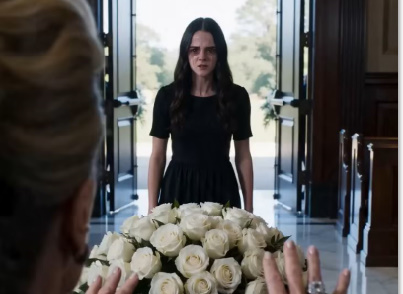
When they finished, Victoria collapsed in her chair, sobbing. Roland sat perfectly still, his face blank, like he couldn’t believe it was real.
The judge set sentencing for two weeks later. The bailiffs led the Langfords out, back to jail, this time for good.
I walked out of the courtroom into the hallway, and the Westside families surrounded me, hugging me, crying, laughing. Maria held me the longest, whispering “Thank you” over and over into my ear.
When I got home, Sophie was waiting up for me on the couch, even though it was way past her bedtime. She ran to me as soon as I walked in the door.
“Did we win?” she asked, her eyes big.
I knelt down, picking her up, holding her tight. “We won, baby. We won everything.”
She cheered, wrapping her arms around my neck. “I knew it! I knew you’d do it!”
Two weeks later, we went back to court for sentencing.
Roland Langford got twelve years in federal prison, no chance of parole. He was seventy-two years old. He’d die behind bars.
Victoria Langford got eight years. The judge called her “a danger to society, a woman who believes her wealth gives her the right to hurt anyone who gets in her way.”
As they led her out, Victoria looked right at me. For the first time, there was no hate in her eyes. No anger. Just… nothing. Empty. Broken.
I didn’t feel happy. I didn’t feel triumphant. I just felt… tired. And sad. Sad that a person could grow up so rich, so privileged, and still be so empty inside that hurting a child felt like a game.
But that sadness didn’t last long.
Because a month later, we had something to celebrate.
The new Westside housing project was finished.
The buildings were bright, and clean, and safe. Each apartment had new appliances, big windows, a balcony. The community center had a library, a computer lab, and a big room for after-school programs. The playground had slides, and swings, and a dinosaur-shaped climbing structure Sophie had helped design.
And in the middle of it all, right in front of the community center, was the wildflower garden.
Sophie and Maria had planted every single flower themselves, with help from the construction workers and the other Westside kids. It was huge, full of daisies and clover and poppies and bluebonnets, with a big stone bench in the middle.
On the bench was a bronze plaque. It said:
IN LOVING MEMORY OF DIEGO GONZALEZ, MIA CARTER, AND JAMES WILSON.
MAY THEIR LIGHT SHINE ON IN EVERY FLOWER THAT GROWS HERE.
NO ONE IS ABOVE THE LAW. NO ONE IS TOO SMALL TO MATTER.
The opening ceremony was packed. All the new residents were there, along with the construction workers, the DA, the mayor, reporters, and hundreds of people who’d followed the story from the beginning.
The mayor gave a speech. The DA gave a speech. Maria gave a speech, thanking everyone who’d helped, telling Diego’s story one more time.
Then it was my turn.
I walked up to the microphone, Sophie’s drawing in my hand, and looked out at the crowd. At the kids running around the playground, laughing. At the families carrying boxes into their new apartments. At the wildflowers blowing in the wind.
“Two years ago,” I said, “I stood in a museum gala and watched a woman drag my daughter away, and no one helped. I thought then that the world was a cruel place, that money and name meant more than doing the right thing. But today? Standing here? I know I was wrong.”
I paused, smiling.
“Because the world isn’t made by the rich and the powerful. It’s made by the people who show up. The construction workers who testified even when they were scared. The city officials who told the truth even when it cost them their jobs. The families who fought for three years even when everyone told them to give up. And a little girl who picked wildflowers and reminded all of us that even the smallest, quietest things can grow into something beautiful.”
I looked down at Sophie, standing in the front row next to Maria, grinning up at me.
“Justice isn’t about putting people in jail,” I said. “It’s about making sure no one else has to hurt the way these families did. It’s about building something better. Something that lasts. And today? We did that.”
The crowd cheered. I stepped down from the podium, and Sophie ran to me, throwing her arms around my legs.
“Mommy!” she said. “That was the best speech ever! Even better than the one at school!”
I laughed, picking her up. “Thanks, baby.”
That night, we sat on the stone bench in the wildflower garden, long after everyone else had gone home. The sun was setting, painting the sky pink and gold, and the fireflies were starting to come out, blinking on and off over the flowers.
Sophie rested her head on my shoulder, her breathing slow and even, half asleep.
“Mommy?” she whispered.
“Yeah, baby?”
“Diego can see the flowers, right? From heaven?”
I kissed the top of her head. “He can see them. And he loves them. More than anything.”
“Good,” she said, snuggling closer. “I’m glad.”
I held her, looking out over the garden, over the new buildings, over the playground where the kids would laugh and play for generations to come.
The Langfords were gone. Their name was ruined, their legacy destroyed, their power gone forever.
May you like

But what we’d built? It would last.
And for the first time in my life, I felt completely at peace.