Chapter 10
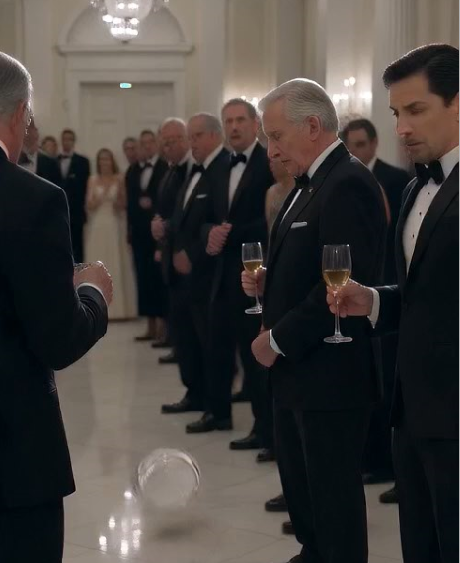
Five years to the day after the gala, we went back to the Ashbourne Museum.
It was the annual gala again, but this time, things were different.
I was the guest of honor. The museum had just opened a new children’s wing—funded with part of the Langford settlement—full of art classes, and dinosaur exhibits, and a big indoor wildflower garden. The wing was named after Sophie.
Sophie was thirteen now, tall and graceful, with long brown hair and the same kind, brave eyes. She wore a new pale blue dress, and she’d tucked a daisy behind her ear, just like she’d done when she was eight.
We walked into the atrium together, our heads held high. The room was full of the same kind of people—senators, billionaires, powerful families—but this time, when they saw us, they smiled. They clapped. They lined up to say hello, to shake our hands, to tell Sophie how much they loved her wing.
No one looked away now. No one was scared.
Halfway through the night, the director of the museum asked me to say a few words. I walked up to the podium, Sophie standing beside me, and looked out at the crowd.
“Five years ago,” I said, “I stood right here. I watched a woman drag my daughter toward that exit over there. And every single person in this room looked away. No one helped. No one cared.”
The room went quiet. People shifted in their seats, looking guilty.
“I’m not telling you this to make you feel bad,” I said, smiling. “I’m telling you this because things change. People change. This museum, which was once a place where cruelty was allowed to happen, is now a place where every kid, no matter how much money their parents have, no matter what their last name is, is welcome. Where they can create, and learn, and grow. That’s the thing about second chances. We all get them. If we’re brave enough to take them.”
I looked down at Sophie, squeezing her hand.
“Five years ago, I thought the worst thing that ever happened to me was that night. But today? I know it was the best. Because it forced me to stand up. To fight. To build something better. And it taught me that the most powerful thing in the world isn’t money, or a famous last name, or connections. It’s a mom’s love for her child. It’s ordinary people deciding to do the right thing. It’s hope.”
The crowd erupted in applause. I stepped down from the podium, and Sophie hugged me tight.
“Nice speech, Mom,” she said, grinning.
“Thanks, kid.”
We spent the rest of the night in the new children’s wing, watching the kids run around, painting, drawing, playing in the indoor wildflower garden. Maria was there, with her new baby girl—Lila, named after my sister—who was almost a year old, waddling around in a frilly dress, grabbing at the flowers.
My sister was there too, laughing as Lila the baby tried to eat a daisy. The DA was there, the mayor, the construction workers, all the Westside families. It felt like one big, happy, messy family.
When the party ended, we walked out onto the museum steps. The night was warm, the sky full of stars. A car was waiting for us, but we didn’t get in right away. We stood there, side by side, looking out at the city.
“Mommy?” Sophie said.
“Yeah, baby?”
“Remember when you said that by sunrise, the Langford name wouldn’t mean anything in this state anymore?”
I smiled. “I remember.”
“Well,” she said, turning to look at me, her eyes shining in the streetlight. “You were wrong.”
I frowned. “I was?”
“Uh-huh,” she said. “Because the Langford name doesn’t mean nothing. It means something now. It means that no one is above the law. It means that even the most powerful people can be beaten. It means that if you hurt a kid, or hurt a family, or build something unsafe just to save a buck? You will pay for it. That’s what the Langford name means now. And it’s all because of you.”
I stared at her, my throat so tight I could barely speak. I pulled her into a hug, holding her close, kissing the top of her head.
“You’re so much smarter than me,” I whispered.
“I know,” she said, laughing into my shoulder. “I get it from Dad.”
I laughed through my tears, squeezing her one more time before letting go. We got in the car, and the driver pulled away from the museum, heading home.
On the seat between us was the drawing Sophie had made two years earlier—the one of us on the bench, with Diego in the sky. Framed now, small enough to carry with me wherever I went.
I looked out the window at the passing city. At the lights, at the buildings, at the Westside neighborhood glowing in the distance, where the wildflower garden was sleeping under the moon.
We’d been through so much. Fear. Pain. Lies. War.
But we’d come out the other side. Stronger. Braver. Happier.
Justice had been served. The Langfords were gone, their legacy turned into something good, something that would help people for generations.
Sophie was safe. She was loved. She was confident, and kind, and ready to take on the world.
And me? I was exactly where I was meant to be. Right beside her.
The car pulled into our driveway. We got out, walking up the path to the front door, the smell of our own backyard wildflowers drifting over the fence.
Sophie grabbed my hand, lacing our fingers together, just like she’d done that night at the gala.
“Ready to go in, Mom?” she asked.
I smiled, squeezing her hand.
“More than ready, baby.”
We walked inside, closing the door behind us, shutting out the dark and the past and everything that had ever tried to hurt us.
May you like
Inside, it was warm. It was bright. It was home.
And for the rest of our lives, we would never be scared again.