Chapter 10
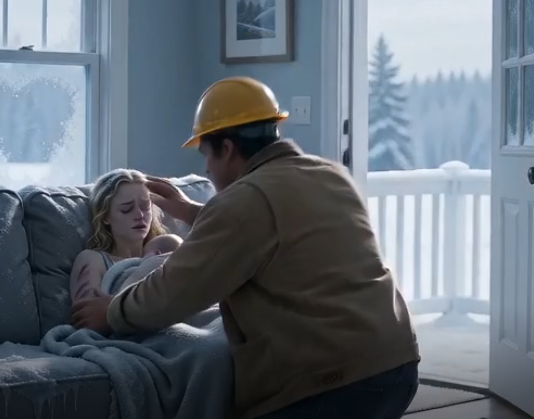
Lily was ten years old.
It was a perfect Saturday in June. The sun was shining, the birds were singing, the air smelled like cut grass and Sophia’s famous lemon bars baking in the oven.
We were at the cabin on Grandma’s land.
The cabin was bigger now. We’d added on over the years—another bedroom, a bigger kitchen, a deck that wrapped all the way around, overlooking the creek. The old oak tree I’d climbed as a kid now had a treehouse in it, the one I’d built Lily for her eighth birthday, complete with a slide and a rope swing.
Lily was down by the creek with Jake’s two kids—her cousins, eight and twelve. They were catching frogs, screaming, laughing, their shoes off, their jeans rolled up, covered in mud. Jake was sitting on the deck with me, drinking a beer, watching them.
“Remember when we were that age?” Jake said, grinning. “We used to catch frogs in that exact same spot. Grandma would yell at us for tracking mud in the house.”
I laughed. “Yeah. She’d make us take our clothes off on the porch. Said we weren’t getting her floors dirty.”
Sophia came out of the cabin then, carrying a tray of lemon bars. She was thirty-four now, more beautiful than ever, her hair longer, a few faint lines around her eyes from smiling so much. She was teaching at Lily’s school now—second grade, the same grade Lily was in. She loved it. The kids loved her. She was the kind of teacher they remembered their whole lives.
“Lemon bars are done,” she said, setting the tray down on the deck table. “And if you two don’t stop those kids from tracking mud in my cabin, there will be no dessert for anyone.”
Jake and I both stood up, laughing, and yelled down to the creek.
A few minutes later, the kids came running up the hill, muddy, wet, breathless, each holding a frog in a bucket they promised they’d let go before dinner.
Lily ran straight to Sophia. She was ten now, almost as tall as her mom’s shoulder, her hair in a messy braid, a gap where her front tooth was growing in. She was still fierce, still stubborn, still the kind of kid who’d stand up for anyone being picked on at school, who’d bring home stray cats and beg to keep them, who’d cry at dog food commercials.
“Mom, look!” she said, holding up her bucket. “I caught the biggest one! I named him Grandma. Because he’s old and wise, just like her.”
Sophia laughed. She knelt down and wiped the mud off Lily’s cheek with her thumb.
“Grandma the frog,” she said. “I love it. But he has to go back to his family before dinner, okay? Frogs don’t like lemon bars.”
Lily nodded, serious. “Okay. But can we keep him for an hour? I want to show him the treehouse.”
“An hour,” Sophia said.
Lily whooped and ran off with the other kids, toward the oak tree.
Jake’s wife came out then, carrying a bowl of potato salad, and we all sat down at the big picnic table on the deck. We ate burgers and potato salad and corn on the cob, and we laughed, and we talked, and for a while, no one mentioned Marge. No one mentioned the trial. No one mentioned the cold house, the bruises, the letters, the prison.
It was just us. Family. The family we’d chosen. The family we’d built.
After dinner, Jake and his family went home. The kids were exhausted, their frogs released, their bellies full.
Sophia and I cleaned up the dishes together, the way we always did—her washing, me drying, moving around each other in the small kitchen like we’d been doing it our whole lives.
When we were done, we went out on the deck. The sun was setting, painting the sky pink and orange and purple. The fireflies were starting to come out. The creek gurgled below us.
Lily was in the loft, asleep, tired from a long day of running and playing and catching frogs. We could hear her soft, even breathing through the open window.
Sophia leaned against the railing, looking out over the land. I came up behind her and wrapped my arms around her waist, resting my chin on her shoulder.
“Can you believe it’s been twelve years?” she said, quiet. “Twelve years since that night.”
I nodded. “Feels like yesterday. And a lifetime ago.”
“Marge died last week,” she said.
I froze.
I’d gotten the call three days before. A social worker from the hospice. She’d gone in her sleep, alone, no family, no friends. Just the nurses. I hadn’t told Sophia yet. I’d been trying to find the right time.
“I know,” I said. “I got the call. I was going to tell you. I just… didn’t know how.”
Sophia was quiet. She turned in my arms so she was facing me. She put her hands on my chest, looking up at me.
“I’m not sad,” she said. “I’m not happy either. I’m just… nothing. She was a person who did terrible things. And now she’s gone. And the world keeps turning. And our lives keep going. And that’s all there is to it.”
She paused.
“Did she… did she say anything? At the end? About us? About Lily?”
I shook my head. “The social worker said she didn’t talk much those last few days. She just slept. She asked for you once, the day before she died. Asked if you’d come. When they said no, she just rolled over and didn’t say another word.”
Sophia nodded. She was quiet for a minute. Then she said, “I hope she found peace. Wherever she is. Not for her. But because… no one deserves to die alone with all that hate in their heart.”
I kissed her forehead.
That was the thing about Sophia. Even after everything Marge had done, she still had kindness in her. Still had room in her heart to wish someone peace, even someone who’d tried to destroy her.
That was why I loved her. That was why I’d chosen her, over and over, every single day for the last twelve years.
We stood there for a long time, watching the sun go down, holding each other.
Then Sophia pulled back. She looked at me, her eyes bright in the fading light.
“Dance with me,” she said.
I laughed. “There’s no music.”
“We don’t need music,” she said, and she put her arms around my neck.
So we danced.
Slow, quiet, on the deck of our cabin, under the stars, the fireflies blinking around us, the sound of the creek below us, our daughter asleep above us.
We danced, and I thought about everything we’d been through.
The cold. The fear. The trial. The letters. The threats. The years of looking over our shoulders, of waiting for the other shoe to drop, of fighting for every scrap of peace we’d ever gotten.
I thought about the mistakes I’d made. Not believing Sophia. Leaving them alone. Almost losing the two best things that ever happened to me because I was too stupid, too loyal to the wrong person, too blind to see what was right in front of my face.
I thought about how we’d fixed it. Not perfectly. Not easily. But together. Every step of the way.
I thought about Lily. Our miracle. Our girl. The reason we’d fought so hard, the reason we’d never given up. She was ten years old, happy, healthy, loved, safe. She had no idea how close she’d come to never having this life. And that was the greatest victory of all.
Sophia rested her head on my chest. I could feel her heart beating, steady and strong, against mine.
“Thank you,” she whispered.
“For what?” I said.
“For choosing us,” she said. “For fighting for us. For loving us, even when it was hard. Especially when it was hard.”
I kissed her. Soft. Slow. The way I’d kissed her on our wedding day, the way I’d kiss her for the rest of my life.
“I’ll always choose you,” I said. “Both of you. Every single day. For the rest of my life.”
Somewhere in the woods, an owl hooted. A breeze blew through the oak tree, making the leaves rustle. The last of the sun disappeared below the horizon, and the stars came out, bright and clear.
Down by the creek, a frog croaked. Probably Grandma the frog, back with his family, safe and warm.
Up in the loft, Lily sighed in her sleep, and turned over, and smiled.
And there, on the deck of the cabin we’d built with our own hands, surrounded by the land we loved, holding the woman who’d saved me, who’d saved us both, I knew.
This was it.
This was the happy ending.
Not because everything was perfect. Not because we’d never have hard days again. Not because the ghosts were completely gone.
But because we had each other.
Because we’d survived.
Because we’d chosen love, over and over, even when hate was easier. Even when the world was against us. Even when it would’ve been so much simpler to walk away.
Love had won.
May you like
Justice had been served.
And for the first time in my life, I felt completely, utterly, forever safe.