Chapter 8
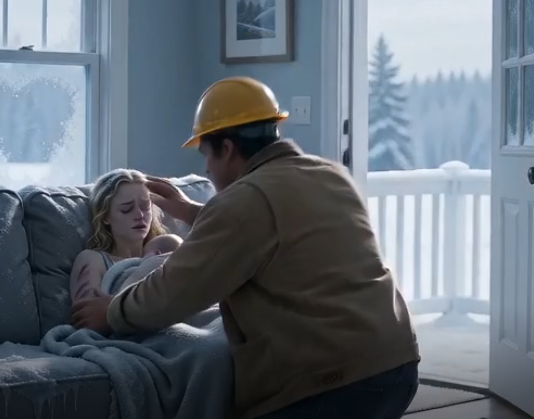
Lily was four years old when Grandma died.
It was peaceful. She went in her sleep, in her own bed, the way she’d always wanted. She was eighty-four. She’d lived a good, long life. She’d gotten to see Lily grow from a tiny, bruised newborn into a bright, fierce, funny little girl who loved dinosaurs and princesses and getting into everything.
We buried her on a rainy Tuesday in March.
Almost no one from Marge’s side of the family came. Just Jake and his wife, and my dad, who’d flown in from Oregon. The rest of them were still too angry, still too loyal to Marge, still too convinced we’d made the whole thing up.
It was okay. We didn’t need them.
We had Grandma’s church friends. We had Sophia’s family—her mom and dad, her two sisters, who’d flown in from Ohio. We had the neighbors. We had the moms from Lily’s preschool. We had people who loved us, who believed us, who’d stood by us through everything.
That was enough.
At the grave, Lily held my hand, her rain boots squelching in the mud. She didn’t really understand what death was, not yet. She just knew Grandma wasn’t going to bake her cookies anymore, or read her bedtime stories, or sneak her candy when Mommy and Daddy weren’t looking.
“Is Grandma an angel now?” she asked, looking up at me, her big blue eyes serious.
I knelt down in the mud. I wiped the rain off her cheek.
“Yeah, baby,” I said. “She’s an angel now. And she’s watching over you. Always.”
Lily nodded, like that made perfect sense. Then she turned to the casket, put her little hand on it, and said, loud and clear, “Bye, Grandma. I love you. Save me a cookie up there, okay?”
A few people laughed through their tears.
That night, after everyone left, after Lily was asleep, Sophia and I sat in the living room. The house was quiet. Too quiet.
Grandma’s Tupperware container was still on the kitchen counter—the last one she’d brought over, full of chocolate chip cookies, just three days before she died. We hadn’t had the heart to throw it away.
“I keep expecting her to walk through the door,” Sophia said, quiet. She was holding a framed photo of Grandma holding Lily at her first birthday, both of them covered in cake. “With her cookies and her cane and her opinions about everything.”
I sat down next to her. I put my arm around her.
“Me too,” I said.
We were quiet for a long time. The rain tapped against the windows.
Then Sophia said, “She left something for us. In her will. The lawyer called yesterday. I didn’t want to say anything at the funeral. It didn’t feel right.”
I looked at her. “What?”
“Her house,” Sophia said. “And the land. And some money. Enough to… well. Enough to pay off this house. Enough to put Lily through college. Enough that we never have to worry about money again, if we’re careful.”
I stared at her.
Grandma had owned a little house on five acres out in the country, the one she’d lived in since the 1970s. I’d played in those woods as a kid. I’d learned to fish in the creek out back. I had no idea it was worth that much.
“Why?” I said. “She had other kids. Other grandkids.”
Sophia looked at me, her eyes wet.
“Her lawyer said she told him… we were the only family she had left. The only ones who deserved it. She said Marge had already gotten more than enough from her over the years, and the rest of them had made their choices. She wanted us to have it. She wanted us to be safe. For Lily.”
I leaned my head back against the couch. I closed my eyes.
Grandma. Even gone, she was still taking care of us.
A week later, we got another letter.
This one wasn’t from Marge. It was from the prison.
Marge had been told about Grandma’s death. And she’d been told about the will.
She’d lost her mind.
She’d screamed at the guards. She’d thrown her food tray. She’d told anyone who would listen that we’d killed Grandma, that we’d poisoned her, that we’d forged the will, that we’d stolen everything that was rightfully hers.
She’d filed a formal protest with the court, challenging the will. Saying she was the only surviving child, that everything should go to her. That we’d manipulated a poor, confused old woman in her final days.
Our lawyer called us, laughing a little when he told us.
“She doesn’t have a leg to stand on,” he said. “Grandma had her lawyer present when she signed it. She had two witnesses. She was of sound mind. The judge will throw this out before the ink is dry.”
He was right.
It took three months, but the judge dismissed Marge’s challenge with prejudice. She couldn’t file it again. And because she’d threatened a guard during her tantrum, she’d lost another year of good time. Parole was pushed back again. Now she wouldn’t even be eligible until Lily was ten.
We put that letter in the folder too. The folder was getting thick.
That summer, we sold Grandma’s house.
We kept the land—five acres, with the creek, with the woods, with the old oak tree I’d climbed a hundred times as a kid. We paid off our mortgage. We put the rest in trust for Lily.
And we decided to build.
Not a new house on Grandma’s land—we liked our little house in town, with the front porch swing and the nursery with the morning sun. But a cabin. A small one. One bedroom, a loft for Lily, a big stone fireplace, a porch that looked out over the creek.
A place we could go on weekends. A place where Lily could run free, climb trees, catch frogs, make the same kind of good memories I’d made there. A place that was ours, that no one could take away.
I built it myself, on weekends and after work. Jake helped me—he was a carpenter, good with his hands, and he’d been making up for lost time, showing up every Saturday with donuts and coffee, never mentioning Marge, never asking for anything but the chance to be family again.
Lily “helped” too. She was five now, all elbows and knees, with pigtails and a tool belt that was too big for her, hammering nails into scrap wood and telling us she was building a castle for her princess dolls.
By the time fall came, the cabin was done.
We spent our first weekend there in October. The leaves were turning red and gold. The air smelled like pine and wood smoke.
We made chili on the stove. We roasted marshmallows in the fireplace. We took Lily fishing in the creek, and she caught her first fish—a tiny little bluegill—and she was so proud she cried, then made us let it go because “he has a mommy too.”
That night, after Lily was asleep in the loft, Sophia and I sat on the porch of the cabin, wrapped in a blanket, watching the stars.
“Can you believe this is ours?” Sophia said, quiet. “All of it. The house. The cabin. Lily. Us. Sometimes I wake up and I’m still afraid it’s a dream. That I’m going to open my eyes and I’m back on that couch, freezing, with her yelling at me.”
I squeezed her tighter.
“It’s not a dream,” I said. “It’s real. And no one is ever going to take it from us. Not Marge. Not anyone.”
Sophia was quiet for a minute. Then she said, “I forgave her, you know. Not for her. For me.”
I looked at her.
“Really?” I said.
She nodded. “It took a long time. A lot of therapy. A lot of crying. But I did. I forgave her for being the person she is. For being broken, and angry, and cruel. I don’t wish her harm. I don’t hate her anymore. I just… feel sorry for her. She spent her whole life so angry at everyone else that she threw away the only people who ever loved her. And now she’s alone in a cell, with nothing but her own hate to keep her company. That’s worse than any prison sentence.”
She leaned her head on my shoulder.
“But forgiveness doesn’t mean I have to let her back in,” she said. “It doesn’t mean I have to trust her. It doesn’t mean she gets to be in Lily’s life. Forgiveness is for me. Boundaries are for us. And my boundaries are non-negotiable.”
I kissed her.
I’d spent so long thinking I had to be the strong one, the protector, the one who fought all the battles. But Sophia was stronger than I’d ever be. She’d been broken, and she’d put herself back together, piece by piece, and she’d come out kinder, softer, but unshakable.
She was my hero.
May you like
Inside the cabin, Lily laughed in her sleep. Somewhere in the woods, an owl hooted. The fire crackled in the fireplace.
For the first time in my life, I felt completely, utterly at peace.