Chapter 6
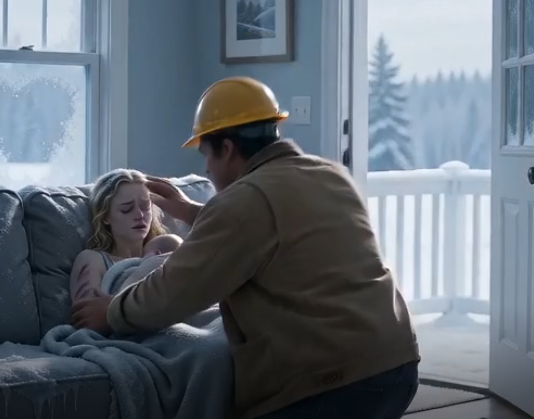
The sentencing was six weeks later.
The judge gave Marge twelve years.
Twelve years for what she did to Sophia. Twelve years for what she did to Lily. Twelve years to think about it, alone in a cell, with no one to manipulate, no one to hurt, no one to blame but herself.
With good behavior, the lawyer said, she might get out in eight.
But she’d be seventy when she got out. And she’d never be allowed within a thousand feet of Sophia or Lily again. The restraining order was permanent. No contact. No letters. No third-party messages. Nothing.
If she tried, she’d go right back in.
We walked out of the courthouse that day, and for the first time in months, I breathed deep.
The air was cold—December in Denver—but it felt clean. Fresh. Like the whole world had been washed.
“Twelve years,” Sophia said, quiet, as we walked to the truck. She was holding Lily tight, like she still couldn’t believe it was real. “Is that… is that enough?”
I stopped. I turned to her. I put my hands on her shoulders.
“It’s enough that she’s gone,” I said. “It’s enough that she can’t hurt us anymore. The rest doesn’t matter. What matters is us. You. Me. Lily. We’re free now.”
Sophia nodded. She leaned her head on my chest, and I wrapped my arms around both of them.
But freedom isn’t a switch you flip.
It’s a process.
The first few months after the trial were better. So much better. No more knocks on the door from angry relatives. No more late-night phone calls. No more looking over our shoulders.
But the ghosts were still there.
Sophia still had nightmares. Not as often, but when they came, they were bad. She’d wake up screaming Marge’s name, sweating, her heart racing so fast I could feel it against my chest.
She still flinched if someone raised their voice. Even me. Even if I was just yelling at the TV during a football game. She’d grab Lily and leave the room, and it would take me an hour to talk her down, to remind her I’d never hurt her, never.
And she still struggled with the guilt.
Not her guilt—mine.
She’d lie awake at night, watching me sleep, and she’d tell me later she was thinking about how I’d lost my whole family over her. My mom. My aunts and uncles. Most of my cousins. The people I’d grown up with.
“Sometimes I wonder,” she said one night, quiet, after Lily was asleep, “if it was worth it. If you’d be happier if I’d just… if I’d never said anything. If we’d just let it go.”
I sat up. I turned on the lamp. I made her look at me.
“Don’t you ever say that,” I said, and my voice was sharp, sharper than I meant it to be. “Don’t you ever think that. You didn’t take my family from me, Soph. Marge did. She made her choices. Every single one of them. And the relatives who took her side? They made their choices too. They chose to believe a lie instead of the truth. That’s on them. Not you. Never you.”
I took her hand in mine.
“And for the record?” I said, softer now. “I didn’t lose my family. I gained the only one that matters. Right here.” I touched her chest, right over her heart. Then I touched the bassinet next to the bed, where Lily was sleeping. “You two are my family. Everything else is just… people I used to know.”
Sophia cried then, and I held her, and I promised her over and over that I meant it.
That spring, we decided to move.
Not because we had to. The house was fine. The locks were new. The alarm was top-of-the-line. But every room still held memories. The couch was gone, the walls were repainted, but we both knew what had happened in every corner.
We found a smaller house, twenty minutes outside of town, on a quiet street with big trees and a big backyard. It had a front porch with a swing, and a nursery with a window that faced the morning sun, and a kitchen big enough for both of us to cook in.
It was ours. No one had ever lived there but us. No ghosts. No bad memories. Just empty rooms waiting for us to fill them with good ones.
Grandma helped us move.
She was eighty-two, but she was there at eight in the morning, bossing the movers around, telling them where to put the boxes, bringing lemonade for everyone.
When we were done, she walked through the house, room by room, nodding like she was approving.
“Good,” she said, when she got to the nursery. She leaned over the crib and touched Lily’s cheek—Lily was six months old now, sitting up, grabbing everything, laughing at everything. “This is good. No bad energy here. Just love.”
She stayed for dinner that night. We ate at the new kitchen table, the one we’d bought together, and Grandma told stories about when Marge was little, about how she’d always been stubborn, always had to have her own way, how none of this was a surprise, not really.
“I tried,” she said quietly, stirring her coffee. “I tried to raise her right. I don’t know where I went wrong.”
I reached across the table and put my hand on hers.
“You didn’t go wrong,” I said. “You raised me. And you’re here. That’s enough.”
Grandma smiled, but her eyes were wet.
That summer was the best of my life.
I went back to work, part-time at first, then full-time. Sophia stayed home with Lily, but she started taking classes online—early childhood education, something she’d always wanted to do. She made friends with the other moms at the library story time. She joined a mom’s group. She started laughing again. The real laugh, the one I’d fallen in love with, the one that crinkles her eyes at the corners.
Lily was thriving. She was crawling by seven months, walking by ten, into everything. She had my eyes and Sophia’s smile, and she was the happiest baby I’d ever seen. No nightmares. No fear. Just pure, uncomplicated joy.
We took her to the zoo for her first birthday. Grandma came too. We ate cake, we watched the elephants, we took a hundred photos. Lily smashed her face into the frosting and laughed so hard she snort-laughed, and I thought my heart would burst.
That night, after we got home, after Lily was asleep in her new crib in her new room, Sophia and I sat on the front porch swing. The air was warm, the crickets were chirping, the stars were bright.
Sophia leaned her head on my shoulder.
“Remember that night you came home?” she said, quiet. “When you found us on the couch? I thought… I thought we were going to die. I thought Lily was going to die. And I thought you’d never believe me. I thought you’d take her side, like everyone else.”
I put my arm around her. I kissed the top of her head.
“I was an idiot,” I said. “I should’ve believed you from the start. I should’ve never left you alone with her. I’ll spend the rest of my life making it up to you. Both of you.”
Sophia lifted her head. She looked at me, her eyes shining in the porch light.
“You already have,” she said. “You believed me when it mattered. You fought for us. You chose us. That’s all I ever needed.”
She kissed me then, soft and slow, and for the first time in a long time, I didn’t feel the weight of everything we’d been through.
May you like

I just felt light.
I felt home.