Chapter 9
Lily was seven years old when Marge’s first parole hearing finally happened.
Ten years had passed since that night I’d carried my girls out of our freezing house. Ten years of good days and bad days, of letters and threats and court dates, of building a life that was ours, brick by brick.
Marge was sixty-two now. She’d served ten years of her twelve-year sentence. She’d been a model prisoner, by all accounts—no more fights, no more tantrums, church every Sunday, anger management, library work, all of it.
Her lawyer argued she was a changed woman. That she was elderly, in poor health, that she posed no threat to anyone. That she’d served more than enough time for a “family dispute that got out of hand.”
We argued otherwise.
We brought the folder. All of it. The original security footage. The letters. The threats. The will challenge. The disciplinary reports from prison. The police reports. The doctor’s testimony. Everything.
I spoke first.
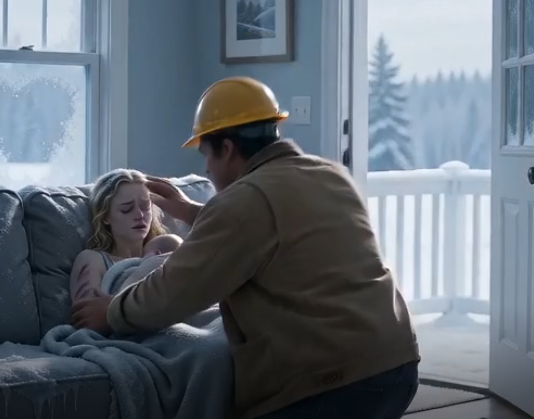
I told the parole board about coming home that night. About the cold. About finding Sophia and Lily on the couch, blue, shivering, barely alive. About the drive to the ER, about the doctor telling me they almost didn’t make it. About the bruises. About the guilt of not believing Sophia, of leaving them there.
I told them about the letters. About the threats. About Marge saying she’d camp on our lawn, about her saying Lily belonged to her. About how she’d never once, in ten years, apologized to Sophia directly. All her apologies had been to me. All her promises had been to me. She still didn’t see Sophia as a person. She still saw her as an obstacle between her and what she thought was hers.
Then Sophia spoke.
She was calm. She was steady. She didn’t cry. She didn’t yell. She just told the truth.
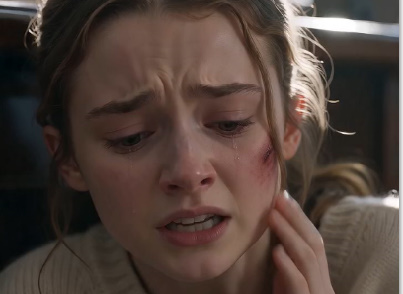
She told them about the ten days alone with Marge. About the cold. About the hunger. About being grabbed, shoved, slapped. About being too scared to move, too scared to speak, too scared to even breathe wrong. About holding Lily against her chest, trying to keep her warm, trying to keep her alive, thinking they were both going to die there.
She told them about the years after. About the nightmares. About flinching when someone raised their voice. About lying awake at night, afraid Marge would come through the door. About having to explain to Lily, when she was old enough to ask, why she didn’t have a grandma like the other kids at school.
“Marge Carter is not a changed woman,” Sophia said, looking right at the three parole board members, her voice clear and strong. “She’s a better actress. She’s learned what to say, what to do, to get what she wants. She’s been doing it her whole life. And if you let her out today, the first thing she will do is come for us. Not because she’s sorry. Not because she loves us. But because in her mind, we are hers. And she will never stop until she gets what she thinks she deserves.”
She paused. She looked at the one-way mirror behind the board, where Marge was sitting, watching.
“I have spent ten years building a life for my family,” Sophia said. “A life of safety. Of love. Of peace. I will not let her destroy it. Not now. Not ever. If you release her today, you are not releasing a reformed woman. You are releasing a woman who has spent ten years in a cell, with nothing to do but plan her revenge. And my daughter will be the first person she comes for.”
She sat down.
The room was quiet.
Then the board asked to hear from Marge.
She came into the room in her prison grays, her hair gray now, lined, thinner. She looked old. Frail. She walked slow, like her knees hurt.
She sat down. She looked at the board. And then she looked right at us.
And she smiled.
Not a nice smile. Not a repentant smile. A cold, tight, knowing smile. The same smile she’d had on the security footage, when she turned the thermostat down.
She didn’t apologize. She didn’t say she was sorry. She didn’t even pretend.
“I did what I had to do,” she said, her voice rough from years of smoking. “That girl was never good enough for my son. She was weak. She was lazy. She was turning him against me. And that baby? She was mine. My blood. My flesh. I had every right—”
“Enough,” the head of the parole board said, cutting her off. His face was tight.
Marge stopped. She stared at him. Then she looked back at us. The smile was gone now. The mask was off.
“You’ll regret this,” she said, pointing a finger at Sophia. “All of you. I’ll get out eventually. And when I do—”
The guards stepped forward and pulled her out of the room. She was still yelling as the door closed behind her.
The board deliberated for twenty minutes.
When they came back, the chairman looked at us.
“Parole denied,” he said. “Mrs. Carter will serve the full remainder of her sentence. She will be eligible for mandatory release in two years, at which time the state will re-evaluate her risk to the community. In the meantime, the permanent restraining order remains in full effect. Any contact, direct or indirect, will result in immediate re-arrest and additional charges.”
We walked out of the prison an hour later.
The sun was bright. The air was warm. It was a perfect June day.
Sophia stopped on the steps. She took a deep breath, like she was breathing in all the clean air she could.
“Two more years,” she said, looking at me. “Then she gets out. Mandatory. No more parole hearings to stop her.”
I nodded. I took her hand.
“Then we have two years to make sure she can’t get within a hundred miles of us,” I said. “We’ll talk to the lawyer. We’ll get the restraining order upgraded. We’ll move if we have to. We’ll do whatever it takes.”
Sophia smiled. A real smile. The one that crinkles her eyes.
“We don’t have to move,” she said. “This is our home. Our town. Our life. I’m not running anymore. If she wants to come after us, let her. We’re ready.”
She was right.
We were ready.
That fall, Lily started second grade.
She was seven years old, smart as a whip, fierce and kind and stubborn as a mule. She played soccer, she took art classes, she loved science, she could argue her way out of any punishment we tried to give her. She had no memory of Marge. No memory of the cold, the hunger, the fear. All she knew was love. And safety. And that her mom and dad would burn the world down before they let anything hurt her.
That was the greatest gift we’d ever given her.
In November, we got the final letter from the prison.
Marge had been diagnosed with late-stage lung cancer. It had spread. The doctors gave her six months, maybe a year. They were releasing her early, on compassionate grounds, to a hospice facility in another state—far away from us, far away from anyone she knew.
She’d asked to see us. To see Lily. One last time.
The letter said she was sorry. Truly sorry, this time. That she was dying, and she didn’t want to go with this weight on her soul. That she just wanted to hold her granddaughter one last time, to say she loved her, to say goodbye.
We sat at the kitchen table and read it together. Lily was in the living room, watching cartoons, oblivious.
I looked at Sophia.
“What do you want to do?” I asked.
Sophia read the letter again. Slow. Careful.
Then she folded it up. She put it in the folder—the folder that was now so thick it barely closed. The folder we kept in the back of the safe, that we hadn’t opened in years.
She closed the safe. She locked it.
“Nothing,” she said. “I’m not going. I’m not taking Lily. She made her choices. She lived with them. She can die with them. I owe her nothing. Not a visit. Not a goodbye. Not even a thought.”
She walked over to the living room. She sat down on the couch next to Lily, who immediately crawled into her lap, chattering about her favorite cartoon. Sophia wrapped her arms around her, kissed the top of her head, and smiled.
I watched them.
I thought about Marge, alone in a hospice bed in a strange state, with no one by her side. I thought about the choices she’d made, the people she’d hurt, the love she’d thrown away because she was too angry, too proud, too selfish to see what was right in front of her.
I felt nothing.
No sadness. No anger. No guilt. Just… nothing.
She was a stranger to me now. A woman who’d once been my mother, who’d once been the most important person in my life, but who’d chosen hate over love, control over connection, cruelty over kindness.
And she’d died alone because of it.
That was her tragedy. Not ours.
Ours was the story of two people who’d been broken, who’d been hurt almost beyond repair, who’d chosen each other, over and over, even when it was hard, even when it would’ve been easier to walk away.
May you like
Ours was the story of a little girl who’d almost died in the cold, who’d grown up warm and loved and safe, who had no idea how lucky she was, and that was exactly how it should be.
Ours was the happy ending.