Chapter 4
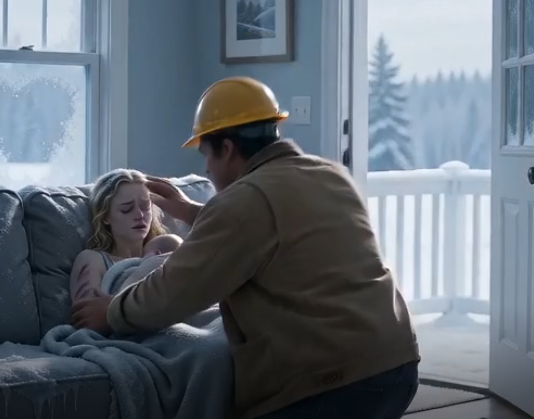
The trial was set for three months later.
Three months of waiting. Three months of dreading it. Three months of Marge’s people still calling, still texting, still trying to make us feel like the bad guys.
We stopped answering the phone. We deleted social media. We changed our numbers twice.
Most days were okay.
Sophia was getting stronger. Lily was thriving, gaining weight, hitting every milestone right on schedule. I took time off work—my boss was amazing, held my job for me as long as I needed—and I was home every day, every night, helping with the baby, helping with the house, just being there.
But some days were bad.
Days when Sophia would be folding laundry and she’d find one of Marge’s old socks tucked in a corner, and she’d freeze, and her hands would start shaking. Days when a car would drive by the house too slow, and she’d grab Lily and run to the back bedroom, locking the door behind her. Days when she’d wake up screaming from nightmares, sweating, crying, saying Marge was in the house.
Those days were the hardest.
I’d hold her until she stopped shaking. I’d check every door, every window, every closet. I’d show her the alarm was on, the locks were tight, Marge was in jail, she couldn’t get to us.
But fear doesn’t listen to logic.
One afternoon in late October, there was a knock on the door.
I was in the garage, working on the truck. Sophia was in the living room with Lily, who was napping on the couch.
I heard the knock. Then I heard Sophia gasp.
I ran inside.
Sophia was standing in the middle of the living room, her hand over her mouth, her eyes wide. She was staring at the front door like it was about to burst open.
“Who is it?” I said, stepping in front of her.
“I don’t know,” she whispered. “I looked through the peephole. It’s… it’s your grandma.”
My grandma.
Marge’s mom. Eighty-two years old. The woman who’d practically raised me when Marge was working three jobs. The woman who’d taught me to fish, who’d baked me cookies every Sunday, who’d been the only constant in my chaotic childhood.
I hadn’t talked to her since the arrest.
I’d tried to call her, a few times in those first weeks. She’d never answered. I’d figured she’d taken Marge’s side, like everyone else.
I opened the door.
Grandma was standing on the porch, holding a Tupperware container in one hand, her cane in the other. Her hair was white, pulled back in a tight bun. She was wearing her good coat, the one she only wore to church and funerals.
She looked up at me, and her eyes were red.
“Tyler,” she said, and her voice cracked. “Can I come in?”
I hesitated. I glanced back at Sophia, who was still standing in the living room, holding Lily, her body tense.
“Is she alone?” Sophia called, quiet.
I looked up and down the street. No other cars. No one hiding behind the bushes. Just Grandma, small and frail, standing on my porch with a Tupperware of what smelled like chocolate chip cookies.
“Yeah,” I said. “She’s alone.”
I stepped aside.
Grandma walked in. She moved slow, her arthritis bad in her knees. She stopped in the entryway and looked at Sophia.
For a long second, nobody said anything.
Then Grandma set the Tupperware on the entry table. She leaned on her cane, and she looked Sophia right in the eye.
“I’m sorry,” she said, and her voice was steady, sure. “I am so, so sorry, honey. For everything she did to you. To that baby. I raised that girl. I taught her right from wrong. And I don’t know when she forgot it. But I want you to know… I don’t believe her. Not a word. I saw the footage. The whole thing. And if I was twenty years younger, I’d go down to that jail and shake some sense into her myself.”
Sophia stared at her.
Then she burst into tears.
Not the scared, quiet tears she usually cried. These were big, heaving sobs, the kind that come when someone finally sees you, finally believes you, finally says you’re not crazy.
Grandma walked over to her. She was slow, but she got there, and she wrapped Sophia in a hug—small, but fierce.
“You’re family,” Grandma said, rubbing Sophia’s back. “You and that baby. And family takes care of each other. Marge forgot that. But I didn’t.”
I leaned against the wall, and I felt my own eyes get wet.
That was the day everything started to turn.
Grandma came over every Sunday after that. She brought cookies. She held Lily for hours so Sophia could nap, or shower, or just sit in silence for five minutes. She called the relatives who’d been talking trash, and she gave them a piece of her mind that they wouldn’t soon forget.
“Marge did this to herself,” she’d tell them, sharp as a tack. “She hurt a baby. A newborn baby. And if you take her side, you’re no better than she is. Don’t call me again until you get your heads on straight.”
Half of them stopped calling after that. The other half called to apologize.
My aunt Linda showed up at the door a week later, hat in hand, saying she’d been wrong, saying she’d seen the footage too, saying she was sorry she’d ever doubted Sophia.
Sophia let her in. She was polite. But she never let her hold Lily. Not all the way. Not without me in the room.
Trust doesn’t grow back overnight either.
The week before the trial, we got a letter.
It was from Marge. Handwritten. Ten pages, front and back.
I read it first.
Half of it was apologies. I’m sorry, I didn’t mean it, I was stressed, I was tired, I don’t know what came over me.
Half of it was threats. You’ll regret this. You’ll lose your family. You’ll lose your son. No one will ever love you like I do.
And in the middle, buried between the lines, the real message.
Drop the charges. Let me come home. Or I’ll tell the court about Sophia’s “history of mental illness.” I’ll tell them she tried to kill herself once, back in college. I’ll tell them she’s unstable, she’s a danger to the baby, she shouldn’t be allowed to keep her.
My blood ran cold.
Sophia had told me about that, once, early in our relationship. A bad breakup, a bad time in her life, one stupid, impulsive night when she’d taken too many pills. She’d gotten help. She’d been fine for years. It was ancient history.
But Marge had found out about it somehow. Probably snooping through Sophia’s old things while we were gone. And she was going to use it.
I folded the letter up. I didn’t want to show it to Sophia. I wanted to burn it. I wanted to pretend it didn’t exist.
But I couldn’t.
We were a team now. No more secrets. No more “I’ll handle it.” No more leaving her in the dark.
I sat her down at the kitchen table. Lily was asleep in her swing. I held her hand. And I read her the letter, word for word.
When I got to the part about the suicide attempt, Sophia went pale.
“She can’t do that,” she whispered. “That was… that was ten years ago. I was a kid. I’m better now. I’m a good mom—”
“I know,” I said, squeezing her hand. “I know. The judge will know. The jury will know. Our lawyer will tear her apart for it. It’s a cheap shot, Soph. That’s all it is. She’s desperate. She knows she’s going to lose, so she’s throwing everything she can at the wall to see what sticks.”
Sophia was quiet for a long time. She stared at the letter, her jaw tight.
Then she reached out, took it from my hand, and dropped it in the trash can next to the table.
“Let her try,” she said, and her voice was stronger than I’d heard it in months. “Let her say whatever she wants. I have nothing to be ashamed of. I survived that. I survived her. And I’m going to survive this trial too.”
I looked at her.
Really looked at her.
The woman sitting across from me wasn’t the same scared, shivering girl I’d carried out of this house three months ago. She was still soft, still kind, still the woman I loved. But there was a fire in her eyes now. A strength.
May you like

Marge had tried to break her.
Instead, she’d forged her.