Chapter 7
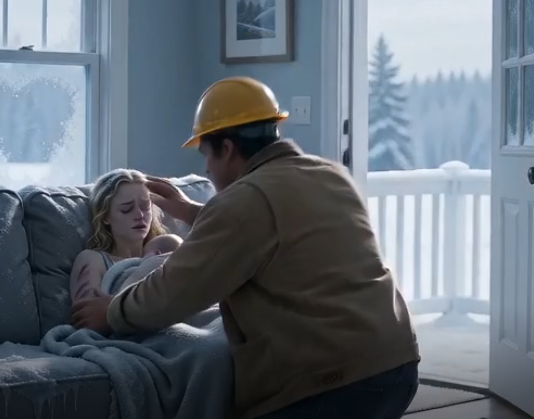
Lily was two years old when Marge first tried to reach out again.
It was a letter. Addressed to me at the new house. I have no idea how she got the address—probably Grandma, though she swore up and down she never told anyone.
I was in the garage, fixing the lawnmower, when the mailman dropped it off. Sophia brought it out to me. She was holding Lily on her hip, who was covered in popsicle, chattering about the dog next door.
“Something came for you,” Sophia said, and her voice was tight. She held the envelope out. Her name wasn’t on it. Just mine. In Marge’s loopy, familiar handwriting.
I took it.
My stomach dropped. I’d thought we were past this. I’d thought twelve years meant twelve years of silence.
I opened it.
Two pages. Neat, careful, like she’d written and rewritten it a dozen times.
She said she’d found God in prison. She said she’d changed. She said she’d been going to church services, taking anger management classes, working in the library. She said she understood now what she’d done was wrong, that she was sick, that she needed help, that she was getting it.
She said she missed me. She said she thought about Lily every day, about what she’d missed—her first steps, her first words, her first birthday. She said she dreamed about holding her, about being a real grandma, the kind she should’ve been from the start.
She said she was up for parole in three years. And when she got out, she wanted to make amends. She wanted to earn our forgiveness. She wanted to be part of our lives again.
At the bottom, in smaller letters: Don’t tell Sophia I wrote. I don’t want to upset her. This is between us, son. Just like old times.
I read it twice.
Then I crumpled it up and threw it in the trash can next to the garage door.
Sophia was watching me. Lily was still chattering, oblivious, but Sophia’s eyes were sharp, worried.
“What did she say?” she asked.
I told her. Every word. Even the part about not telling her. Even the part about parole.
I didn’t keep secrets anymore. Not ever.
Sophia was quiet for a long time. She bounced Lily on her hip, her jaw tight.
“Parole in three years,” she said finally. “That’s… that’s only three years. She could be out when Lily’s five.”
I stepped closer to her. I put my hand on her arm.
“Hey,” I said. “Look at me. She’s not getting out. Not if I can help it. We’ll go to every parole hearing. We’ll show the letters. We’ll show the footage. We’ll tell them everything. She’s not getting within a thousand miles of us. Ever.”
Sophia nodded, but she didn’t relax. Not really.
That night, after Lily was asleep, we sat at the kitchen table with the letter— I’d fished it out of the trash, smoothed it out, because evidence is evidence. We called our lawyer.
He told us to keep it. To keep every letter, every card, every attempt at contact. Marge was violating the restraining order just by sending it. Even if it was only to me. Even if she said nice things.
“One more violation,” he said, “and they add time to her sentence. Parole gets pushed back. She’s digging her own grave, and she doesn’t even know it.”
We hung up.
Sophia was staring at the letter, her fingers tracing the edges.
“Part of me wants to believe her,” she said quietly. “That she’s changed. That she’s sorry. Wouldn’t that be easier? If she was actually better?”
I sat down next to her. I took her hand.
“Maybe she has changed,” I said. “Maybe she has found God. Maybe she is sorry. But that doesn’t mean we owe her anything. Forgiveness isn’t something you have to give, Soph. Not to make her feel better. Not to make anyone else feel better. Only if you want to. Only if it helps you.”
I squeezed her hand.
“And even if she has changed?” I said. “She still did what she did. She still hurt you. She still hurt Lily. Consequences don’t go away just because you’re sorry later.”
Sophia was quiet. Then she nodded.
“You’re right,” she said. She picked up the letter, folded it neatly, and put it in the manila folder we kept in the back of the safe—the one with all the court papers, all the photos, all the proof. “She made her bed. Let her lie in it.”
But the letter had opened a door we thought was locked.
Over the next year, more letters came.
One a month, like clockwork. Always to me. Always saying the same things: I’m better. I’m sorry. I miss you. I miss Lily. Forgive me.
We put every single one in the folder. We sent copies to our lawyer, to the parole board, to the district attorney’s office.
And then, when Lily was two and a half, a relative I hadn’t heard from in years showed up at the house.
My cousin Jake. Marge’s sister’s boy. We’d grown up together. Best friends, once. We’d been in each other’s weddings. He’d been Lily’s godfather, before everything.
He’d taken Marge’s side in the beginning. He’d called me a traitor. He’d posted all kinds of garbage on Facebook. I hadn’t talked to him in two and a half years.
He was standing on my front porch, holding a six-pack of my favorite beer, looking nervous.
“Tyler,” he said, when I opened the door. “Can we talk?”
I crossed my arms. I didn’t invite him in.
“Talk fast,” I said.
Jake nodded. He shifted his weight.
“I went to see her,” he said. “Last week. In prison. She asked me to come. Said she had something she wanted me to tell you.”
My jaw tightened. “I don’t want to hear it.”
“Just let me say it,” Jake said, holding his hands up. “Then I’ll go. I promise. She said… she said she’s not going to stop writing. She said when she gets out on parole, she’s going to come here. She’s going to stand on your lawn every day until you let her see Lily. She said she’ll camp there if she has to. She said the restraining order is just a piece of paper, and she’ll do whatever it takes to be part of her granddaughter’s life.”
He paused.
“And Tyler… she sounded crazy. Not the sad, crying act she put on at the trial. Real crazy. Like she actually believes Lily belongs to her. Like she thinks you and Sophia are just keeping her from what’s hers.”
I stared at him.
The blood drained from my face.
I thought of Marge in that cell, year after year, with nothing to do but think about us, about Lily, about how we’d “stolen” her family. I thought of her getting out, three years from now, showing up at Lily’s preschool, at the grocery store, at our house, every single day.
I thought of Lily, five years old, scared, asking why that lady was yelling at her mommy.
“Thanks for telling me,” I said, my voice tight.
Jake nodded. He set the six-pack on the porch step.
“I’m sorry,” he said. “For everything. For taking her side. For the things I said. I was an idiot. I saw the footage, finally. All of it. And… I get it now. You did the right thing. If it was my kid? I’d have done worse.”
He turned to leave. Then he stopped.
“One more thing,” he said. “She’s been writing to Grandma too. Asking for your new address. Asking for photos of Lily. Grandma hasn’t sent anything. But… Marge has ways. She’s manipulative. Be careful, okay?”
He walked to his truck and drove away.
I closed the door. I locked it. I set the alarm.
Sophia was standing in the living room, holding Lily, who was coloring at the coffee table. She’d heard every word.
Her face was pale. But her eyes were hard.
“She’s not getting Lily,” she said, and her voice was steady, sure. “Over my dead body.”
I walked over to them. I wrapped my arms around both of my girls.
“Over both our dead bodies,” I said.
That night, we called our lawyer again. We told him what Jake had said. We told him about the letters, about the threats, about Marge’s state of mind.
He filed a motion. A permanent, no-exceptions, lifetime restraining order. And he filed a formal complaint with the department of corrections about Marge’s harassing correspondence and her threats.
A week later, we got a letter back.
Marge’s parole eligibility had been pushed back. Five more years. Now she wouldn’t even be considered until Lily was seven. And if she sent one more letter, made one more threat, it would be pushed back again. Indefinitely.
We put that letter in the folder too.
That night, Sophia and I sat on the porch swing again. The air was cool, fall coming on. Lily was asleep inside.
“We’re going to have to keep fighting, aren’t we?” Sophia said, quiet. “For the rest of our lives. She’s never going to stop.”
I nodded. “Yeah. We are.”
Sophia was quiet for a minute. Then she leaned her head on my shoulder.
“Good,” she said. “Because I’m done being scared. I’m done running. If she wants a fight, she’s got one. I’m not letting her take anything else from us.”
I kissed the top of her head.
Some people say love is soft. That it’s gentle, kind, easy.
But I know better.
Love is showing up. Love is fighting. Love is standing between the people you care about and the people who want to hurt them, no matter how tired you are, no matter how long it takes.
May you like

I’d spent my whole life thinking Marge was the one who’d taught me that.
Turns out, Sophia was.